
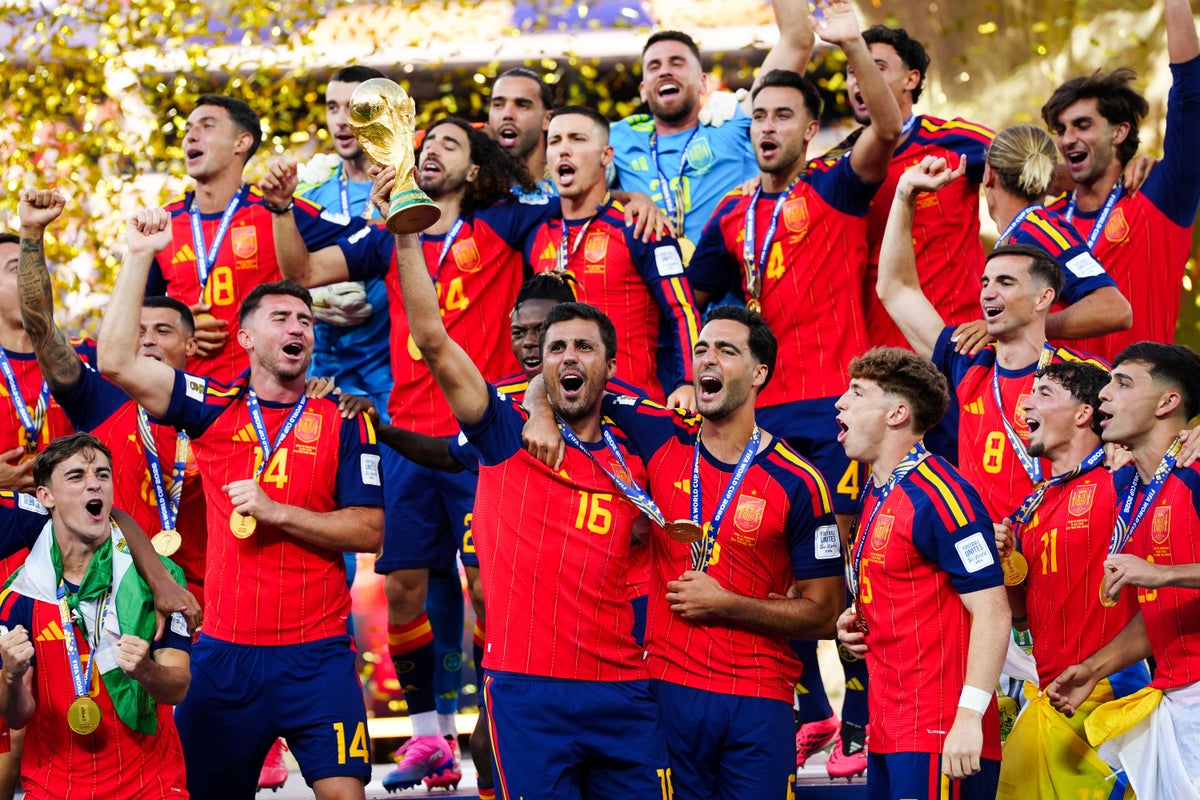
Spain Clinches World Cup Title with Composed Performance
As Spain prepared to compete for the World Cup title in New York, team members recalled a mantra from their former coach Luis Aragones: “Stay calm, you’re the better team.” This principle resonated throughout the match, ultimately leading Spain to victory in the World Cup 2026 final.
This statement may seem straightforward, yet it encapsulated the essence of their performance, highlighting Spain’s mental fortitude. Argentina, anticipating Spain’s superior ball control, attempted to disrupt their rhythm by turning the match into a battle. However, their aggressive tactics went largely unpunished, with several potential yellow cards overlooked before Enzo Fernandez received his red.
During the first half of extra time, Spain began to feel the pressure, leading to moments of frantic play. Argentina clearly strategized for a penalty shootout, where goalkeeper Emiliano Martinez excelled, yet Spain sought to finish the game in regulation.
Spain’s players were reminded that they had the talent to control the game. They adapted their approach, keeping faith in their technical skills and waiting for an opportunity to strike. That chance arose when Nico Williams headed the ball back for Ferran Torres, who scored the decisive goal, reminiscent of Andres Iniesta’s 2010 winner. Torres celebrated with unabashed joy, kicking the corner flag in his excitement.
Reflecting on his monumental goal, Torres stated, “This isn’t just my goal, or even from the 26 players. It was a goal scored by 47 million people.” His words underscored the national pride shared among players and fans alike.
The Spanish squad’s football education in small-space games has imbued them with a sense of technical awareness and positional understanding. This training allows them to navigate through high-pressure situations effortlessly, as seen when they disrupted Argentina’s attempts to regain possession.
This technical foundation stems from Spain’s top-tier grassroots coaching, making it difficult for other nations, such as England, to replicate. Coaches in Spain are among the most qualified in Europe, contributing to sustained success at youth levels. Spain recently triumphed in the under-19 Euros in Wales, further evidencing the strength of their development programs.
Manager Luis de la Fuente, who has coached many current players since their youth, emphasized unity within the team. Reflecting on the squad’s camaraderie, he remarked on the exceptional qualities of his players, who have exemplified a strong team ethos.
Spain’s football community also fosters a sense of trust among players, transcending the regional divisions often highlighted in Spanish football. De la Fuente acknowledged this unity during his press conference after the win, expressing pride in the current generation of footballers committed to a shared philosophy.
While sometimes criticized for a lack of entertaining play, Spain’s emphasis on control and composure is worth studying for other football federations. Their ability to remain calm under pressure is a hallmark of their playing style, showcasing the importance of self-belief and possession in football.
Spain’s victory illustrates broader lessons for the sport, as they become the first nation to hold both the men’s and women’s World Cup titles simultaneously. With a strong team and youth pipeline, they aim to repeat their success in the next World Cup.
Lamine Yamal, despite winning before turning 20, is indicative of the promising talent in the pipeline. Ultimately, Spain demonstrated their superiority, remaining calm and focused to secure the World Cup title.