Headline: Bayern Munich and Borussia Dortmund’s Rivalry Transforms into Global Phenomenon
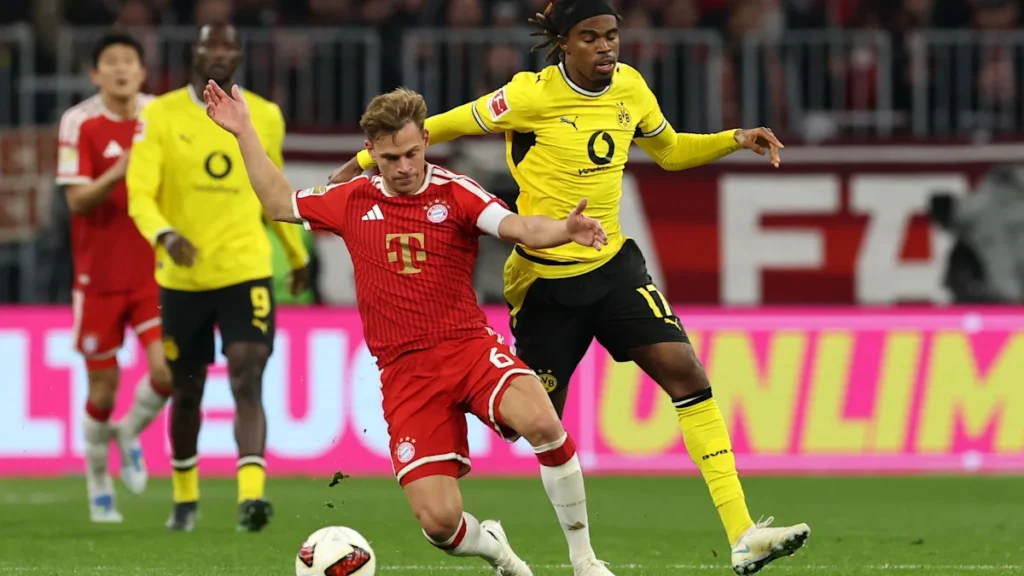
In a notable evolution, the long-standing rivalry between Bayern Munich and Borussia Dortmund has transformed significantly over the years. Once defined by intense encounters rooted in sporting hostility, the match now dubbed Der Klassiker stands as the marquee event of the Bundesliga, captivating millions of fans worldwide.
The rivalry took shape in the early 2000s when Bayern Munich emerged as the dominant force in German football. Dortmund, having clinched consecutive Bundesliga titles in 1995 and 1996 and the Champions League in 1997, posed a significant challenge. Their matches often devolved into heated confrontations, including a notorious clash in 2001 that saw 14 yellow cards and three red cards issued in a tense 1-1 draw. Although Dortmund triumphed in the 2001/02 Bundesliga season, financial difficulties soon shifted the club’s fortunes and the rivalry’s intensity.
A major turning point arrived in 2008 with Jürgen Klopp’s appointment as Dortmund’s head coach. Klopp’s unique, high-pressing style revitalized the team, leading them to consecutive championships in 2010/11 and 2011/12, culminating in a domestic double in 2012. This resurgence enabled Dortmund to consistently challenge Bayern not just in single matches, but throughout complete seasons. The rivalry peaked in 2013 when Bayern defeated Dortmund 2-1 in the UEFA Champions League final, signaling a shift in European football’s focus to German clubs.
However, the years following the Wembley showdown altered the competitive landscape. Bayern fortified their position as Germany’s top club while Dortmund struggled to retain their star players, with high-profile transfers like Mario Götze in 2013 and Robert Lewandowski in 2014 to Bayern amplifying these disparities. Despite Dortmund’s occasional competitiveness, they couldn’t maintain the drive needed for sustained success against their richer rivals. Bayern’s dominance solidified with 11 consecutive Bundesliga titles from 2013 to 2023, with Dortmund frequently slipping out of title contention.
In 2026, the fixture has morphed into something distinctly different. Bayern’s modern attacking approach under Vincent Kompany features stars such as Harry Kane, while Dortmund continues to cultivate young talent under Niko Kovač. As they prepare to face each other on October 31 at the Allianz Arena, both clubs remain unbeaten and share the same point total, with Bayern ahead on goal difference.
Despite the increased global attention that Der Klassiker now attracts, there is ongoing debate about whether it has lost some of its original character. The matches still have deep significance for fans, but the once raw atmosphere, marked by intense physicality and rival personalities, has become more commercialized. The spectacle is more polished and accessible to international viewers, yet the competitive tension that defined the earlier years is sometimes overshadowed by the current financial imbalance.
As the rivalry continues to evolve alongside the Bundesliga, the challenge lies in ensuring that the sporting competition remains as engaging as the increased spectacle that surrounds it. What made the matches between Bayern Munich and Borussia Dortmund truly unique was always the underlying belief that either team could contended for the top honors in German football.