Manchester United Evaluates Future of Manager Michael Carrick Amidst Struggling Performance
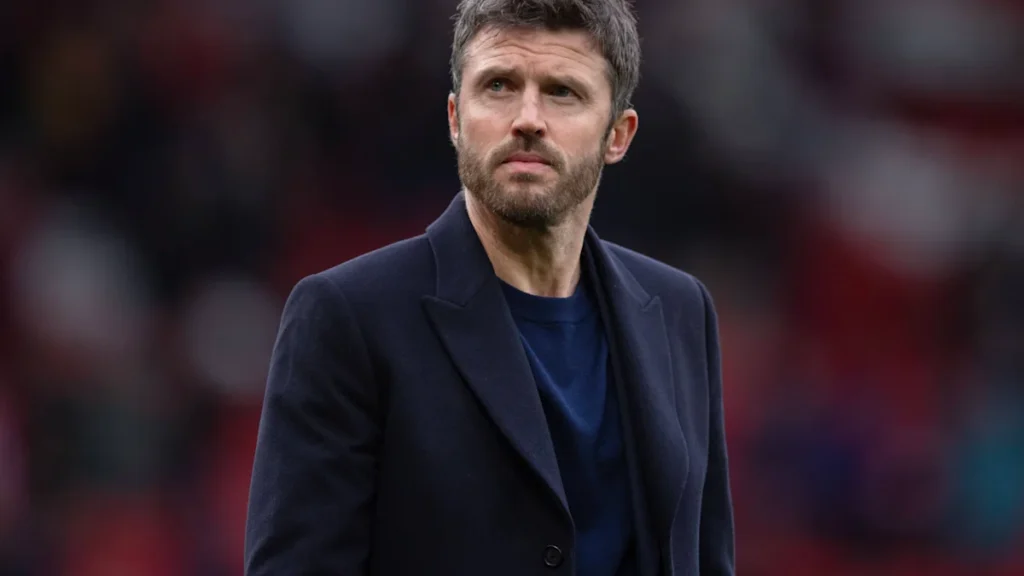
Manchester United has found itself in yet another troubling situation, primarily concerning the team’s performance on the pitch. As reported byStandard Sport, the club is now preparing to deliberate on manager Michael Carrick’s future, as “the sack looms for the under-fire manager.” This stark message aligns with the current standings in the league.
Advertisement
As the November international break approaches, United sits in the Premier League relegation zone. This is the pressing reality, and it cannot be sugar-coated. A 4-4 draw against Aston Villa appears thrilling on paper; however, the circumstances reveal a much graver situation. United struggled, going “two goals down in both halves” and needing to score back from “2-0 and 4-2 down to secure a point.” This suggests not just a lack of resilience, but rather systemic dysfunction.
Carrick’s Position Grows More Vulnerable
Pressure has steadily accumulated. According to Standard Sport, the team is on a “run of nine straight games without a victory,” only breaking this streak with a midweek 3-2 win over Roma in the Champions League. Nevertheless, this victory came with caveats, as United were described as “unconvincing against the Serie A outfit.” Therefore, the win did little to change the overall dire situation.
In light of the earlier 3-0 defeat to Bournemouth, expectations had already risen that Carrick “would be relieved of his duties.” This impression intensified after a 4-1 loss to Como, yet he remained at the helm following a 2-0 setback at Chelsea and the narrow triumph over Roma. Recent reports indicate that “club chiefs are locked in crisis talks over Carrick’s position,” suggesting that discussions have reached a critical juncture.
Photo IMAGO
Advertisement
Club Considers Potential Successors
Standard Sport indicates that three names are “rumoured to be at the top of the club’s potential replacement shortlist,” including Julian Nagelsmann and Fabian Hurzeler, with Antonio Conte also prominently mentioned. Notably, Hurzeler’s candidacy stands out as he is “the only one contracted to a club.”
For Manchester United, the scenario is straightforward. The current league standings are concerning, defensive capabilities are faltering, and the pattern of poor performances is glaring. Crisis talks usually occur when clubs realize that a situation has spiraled too far.
Critical Observations
This predicament reflects the consequences of confusing inaction with patience. The trajectory became clear after the losses to Bournemouth, and certainly after Como. While waiting for the international break might have seemed sound from a boardroom perspective, the reality of football does not pause for decision-making meetings. The relegation zone does not consider procedural delays.
Advertisement
What is particularly frustrating is the recurrence of the same issues. Falling behind early, losing structure, scrambling to recover, demonstrating some fight, and then discussing character is no longer acceptable. Allowing a team to go two goals down once is unfortunate; experiencing it twice in one match is negligence. Although coming back from a 4-2 deficit may earn commendation from optimists, it should raise alarms for those seriously focused on maintaining standards.
If indeed the club is engaged in “crisis talks,” then decisive actions must be taken. No more tentative measures or vague communications; it’s time to confront the situation head-on. Either Michael Carrick can urgently rectify the team’s issues, or he cannot. Presently, the indicators strongly suggest the latter.
If a managerial change is imminent, prompt action is crucial. Avoid treating each managerial decision like a mere marketing strategy. Prioritize hiring the most capable coach, outline the necessary structural support, and acknowledge that the squad shares accountability. It is possible for both the manager to fail and recruitment to falter simultaneously. For years, United has operated under the belief that a single change will rectify everything; this is rarely the case. Inaction, however, guarantees even less improvement.