Pochettino Expresses Admiration for Ferguson as He Poised to Lead Manchester United
Former Chelsea manager Mauricio Pochettino has unequivocally named Sir Alex Ferguson as the top choice of Premier League managers he would have loved to play for. As he approaches his new role as the head coach of Manchester United, Pochettino’s admiration for the legendary manager was clearly highlighted in a recent interview with Sky Sports.
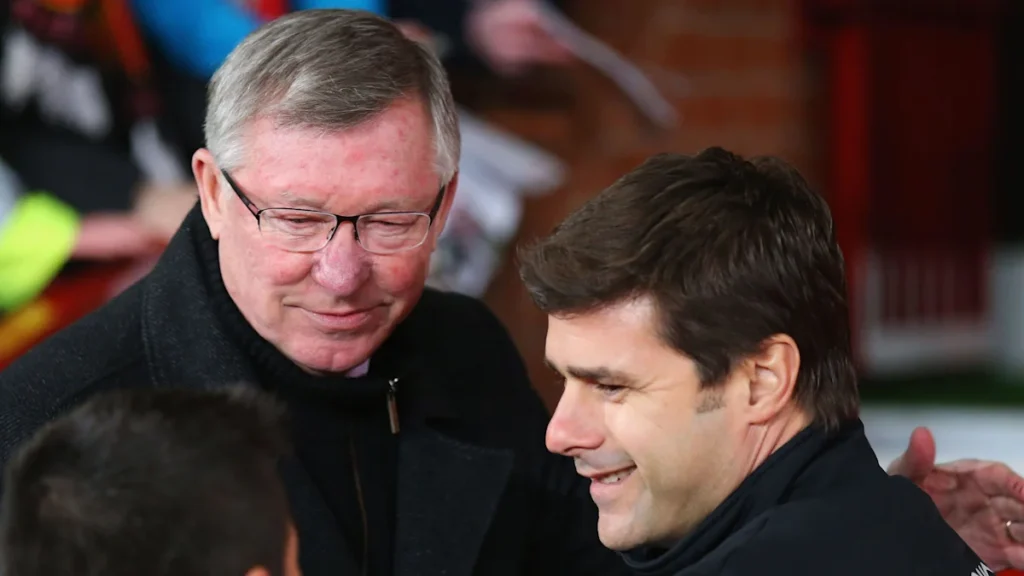
In this interview, Pochettino, decked in Chelsea training attire, emphasized Ferguson’s influence on his career. Reflecting on a lunch he shared with Ferguson during his tenure at Tottenham six years earlier, Pochettino stated, “When I was young, when I started my career as a manager, he was always my inspiration, my reference. And when you can share two hours with a person who was the greatest manager in the history of football, you can only enjoy.”
Since Ferguson’s exit in 2013, Manchester United has faced challenges in its managerial recruitment, often wrestling with the club’s identity. Some stakeholders prioritize winning games regardless of the style, while others hold firm to the traditional style of play developed during Ferguson’s most successful years.
Under the management of Michael Carrick, United demonstrated a remarkable performance last season, achieving an impressive run that set them apart in the league. The team’s success was primarily built on a counter-attacking style, exploiting moments when they had less possession, where they recorded a 62% win rate.
However, despite that attacking prowess, Carrick aimed to implement a slicker brand of football, inspired by Paris Saint-Germain’s midfield dynamics. Carrick’s vision faced hurdles, ultimately leading to challenges similar to those experienced by ex-managers Ole Gunnar Solskjaer and Erik ten Hag.
Pochettino brings a potential solution to these issues. He describes his team philosophy as one that requires high pressing, hard work, and dynamic transitions. As a “disciple” of Argentine coach Marcelo Bielsa, Pochettino’s styles align with proactive football, presenting a vision that could resonate well with the United faithful.
This year’s World Cup showcased his tactical versatility, with an emphasis on flexible movement rather than rigid positional play. This approach allowed players to exploit unmarked areas on the pitch, creating opportunities against zonal defenses. His recent experiences with the U.S. national team demonstrated the efficacy of small-space passing and direct approaches, echoing Carrick’s ambitions.
Importantly, Pochettino’s managerial approach focuses on empowering players to express themselves on the pitch, creating an adaptable and comfortable shape for all involved. He has a history of instilling confidence in his players, a method that could benefit United’s talented attacking roster.
However, challenges remain. If Pochettino encounters difficulties, it may stem from United’s longstanding struggle to break down disciplined defensive teams, a scenario that could mirror past frustrations.
As Pochettino prepares to guide Manchester United, his task will be to blend the exhilarating football reminiscent of Ferguson’s era, while overcoming the hurdles faced by his predecessors in transforming the squad’s style and effectiveness on the field.