
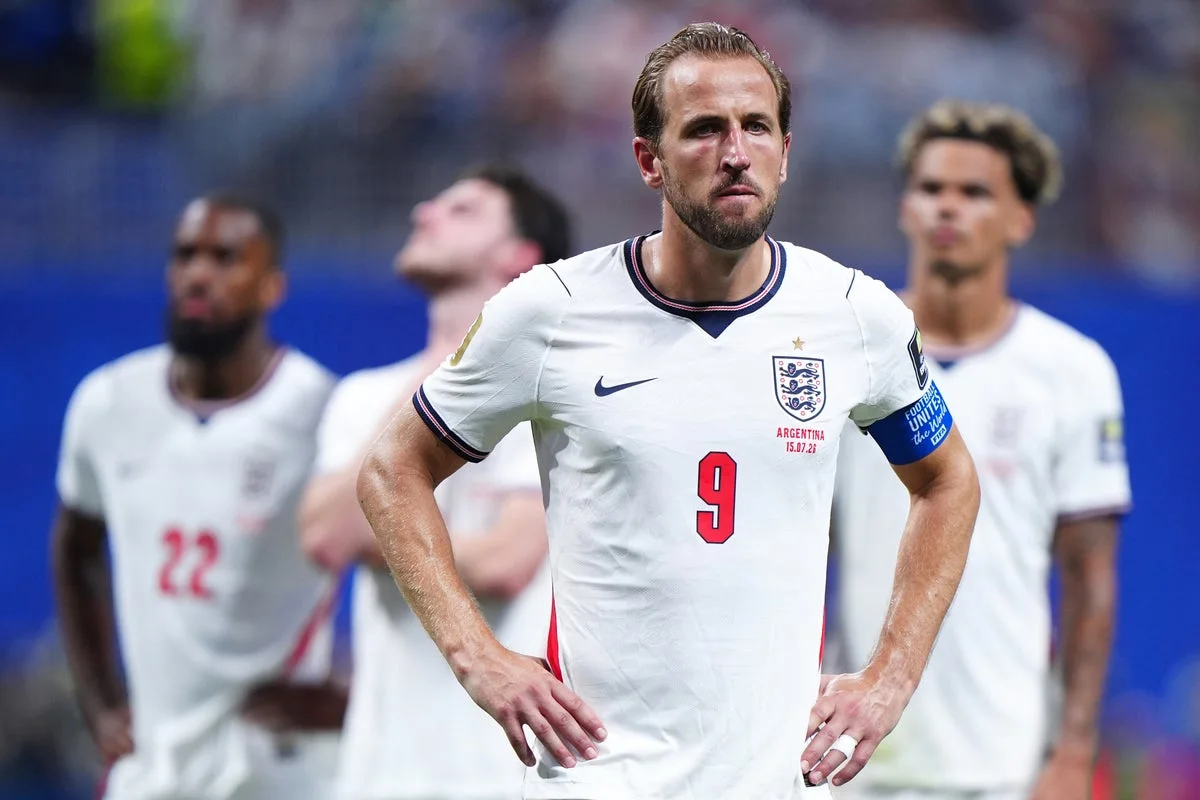
England Football Association Stands Firm Behind Coach Thomas Tuchel After World Cup Exit
England might have exited the World Cup with a performance that would prompt deep reflection in other nations. However, the Football Association showed no signs of such introspection.
After a bland public statement asserting that “the players and Thomas gave it everything,” private indications suggested there would be no changes considered—nor much else.
Thomas Tuchel has been heavily criticised since England’s semi-final defeat (PA Wire)
The FA remains committed, increasingly confident that Tuchel can lead England to victory in the upcoming Euro 2028.
While discussions about the future can wait, there is a tangible risk that Tuchel’s connection with the players may falter.
Will Thomas Tuchel retain the faith of his England players? (PA)
Specifically, Tuchel was selected for his reputation as a tactical mastermind and a “winner,” known for his ability to lead teams to success. Yet the basic tactics employed have cost the players a chance at making history, leading to implied criticisms about their lack of “belief.”
It’s clear that this situation could lead to complications.
Currently, those associated with the England team are reflecting on the recent World Cup events. Some feel a sense of cosmic unfairness, rationalizing that it may never be their time and that another 62 years could pass without a significant trophy.
England were stunned late on by Argentina (Reuters)
That failure seems almost like reverse alchemy, particularly as the FA invested heavily in the program. Yet this outcome reflects a certain justice in football.
Though difficult for many England fans to accept, some—especially within the FA—may need to reconsider their views.
It might be beneficial for international football that a wealthy nation—already enjoying many advantages—does not win simply because it can afford the most expensive coach available.
What would that signify? Would it suggest that wealth alone is enough to succeed? That simply hiring a “winner” suffices if the financial resources allow?
The prevalence of such a mindset exists within the club scene. It is vital that it does not extend to the international level, emphasizing the need for more developed philosophies, which could ultimately benefit the FA.
England splashed the cash to appoint Thomas Tuchel and appear to have made little progress (Getty)
Will they reconsider?
The current signs suggest they might not.
The underlying frustration is that much of the groundwork is already in place.
English football has leveraged significant resources to create a talent pipeline admired by many around the world. The Elite Player Performance Plan has proven effective, yielding a consistent supply of players, especially in key positions.
However, this plan lacks integration within a larger framework.
This brings us back to Tuchel’s appointment as central to a more complex discussion, highlighting the FA’s current struggle.
Mark Bullingham (left) has given his backing to Thomas Tuchel – but should he consider a change? (John Walton/PA Wire)
The FA should focus on the kind of identity they want for the English team and which cultural football qualities they aim to enhance within a coaching framework compatible with modern play.
Interestingly, Tuchel appeared to give this some thought, stating his desire for England to adopt “a Premier League style,” characterized by a level of intensity aligning with the more favorable aspects of English football.
However, the reality diverged significantly from that vision; aside from a brief display against Croatia, the promised style was largely absent.
England failed to deliver on Thomas Tuchel’s promises (Getty)
Rather than showcasing a Premier League style, Tuchel’s appointment epitomized a prevailing mindset in the Premier League—if problems arise, simply buy your way out.
It is disheartening, yet somewhat expected, that the FA has adopted this same approach during a time free from Premier League constraints.
In light of Tuchel’s performances, it’s challenging to separate the broader issues from specific performance metrics.
England still lacks capable midfield controllers, which may correlate with questions regarding team belief and tactical awareness.
It is remarkable that the nation finds itself repeating history, as if it were 2016 or 2010 or 1998: failing to control matches and falling to the first formidable opponent.
England were outthought by Argentina (Getty)
Such a conclusion may seem harsh, particularly considering they were on the verge of a second consecutive major tournament final and third in four years. Yet, it underscores the thin line that divides success from failure.
Despite having the wealth necessary to assemble a talented squad, achieving sustained success requires a more profound approach.
This situation was almost certainly edging toward a scenario in which Spain met England in major finals for four consecutive years—covering a women’s World Cup, a men’s Euros, a women’s Euros, and, ultimately, a men’s World Cup.
For those who might bristle at comparing men’s and women’s games, the connection remains relevant due to shared football cultures.
All three of the finals have followed strikingly similar patterns where Spain asserted control, with England struggling to adapt.
England did capture a title under Sarina Wiegman, but that success relied on her strategic insight, some fortune, and the effective utilization of substitutes.
Sarina Wiegman’s Lionesses have managed to overcome some structural limitations (PA Wire)
Yet again, England’s overall playing philosophy is under scrutiny.
Meanwhile, the two coaches who most recently eliminated England from major competitions, now preparing for the final, are classic representatives of their national federations: Lionel Scaloni and Luis de la Fuente.
This highlights a pattern that the FA seems hesitant to embrace, as neither coach has Champions League experience.
Despite this, the FA’s rationale is sound; their strengths stem from intimate knowledge of their respective football cultures. De la Fuente has worked with most of the Spanish players since childhood.
There is an argument that Lee Carsley would be a better fit for international football than Thomas Tuchel (Getty)
He embodies an idea that England currently lacks.
While it is true that the English system doesn’t produce coaches at the same rate as players, there is emerging talent. England arguably has their own version of De la Fuente in Lee Carsley, who produced a clearer football philosophy over six matches than Tuchel did.
While it may seem implausible for England to hire a manager regarded as lesser-known, it mirrors the reactions to the appointments of Scaloni and De la Fuente.
Importantly, the points raised here do not relate to Tuchel’s nationality but instead reflect the national football authorities’ lack of clarity about creating a distinct identity for the English team.