
England Falls to Argentina in Dramatic World Cup Semi-Final
It was exquisite torture yet again for England and their fans as the chance of World Cup glory was snatched away in the dying minutes of yesterday’s semi-final with Argentina. So, what happened – apart from the usual?
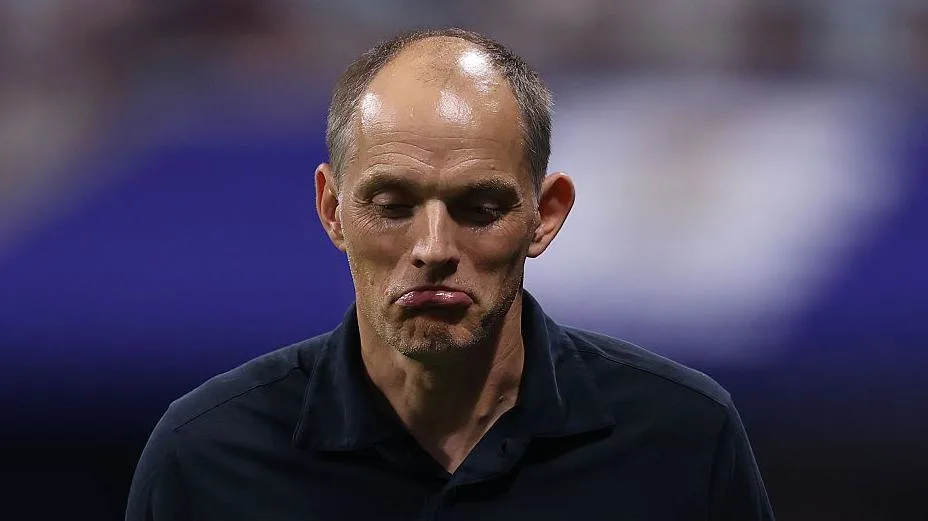
The narrative has already developed that Thomas Tuchel bottled it; he cowered before the genius of Lionel Messi, going to a back five after taking the lead. He seemed genuinely shocked by this reading of the game when interviewed minutes afterwards.
Advertisement
There were 17 long minutes before he sacrificed Antony Gordon for Ezri Konsa and opted for a more defensive formation. A long 17 minutes when he felt they were losing the game, giving up too much space, and were on the verge of conceding a goal, prompting him to try the ‘Mexico’ method: defend with as many stout defenders in the box as possible.
Was he right about that whirlwind period when he felt they were disintegrating? During this phase, Djed Spence made a world-class goal-saving tackle; Enzo Fernandez had a shot just over the bar; Messi delivered several vicious crosses that England struggled to handle; Jordan Pickford made a brilliant save from a low header; and Argentina coach Lionel Scaloni made five personnel changes, leading to increased corner kicks.
England scarcely crossed the halfway line during this phase, and Paul Robinson said on BBC Radio 5Live: “We are playing too deep with a low block; I don’t like it.”
Tuchel was correct; his team had fallen back or been pushed back before he made his changes. Had he then made positive substitutions that didn’t reinforce a back line stretched to breaking point, and they lost subsequently, he would have faced criticism for naïveté.
Advertisement
That is not the narrative that will unfold, and there is no use in Tuchel complaining to the public.
For them, he “went negative and it is his fault.” That’s the job, that’s how it works, and all that matters now is whether those who select the England coach believe in him or the masses.
It’s a tough call because until the 86th minute they had just about managed to get there, and that is pretty close.
Undone by Greatness
Lionel Messi provided the two assists for Argentina to help them come from behind against England [Getty Images]
England were beaten by the positivity of a world-class side capable of switching from nagging negativity to flowing attack in an instant. This transformation appears to be orchestrated by Lionel Messi.
Advertisement
He found space and began delivering passes and crosses that were nearly unstoppable, just when it mattered most. The two assists that decided the match were impressive, with the first looking rather routine.
In this instance, Messi had the ball wide on the right but knew he needed to draw more defenders to create space. This was a deliberate tactic to draw Elliot Anderson towards him. Observe how long he waits to play the ball; Anderson is nearly on top of him when he slips it to Fernandez, who brilliantly utilizes the space Messi created.
The second assist bordered on unfair. Two English defenders had him in check, anticipating he would seek to get the ball onto his left foot, which he often does. However, Messi had been biding his time, aware that both defenders would overcommit on that side. He creates a few inches of space and requires nothing more.
He then shifts onto his right foot and delivers a cross even the greatest right-footed player would envy, setting up the winner. Everything was calculated, and if you watched the Argentina players after the goal, none rushed to the scorer; every player celebrated the genius who created it.
Advertisement
Players recognize when they are in the presence of a great, if not the greatest, player.
Deschamps Bows Out to Disappointment
Didier Deschamps’ final tournament as France manager ended with a whimper as they were well beaten by Spain – only a third-placed showdown against England on Saturday remains [Getty Images]
A French side, which had delivered impressive performances throughout the tournament, suddenly faltered against the Spanish.
They had shown signs of struggle in previous matches, warning that the French were more vulnerable than many wanted to believe.
Adrien Rabiot’s early yellow card limited his ability to support left-back Lucas Digne, who faced an insurmountable challenge coping with Lamine Yamal alone. Some Everton fans were less than sympathetic towards their former player during this tough outing.
Advertisement
The pivotal moment came when Digne conceded a penalty. Although he didn’t intend to foul Yamal since he was blindsided, it was a naïve mistake. At that juncture, the game slipped away from France’s grasp, but they hadn’t firmly held onto it anyway.
Despite the joy Didier Deschamps’ men brought their supporters, this felt like the moment the experienced opposition gained the upper hand.
The French flaws became apparent quickly. Bradley Barcolo appears fast but lacks precision in his final pass, while Ousmane Dembele delivers erratic performances, even as Michael Olise often goes missing in crucial moments.
While Deschamps enjoyed a successful managerial career, he failed to implement any strategies to reverse the momentum when things began to sour.
Advertisement
Could he have introduced Jean Phillipe Mateta in the second half and moved Kylian Mbappe wide to ensure the superstar received more touches? The changes made were merely positional, insufficient to shift the tide against the Spanish.
The Secret of Spain’s Success
Mikel Oyarzabal opened the scoring for Spain from the penalty spot – and they never looked back [Getty Images]
Spain had not made a significant impact at the World Cup, and my initial impression of them during the tournament, particularly against Cape Verde, influenced my perception.
They appeared slow, predictable, and somewhat dull, making it difficult to connect with their current team compared to previous illustrious lineups that included Xavi, Andres Iniesta, and David Silva.
Advertisement
Nonetheless, Spain has consistently played their style, achieving undeniable success. While I anticipated the new and exciting, attack-centred French approach to take center stage, that method is not yet equipped to surpass the control and tactical sophistication that Spain has honed over generations.
Argentina will now face the challenge of overcoming a strategy that has been established for decades, which will not be an easy feat.
What is the secret to Spain’s success? Beyond being strong across most positions and functioning cohesively as a team, I suspect it lies in the fact that if opponents are limited to 30% possession and only a fraction of that in Spain’s final third, scoring becomes incredibly challenging.
And to win World Cup matches, scoring goals is essential.
Advertisement
Why Sunday’s Final Could Be a Slow Burn
The two finalists are confirmed during Fifa’s drone show at Liberty Park in New York [Getty Images]
Argentina will face Spain in the final, and after watching both semi-finals, it is clear that this is the right matchup.
Before the tournament, many anticipated a France vs. England finale, but they will instead compete in the third-place play-off – a game that many feel shouldn’t even exist!
Painful though it is for any England or France supporter, the World Cup has delivered the two strongest teams into the final, promising an intriguing matchup.
I use the term “intriguing” because I suspect it may take some time to ignite excitement.
Both semi-finals were slow to develop; should the France vs. Spain match ever truly gain momentum, spectators should be prepared for the potential of a more cerebral encounter.
If either team nets an early goal, it might be just the jolt needed to avoid a lackluster game.