
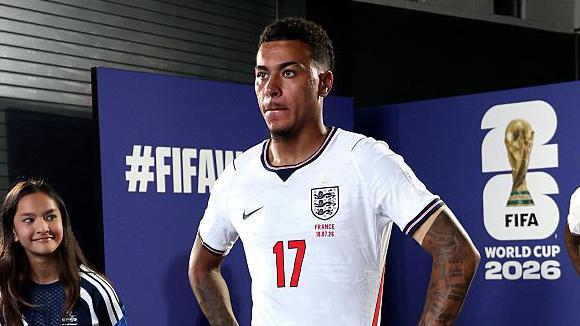
Chelsea Secures £117m Deal for Aston Villa’s Morgan Rogers
Chelsea’s recent acquisition of Aston Villa forward Morgan Rogers for £117 million has generated significant attention during the ongoing transfer window. But how did the club manage this deal and what implications does it have for their squad?
On Monday, Rogers returned from the United States, where he participated in the World Cup with the England squad, to complete a medical in London and finalize a six-year contract with an option for an additional year.
Initially, it was anticipated that Rogers, regarded as Villa’s most valuable player, would be obtainable only for an English transfer record fee, with Arsenal perceived as the leading contender for his signature.
However, Chelsea had monitored Rogers for over two years and prioritized him as their key attacking target. Following England’s semi-final loss to Argentina, they acted swiftly, allowing Rogers to regain focus on his performance.
On Thursday, after the match, a collaborative effort from the club’s sporting directors, head coach Xabi Alonso, and co-owner Behdad Eghbali resulted in the successful agreement. Chelsea captain Reece James even played a role in advocating the club’s case within the England camp, while negotiations involved Cole Palmer, who is described by Rogers as “one of my best friends in life.”
Through a well-coordinated operation, Chelsea finalized the deal in less than 48 hours.
The successful agreement was facilitated by a strong rapport between Chelsea co-owner Eghbali and Aston Villa owner Nassef Sawiris, culminating in a final arrangement on Saturday afternoon, just before Rogers stepped onto the pitch for England’s victory over France.
After completing the deal, Arsenal were given an opportunity to match Chelsea’s bid. They later opted to remain loyal to their initial lower valuation and allowed Rogers to join Chelsea.
Arsenal is now contemplating other options, including Paris St-Germain’s Bradley Barcola and Bournemouth’s Junior Kroupi.
Previously, while Chelsea had considered a deal for Rogers, conversations had taken place during the ‘Profit and Sustainability swaps’ of 2024.
One avenue examined involved Nicolas Jackson reuniting with former Villarreal manager Unai Emery, following the departures of Ian Maatsen to Villa Park and Omari Kellyman to Chelsea.
Rogers’ signing symbolizes a shift in Chelsea’s transfer approach.
Where will Rogers fit in at Chelsea?
Rogers’ arrival raises questions about his position within Chelsea’s lineup, especially considering Palmer’s similar playing style.
Although Rogers was chosen by England manager Thomas Tuchel over Palmer for the recent World Cup, both players possess the versatility to perform together or alternate positions. Reports suggest Rogers will predominantly play on the left, while Palmer operates centrally.
Chelsea is likely to explore both a back-four and a back-three formation next season, the latter of which Alonso utilized effectively at Bayer Leverkusen. This option could enable Rogers and Palmer to operate simultaneously as dual number 10s, with wingers adapting to a more defensive role.
Following a challenging previous season, which saw Chelsea scoreless over five games under former coach Liam Rosenior, Rogers, who scored 14 goals and supplied 12 assists in 55 appearances last year, is expected to enhance the team’s attacking capabilities.
In light of Chelsea’s current squad dynamics—with six attackers vying for three positions—further adjustments are anticipated after last year’s tenth-place finish.
How can Chelsea afford it?
Financial management is crucial for Chelsea as they must not only maintain player morale but also generate income through player sales.
The £117m investment in Rogers adds to the £47m spent on full-back Marco Palestra from Atalanta, alongside possible signings like Pep Chavarria from Rayo Vallecano and Maxence Lacroix from Crystal Palace.
Additionally, midfielder Valentin Barco is expected to join from Strasbourg, although Chelsea has yet to make the deal official.
Last season, Chelsea had to achieve a league-record £300m in player sales to meet Premier League financial regulations. These rules are transitioning from a Financial Fair Play framework to a squad cost ratio model this summer.
However, Uefa continues to pose challenges, having last summer imposed a £26.7m fine for breaching financial regulations, with Villa also facing scrutiny, thus prompting Rogers’ sale.
This summer, Chelsea was found to have violated Uefa’s rules again, but the financial situation has improved significantly, resulting in a reduced fine of £2.6m. Most of this amount will be waived if the club’s finances remain on an upward trajectory.
With five new signings anticipated this summer, Chelsea aims to offload at least a dozen players from their roster of 37 senior players, maximizing transfer income to ensure financial stability.
They have already sold players including Marc Cucurella to Real Madrid and others for a total exceeding £120m.
As Chelsea navigates their current financial landscape, generating revenue through transfers becomes increasingly crucial, especially as they face competition from other big-six clubs.