
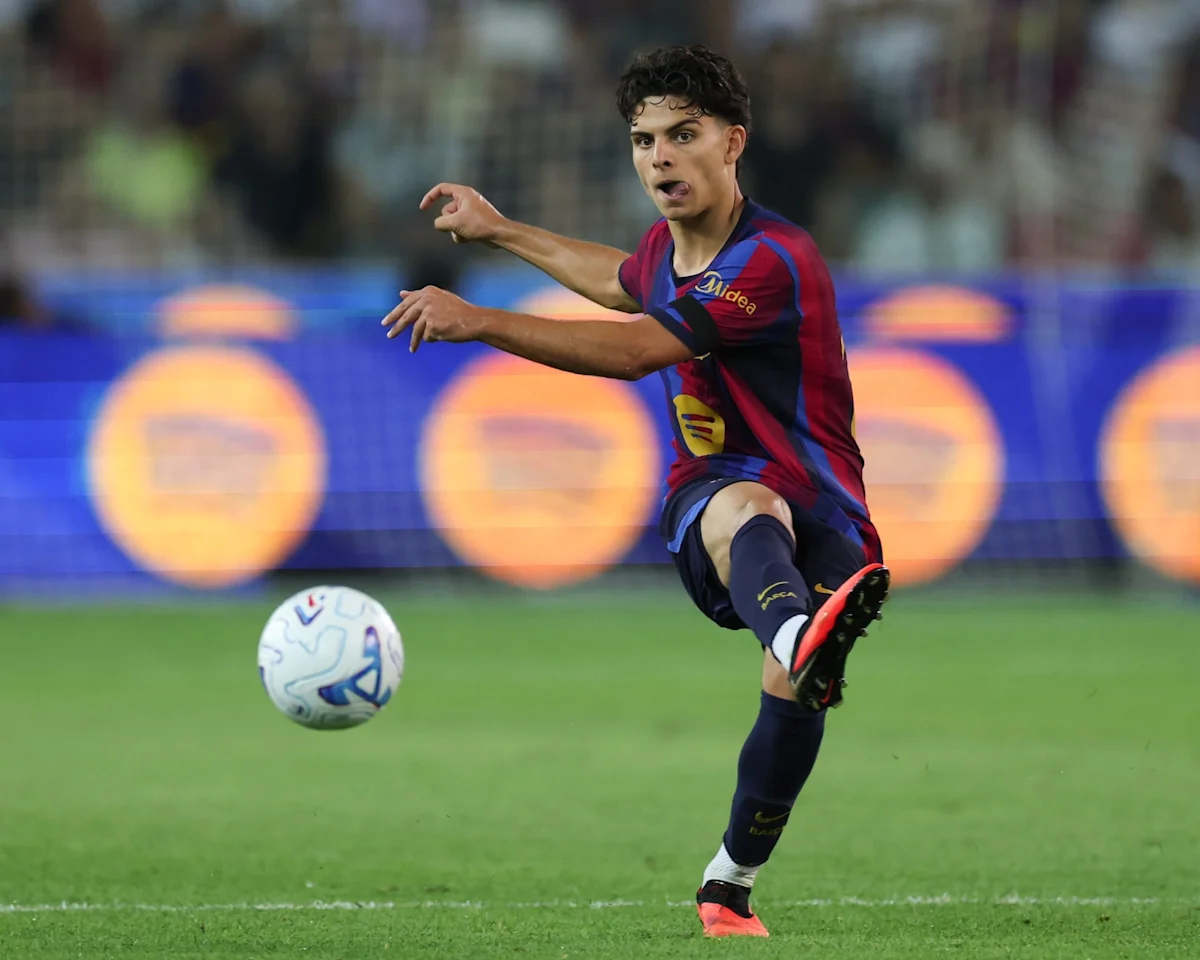
Barcelona’s Rising Star Xavi Espart Faces Position Dilemma
FC Barcelona’s promising young player, Xavi Espart, exhibits remarkable versatility on the field, seamlessly transitioning between right-back and midfield. This dual capability raises questions about his optimal position as he seeks to establish himself within the first team.
Espart’s adaptability creates a valuable situation for Barcelona, although a definitive decision about his development will need to be made. While versatility can be advantageous in securing a place on the team, specializing in a single role is often crucial for long-term retention.
Right-back Could Be His Quickest Route
There is a compelling argument for cultivating Espart as a right-back, especially given Barcelona’s ongoing quest for stability in that position. Currently, the role is being filled by Eric Garcia, while Jules Kounde’s long-term prospects have become uncertain. A right-back from La Masia who comprehends Barça’s playing style and can perform under pressure during build-up play would be immensely valuable.
Espart’s approach does not necessarily conform to the traditional overlapping full-back style. He could adapt to Hansi Flick’s system by taking on a more midfield-oriented role when Barcelona possesses the ball.
He Looks Too Good in Midfield to Ignore
Whenever Espart plays in a central role, there is concern that confining him to right-back might limit his growth. His natural instincts in midfield—awareness, positioning, and confidence—demonstrate what he offers to the team. While Espart’s midfield background suits him well at right-back, he appears more at ease when playing centrally.
Barcelona must avoid determining his future based solely on the current needs of the first team. The focus should be on identifying the position that elevates his potential, rather than immediate vacancies.
The Midfield Competition Makes It Tricky
Breaking into Barcelona’s midfield is no easy task, with well-established players like Frenkie de Jong, Pedri, and Gavi occupying key roles. Additionally, Dani Olmo and Fermin Lopez add depth to the squad. The situation complicates further with recent investments like Marc Bernal and the introduction of seasoned midfielder Rodri, which heightens competition.
In contrast, the path to right-back appears considerably less congested, creating a favorable scenario for Espart. His flexibility could serve as a significant advantage; Barcelona does not need to decide on a fixed position for him right away.
Maybe the Answer is Both
The landscape of modern football continues to blur traditional positional boundaries. A right-back can defend while also venturing into midfield, adapting to various roles during play. For a player like Espart, this hybrid role could be ideal, akin to Bayern Munich’s Joshua Kimmich.
This approach may also offer him the quickest route into Flick’s plans for the upcoming season. His intelligence and technical skills set him apart from conventional full-backs, allowing for opportunities in midfield whenever they arise, as he demonstrated against FC Basel last weekend.
Currently, labeling Espart feels unnecessary. He excels at right-back but shows even greater potential in midfield. Barcelona must avoid wasting either talent as he continues to develop in the coming years.
There are young players who make their pathway easier by having one obvious position.
FC Barcelona prospect Xavi Espart might have the opposite problem. He can look excellent at right-back and then move into midfield and somehow look even more natural.
Advertisement
For Barcelona, that is a wonderful problem to have. For Espart’s development, however, a decision will eventually need to be made.
Versatility can get a youngster into the first-team picture, but mastering one position is usually what keeps him there.
Right-back could be his quickest route
There is an obvious argument for developing Espart as a right-back. Barcelona have spent years searching for stability in that position.
Eric Garcia is currently being pushed towards the role. Jules Kounde’s long-term situation is no longer quite as straightforward as it once appeared.
A La Masia right-back who understands Barça’s positional game, is comfortable receiving under pressure and can move inside during build-up is therefore extremely valuable.
Advertisement
Espart does not have to become the classic overlapping full-back. In Hansi Flick’s system, he could effectively become another midfielder when Barcelona have possession.
That brings us to the main problem.
A special talent with versatility as his weapon. (Photo by Timothy Rogers/Getty Images)
He looks too good in midfield to ignore
Every time Espart plays centrally, you wonder whether moving him permanently to right-back would actually be limiting him.
There is a natural quality to his midfield game. The awareness, the positioning, the confidence to receive the ball in crowded areas and the ability to keep the game moving all feel very Barcelona.
Advertisement
At right-back, the midfield education makes him unusual. In midfield, it makes him look more at home.
That difference is quite evident. Barça should be careful not to decide Espart’s future simply according to where the first team currently has the biggest vacancy.
It should be about finding him a position that maximises his obviously sky-high ceiling, not just thinking short-term.
The midfield competition makes it tricky
Breaking into Barça’s midfield is close to impossible. Frenkie de Jong, Pedri and Gavi are established. Dani Olmo and Fermin Lopez provide different qualities further forward.
Advertisement
Marc Bernal is one of the club’s biggest young investments, while Rodri’s arrival would add one of the world’s most experienced midfielders.
Behind them, La Masia simply cannot stop producing in that position. Tommy Marques is leaving the club in search of new opportunities.
Brian Farinas has really caught the eye with his performances in training. Guille Fernandez is extremely talented too.
At right-back, on the other hand, the highway looks much clearer, with not many vehicles in the rear-view mirror.
This is where versatility could actually become his greatest advantage. He does not need Barcelona to decide today that he is exclusively one thing or the other.
Maybe the answer is both
Modern football is increasingly destroying these traditional positional labels.
Advertisement
A right-back can defend wide without the ball, step into midfield during build-up and spend long periods operating as an interior in possession.
For a player with Espart’s characteristics, that hybrid role might eventually be perfect. In many ways, he can be Barça’s Joshua Kimmich.
It could also be his fastest route into Flick’s plans. The German manager can use him at right-back, at least this upcoming season.
His intelligence, technical quality and midfield education distinguish him from more conventional full-backs.
He can always have midfield minutes when the opportunities appear, like he did against FC Basel this past weekend.
Advertisement
Because, right now, forcing Espart into a label feels unnecessary.
He is excellent at right-back. He may be even better in midfield. Barcelona need to ensure they do not waste either version of him in the coming years.
[/gpt3]