
David Lynch Asks if Manchester City Fans’ Defiance Will Hurt Their Case
The trip to Anfield carried weight beyond the sport itself for Manchester City. Their 3-0 win over Liverpool arrived under the shadow of the Premier League’s guilty verdict, surrounded by protests, anger, and debate over what the financial ruling means next.
Advertisement
Although Liverpool fans voiced their displeasure, David Lynch, writing for Media Matters for Anfield Index, focused more on how sections of the visiting City contingent reacted.
In a conversation with Dave Davis, Lynch challenged the defiant stance taken by some City supporters. He warned that this attitude might reduce the club’s ability to garner sympathy once discussions on possible sanctions heat up.
Defiance Marks Some City Fans’ Display at Anfield
Tensions around the match mirrored the larger dispute. After the independent commission issued its verdict, Liverpool fans aimed their ire at City, but the away supporters seemed fixed on standing by their club.
Advertisement
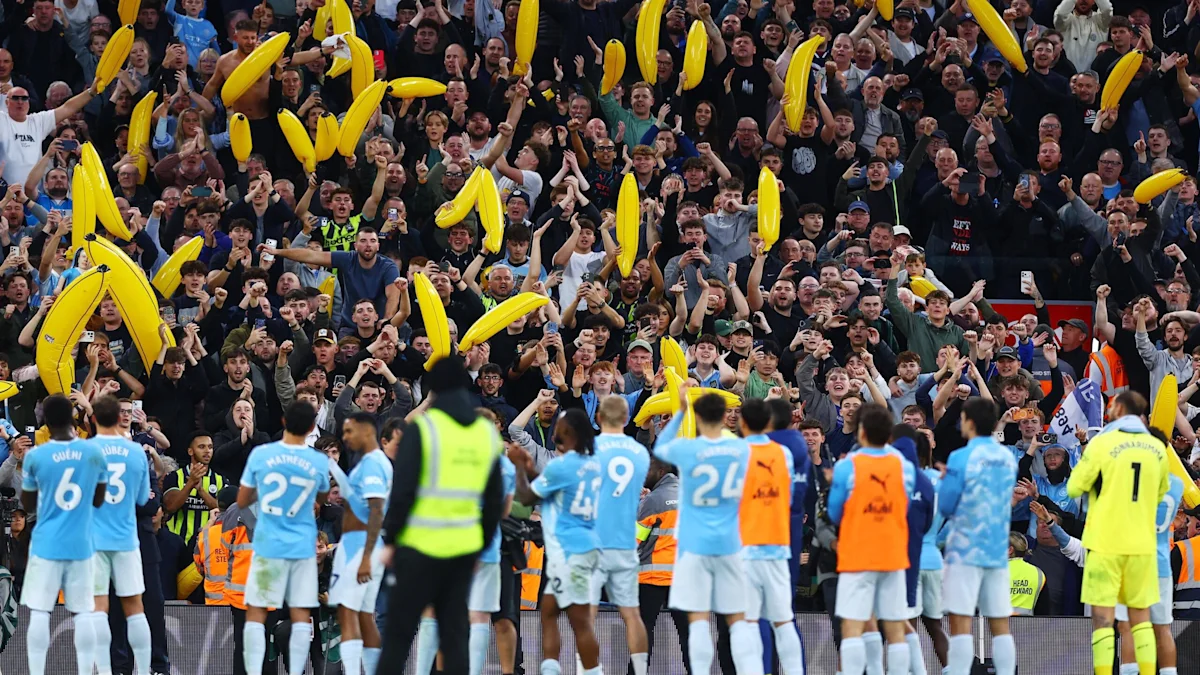
Lynch pointed out banners supporting City chairman Khaldoon Al Mubarak and fans carrying large amounts of cash into the stadium. He viewed these as notable elements in a game already darkened by the financial controversy.
He asked if the standard defence—that fans should not be blamed for choices made by ownership—adequately explained what took place.
“Are we still supposed to build this much sympathy for them?” Lynch asked, pointing to the defiant conduct shown by certain City fans.
The core of his argument went deeper than simply noting that City fans were supporting their team. He argued that, given the verdict, the style of that backing could alter how fellow supporters perceive their situation.
Advertisement
While the club appeals the findings and the issue stays open, Lynch believed the events at Anfield showed just how hard it is now to divorce the football from arguments about City’s financial behaviour.
Lynch Doubts Sympathy Remains for City Supporters
A key part of Lynch’s case separated the club’s management from its supporters.
He admitted most City fans did not make the decisions at the heart of the case. Fans do not manage the club’s finances, and many simply followed their team without sway over its operation.
Advertisement
Lynch had earlier stated that any sanctions should target the owners primarily, instead of penalising the club and its supporters as a group.
He stated plainly that there were “many, many genuine City fans who are angry about this situation that they’ve been put in”, noting he truly sympathised with them.
This nuance is important. His critique did not condemn every Manchester City follower. Rather, he targeted those who publicly adopted a defiant stance while the club faced serious conclusions from the Premier League’s independent process.
To Lynch, a line existed between backing a football team and seeming to celebrate the situation causing the controversy.
Advertisement
How the Reaction Could Shape the Sanctions Debate
The possible outcomes of the case were central to Lynch’s argument.
As the appeal continues and penalties or outcomes remain undecided, Lynch proposed that the attitude shown by some City fans could change the level of public sympathy the club gets if fines or other penalties are handed down.
He said a defiant response might push rival fans to adopt a stricter stance instead of thinking about the effect on ordinary supporters.
Lynch noted that if sanctions were imposed and the appeal failed, he did not anticipate many arguing for leniency on the basis that the supporters did not deserve the fallout.
Advertisement
This was a sharp point regarding football’s tribal culture. While City fans might view their actions as loyalty amidst criticism, Lynch believed that same defiance could strengthen anger in other camps.
This does not imply fans should be held responsible for executive choices. In fact, Lynch argued the owners carry the most responsibility. Still, the public response to the case could shape the broader debate on what happens next.
Controversy Overshadowed the Football Match
The 3-0 scoreline delivered a big result for Manchester City at Anfield, yet the talk on Media Matters extended far past the pitch performance.
Advertisement
For Lynch, the mix of the guilty verdict, the continuing appeal and the sights around the match made the occasion feel very uncomfortable. He had already voiced doubts about the fixture beforehand, calling it a “sham” in his pre-match work, and said later events only strengthened those worries.
The outcome also formed an uneasy contrast: City celebrated a convincing victory while doubts over the club’s financial behaviour stayed open.
Lynch’s criticism thus targeted the wider situation as much as the supporters. The Premier League now must navigate allowing the legal process to finish while keeping trust in its rules and enforcement.
Where Loyalty Ends and Accountability Begins
City fans’ reaction at Anfield posed a tough question: how should supporters behave when their club is found guilty of serious breaches yet disputes the findings and appeals?
Advertisement
Lynch’s answer was not that every City fan deserved blame. He clearly recognised that many supporters were not responsible for the events and could feel let down by the situation themselves.
His worry centred on the more confrontational reaction from those who chose to show steadfast support for the club’s leadership during the controversy.
Ultimately, responsibility for the financial case lies with the club and those behind its conduct, not supporters simply turning up to matches. However, Lynch thinks the defiance shown by some City fans at Anfield could make it harder to build sympathy for the club when sanctions are discussed.