
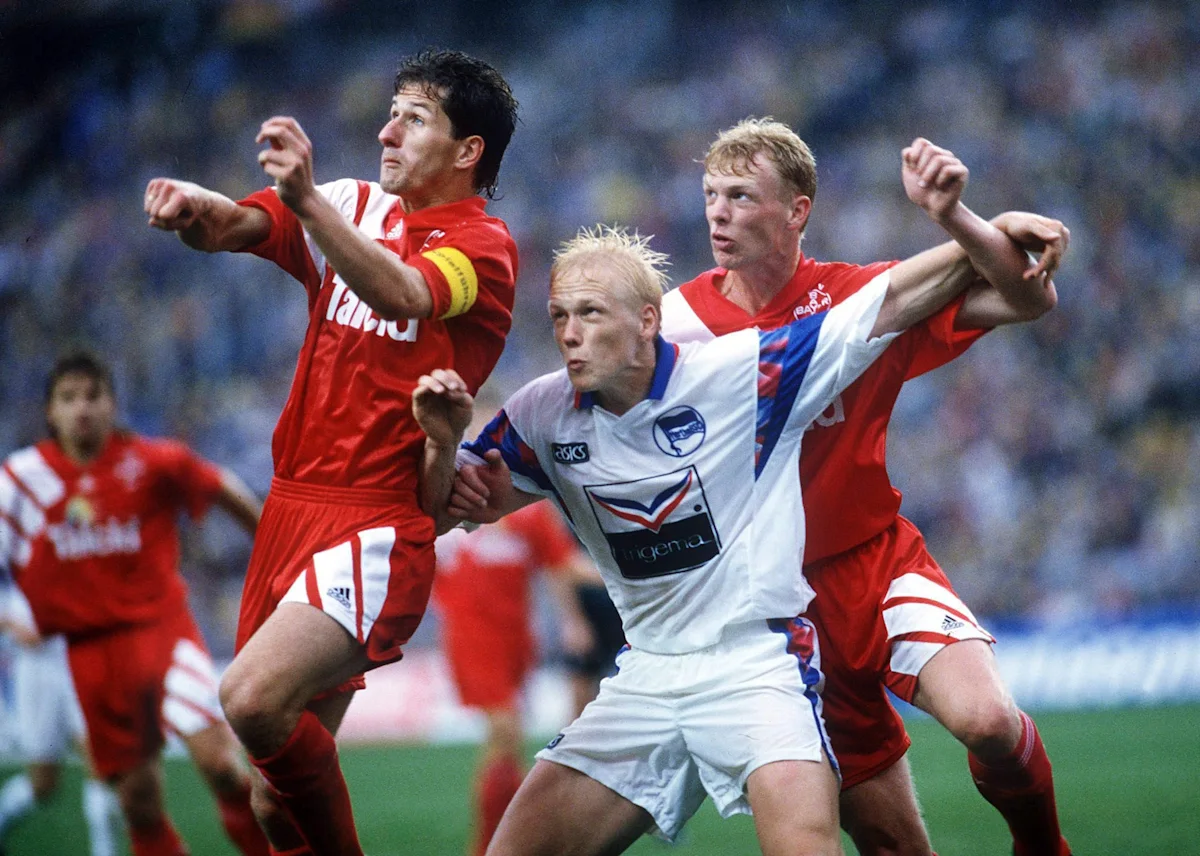
Headline: Hertha BSC’s Reserve Team Achieves Historic DFB Cup Final Run
In 1993, the streets of Berlin resonated with the chant: “Berlin, Berlin, we’re staying in Berlin.” This celebration marked a remarkable achievement for Hertha BSC, as the club’s reserve team reached the DFB Cup final, albeit under unusual circumstances. The first team had been eliminated in the round of 16 by Bayer 04 Leverkusen with a score of 1-0. So how did Hertha’s second team find themselves in the final? The answer lies in their incredible journey that remains unparalleled in German cup history.
Initially, the third-division squad, known as the Hertha Bubis, faced SGK Heidelberg in the second round after receiving a bye. In a surprising performance, the amateur team comprised of students, trainees, and schoolchildren won convincingly with a score of 3-0 against the Oberliga side. They followed up this success with another impressive victory, defeating VfB Leipzig 4-2. However, doubt lingered as the draw for the round of 16 approached, and few believed the Hertha Bubis could continue their fairy tale run.
On November 6, 1992, a young Carsten Ramelow—who would later represent Germany on the international stage—led the team into a match against the then-defending champions Hanover 96. In a stunning upset, Hertha’s reserves prevailed with a score of 4-3, prompting the rewrite of their anthem to “Berlin, Berlin, we’re staying in Berlin!” Following this thrilling victory, the Bubis faced off against Nürnberg and secured a 2-1 upset. Nürnberg’s star player, Dieter Eckstein, acknowledged, “The worst part is that Hertha deserved to go through,” commenting on the surprising outcome.
A ritual emerged during this magical run, as the team would dine at Pizzeria San Remo in Berlin-Wedding before each match, indulging in “spaghetti until they drop,” as noted by coach Jochem Ziegert. Loaded with energy from their meals, the Hertha Bubis overcame Chemnitz in the semifinals, which was managed by the renowned Hans Meyer.
In reflecting on the team’s journey, Hertha’s press spokesperson, Klaus-Dieter Vollrath, recited a heartfelt poem celebrating the Hertha Bubis: “You are not superhumans, no heroes, as the media currently like to report. You are Herthaner who love football.” Whether attributed to their pasta ritual, passion for football, or sheer luck, the Hertha BSC reserve team stunned many by reaching the cup final against Bayer 04 Leverkusen.
Despite a valiant effort in the final, the Hertha Bubis ultimately lost 1-0 to Leverkusen, with Ulf Kirsten scoring the decisive goal. Nevertheless, the loudest cheers in the Olympiastadion were reserved for Hertha’s reserves, who made history by becoming the first reserve team to reach the DFB Cup final—a record that remains untouched. Since 2008, regulations have allowed only one team per club to enter the competition.
In 2025, Arminia Bielefeld demonstrated that third-division teams could still reach the final, suggesting that while miracles do occur, none may replicate the extraordinary feat of the Hertha Bubis.
“Berlin, Berlin, we’re staying in Berlin,” echoed through the streets of the German capital in 1993. The Old Lady had finally made it to the DFB Cup final in its own stadium. Well, almost. How almost?
The first team had already been knocked out in the round of 16 by Bayer 04 Leverkusen (0:1). Okay, so how could Hertha still have been in the final? Simple enough: the second team — affectionately known as the Hertha Bubis — went on one of the most incredible runs in German cup history, one that remains unmatched to this day.
Advertisement
The third-division side certainly wasn’t thinking about a final yet when, after a bye, it faced SGK Heidelberg in the second round of the cup. But the amateur squad, made up of students, trainees, and schoolkids, beat the then-Oberliga side 3:0. The Bubis also cleared the next hurdle against VfB Leipzig (4:2) with flying colors. But after the draw for the round of 16, no one believed in another cup upset.
On November 6, 1992, the team led by young Carsten Ramelow — who would later become a Germany international — faced none other than defending champions Hannover 96. What can we say. Hertha’s reserves sensationally won 4:3 and promptly rewrote the final song “We’re going to Berlin” into “Berlin, Berlin, we’re staying in Berlin!” Was their subsequent quarterfinal opponent Nürnberg thrilled about that? Hertha knocked out the Club too with a 2:1 win. “The worst part is that Hertha deserved to go through,” admitted Nürnberg star and Germany international Dieter Eckstein after the cup exit. Maybe it was simply down to some kind of “miracle cure” the team had? A ritual that made cup dreams come true?
Before every match, the team would go eat at Pizzeria San Remo in Berlin-Wedding and, according to coach Jochem Ziegert, were allowed to enjoy “spaghetti until they drop.” Loaded with carbohydrates, the third-division side then swept aside Chemnitz in the semifinal — coached by legendary manager Hans Meyer.
Advertisement
“You are no superhumans, no heroes, as the media currently like to report. You are Herthaner who love football, from number one to number seven. From number eight all the way to number 25, known from Lake Constance and even in Gdańsk,” Hertha press spokesman Klaus-Dieter Vollrath then recited in a poem dedicated to the Hertha Bubis.
Whether it was the pasta, the love of football, or simply a lot of luck — it didn’t matter. Hertha BSC’s reserve team had pulled off a football miracle and reached the cup final against Bayer 04 Leverkusen. Hardly anyone talks about the final itself nowadays.
Once again, the Hertha Bubis delivered a strong performance, but in the end they had to accept a 0:1 defeat against Bayer’s star-studded squad. Ulf Kirsten scored the winner for Leverkusen, but the loudest cheers in the Olympiastadion were for Hertha’s reserves. The amateurs had made history.
Never before had a reserve team reached the DFB Cup final. And that will very likely remain the case forever. Since 2008, clubs have only been allowed to enter the competition with one team.
Advertisement
At least Arminia Bielefeld showed in 2025 that third-division teams can still make it to the final. So miracles do still happen. Just not one like the Hertha Bubis’.
This article was translated into English by Artificial Intelligence. You can read the original version in 🇩🇪 here.
[/gpt3]