
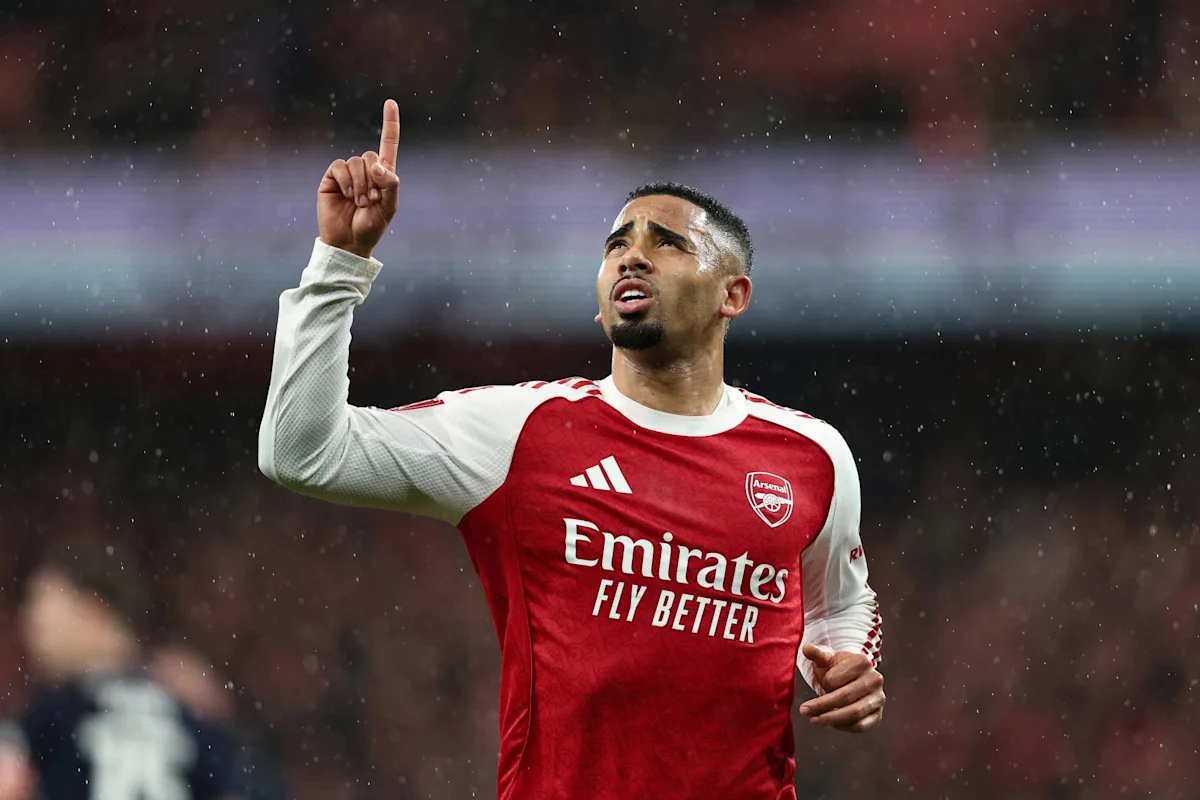
Barcelona to Sign Gabriel Jesus from Arsenal for €10 Million
Barcelona has confirmed the signing of Gabriel Jesus from Arsenal in a deal valued at approximately €10 million plus add-ons. The Brazilian forward is set to undergo a medical examination tomorrow, marking a significant step for the club after previous interest in Julian Alvarez was quashed by Atletico Madrid.
Despite initial excitement surrounding Alvarez, Barcelona’s shift in focus to Jesus may not be as drastic as it seems. The club does not intend to position Jesus as the long-term replacement for Robert Lewandowski; rather, they see him as a short-term solution while they search for a more permanent attacking option.
At 29 years old, Jesus finds himself in the latter stages of his Arsenal career, where his role has diminished under Mikel Arteta. This has made him available for a club like Barcelona at a relatively low price, despite his Premier League experience and tactical knowledge. The emphasis for the Catalans is not solely on securing the best center-forward but rather on finding value that aligns with their current needs.
The tactical capabilities of Jesus stand out for Barcelona. He is skilled at drawing defenders out of position and knows when to take charge of a play or defer to teammates. This quality could enhance the attacking prowess of Barcelona’s lineup, which includes young talents like Lamine Yamal and Raphinha.
Pep Guardiola has previously praised Jesus for his exceptional ability to execute a high press, dubbing him “the best in the world” at it. Guardiola noted that Jesus’ contribution to the team’s aggressive pressing style allowed his squad to maintain pressure on opponents, a sentiment that could resonate in Barcelona’s high defensive line.
Statistically, Jesus has proven his value in pressing situations. In his first season at Arsenal, he averaged 13 pressures in the final third per 90 minutes, and his defensive involvement distinguishes him from typical forwards.
Once Barcelona obtains the ball, Jesus’ importance lies in his ability to create opportunities for others, generating spaces and movement crucial for an attacking team. His previous coaches have emphasized his knack for not needing to score to be impactful during play.
However, potential concerns arise regarding Jesus’ injury history, which has seen him sidelined for significant periods. He missed 319 days post-surgery for a cruciate ligament tear in January 2025 and faced multiple injuries in subsequent seasons. Nevertheless, his on-field intensity has remained consistent when fit; he ranks impressively in pressure metrics among top forwards.
Barcelona appears poised to manage Jesus’s workload strategically, allowing him to thrive in short bursts rather than expecting him to be a regular starter week in and week out. This approach will mirror the situation when the club signed Pierre-Emerick Aubameyang from Arsenal under similar circumstances, who made a significant impact despite not being a long-term centerpiece.
Ultimately, while Jesus may not arrive as another Lewandowski, he could serve an essential purpose within the team. If he remains healthy and integrates well into the squad’s tactical plans, the €10 million investment might turn out to be a wise decision for Barcelona as they await the future attacking player they need.
There is a difference between a dream signing and a smart signing.
For much of the summer, Barcelona’s dream had a name: Julian Alvarez. They still do. However, Atletico Madrid have shut that door emphatically, publicly ruling out negotiations with the Catalans.
Advertisement
Then, almost without warning, another name appeared: Gabriel Jesus.
Barcelona have now reached an agreement to sign the Brazilian from Arsenal for a package worth around €10 million plus add-ons, with a medical scheduled for tomorrow.
Viewed purely through the lens of glamour, it feels like a considerable step-down from Alvarez. However, that may be the wrong lens to use.
A market opportunity, not a statement signing
Barcelona do not need to pretend that Gabriel Jesus is the long-term heir to Robert Lewandowski. That is not what this transfer is supposed to do.
The club still need to find the striker who can become the reference point of the attack for several seasons, but that player does not necessarily have to arrive right now, especially if the ideal target is unavailable.
Advertisement
Jesus represents something different. He is 29, has entered the latter stages of his Arsenal career and is no longer indispensable in Mikel Arteta’s project.
That combination of circumstances has suddenly made a player with Premier League pedigree, Champions League experience and an elite tactical education available at a relatively modest price.
Barcelona are not signing Jesus because he is the best centre-forward in world football. They are signing him because the price and the profile make sense.
Gabriel Jesus is all set to join Barcelona. (Photo by Alex Caparros/Getty Images)
At his best, Jesus is technically secure enough to receive between the lines, mobile enough to drag centre-backs into uncomfortable areas and intelligent enough to understand when he needs to be the hero and when he needs to leave the stage for someone else.
Advertisement
For a team containing Lamine Yamal, Raphinha and interiors constantly looking to attack space, that matters.
Sometimes, the most useful striker is the one who makes everyone around him more dangerous.
Barcelona fans should listen to Pep Guardiola
The strongest argument for Jesus’ signing may have already been made by the legendary Pep Guardiola.
When discussing the Brazilian’s ability to lead Manchester City’s pressure, Guardiola once called him “the best in the world” at providing the running required for an intense high press.
“Thanks to him we can stay high and be so aggressive,” the City manager explained.
Advertisement
Those words should resonate with Flick.
Barcelona’s high defensive line does not really begin with the defenders. It begins much further forward, with the attacking players suffocating the opposition with their high press.
Jesus understands that responsibility almost instinctively. The numbers support Guardiola’s assessment.
During his first Arsenal season, Opta recorded Jesus making 13 pressures in the final third per 90 minutes, with 2.7 resulting in a turnover. He also averaged 1.5 tackles per 90, unusually strong defensive involvement for a centre-forward.
In another Opta study covering the period from the start of 2021-22, Jesus averaged 0.8 possession regains in the final third per 90, the best rate among Premier League strikers with at least 4,000 minutes in the sample.
Advertisement
For Flick, this is bread and butter.
A striker who can make everyone else better
The more interesting part of Jesus’ game, however, might be what happens once Barcelona have the ball.
Arteta once said the Brazilian “creates uncertainty and spaces” and produces movement for those around him.

Jesus can be a good fit for Flick’s style of play. (Photo by Alex Pantling/Getty Images)
That is almost a description of the role Hansi Flick could build for him. Barça do not need Jesus to simply occupy the No. 9 position.
They need him to use his tactical intelligence and years of coaching under Guardiola and Arteta to manipulate spaces and create the platform for others to thrive.
Advertisement
Opta found that during the 2022-23 Premier League season, Jesus was involved in 5.4 attacking sequences ending in a shot per 90 minutes. In 2.4 of those sequences, he was involved without taking the eventual shot himself.
That statistic captures his value rather neatly. Jesus does not need to score the goal or provide the assist to influence an attacking move for his team.
Arteta has also called him phenomenal at winning the ball high and said simply: “He gives us a lot of flexibility.” He specifically pointed to Jesus’ capacity to operate as a No. 9, on either wing or alongside another striker.
Flick has shown repeatedly that he loves players who can play in multiple positions, and the Brazilian fits the bill.
Advertisement
The obvious elephant in the room
If Gabriel Jesus is as elite as the words of his managers and the numbers clearly suggest, then that begs the obvious question: why is he available for just €10 million this summer?
The answer lies in his medical record in recent seasons. He missed football for 319 days after a cruciate ligament tear he suffered in January 2025, costing him 46 matches.
Before that came a 100-day knee absence in 2022-23, while four separate injury spells during 2023-24 accounted for another 89 days out.
These numbers cannot be treated as a footnote.
This is where a very encouraging detail beneath that medical record emerges. When Jesus has been available, the injuries do not appear to have stripped away the off-ball intensity that made him so valuable to Guardiola and Arteta.
Advertisement
Data from the 2025-26 season place him in the 95th percentile for pressures and pressure regains among the relevant top-five league centre-forward sample, and in the 97th percentile for counter-pressures and counter-pressure regains.
Barcelona may have to manage the body, but the engine still appears willing.
The best version of this transfer therefore involves Barcelona accepting what Jesus is physically today, rather than expecting the player Manchester City signed almost a decade ago.
The Catalans need to manage his minutes. They cannot ask for 50 starts from him. They cannot build an entire season relying on his availability.

Workload management will be critical. (Photo by Justin Setterfield/Getty Images)
Advertisement
There will be nights when he starts as the No. 9, games when he is used from the left, and others when Flick might only need 25 intense minutes of pressing against tired defenders.
The objective should not be getting Jesus to feature every minute. It should be to get the most out of the minutes that he plays.
Could Jesus be Barcelona’s next Aubameyang?
This is where Barcelona have a precedent worth remembering.
Pierre-Emerick Aubameyang also arrived from Arsenal under unusual circumstances in February 2022.
He arrived with a lot of question marks, and Barça put in a lot of effort to sign him at a time when their financial situation was dire.
Advertisement
The Gabonese striker was never supposed to become Barcelona’s centre-forward for the next five years. He did not.
Instead, he scored 13 goals in 24 official appearances in barely four months, including twice in the 4-0 Clasico victory at the Santiago Bernabeu.
Barcelona then signed Lewandowski and sold Aubameyang to Chelsea.
Jesus could perform a more tactical, less goal-heavy version of the same job.
Arteta once said the Brazilian had “changed our world” after arriving at Arsenal. Barça do not need the 29-year-old to change their world. They need him to keep the seat warm as they continue to wait for the man who might.
Advertisement
If he stays fit, presses as he always has and gives Lamine, Raphinha and Barcelona’s midfielders better spaces to attack, this €10 million would look like a bargain in the coming months.
He does not have to be the next Lewandowski. For now, being the next Aubameyang might be more than enough.
Not all Barcelona fans may be particularly religious. However, under these circumstances, perhaps it is time they start believing in Jesus.
[/gpt3]