
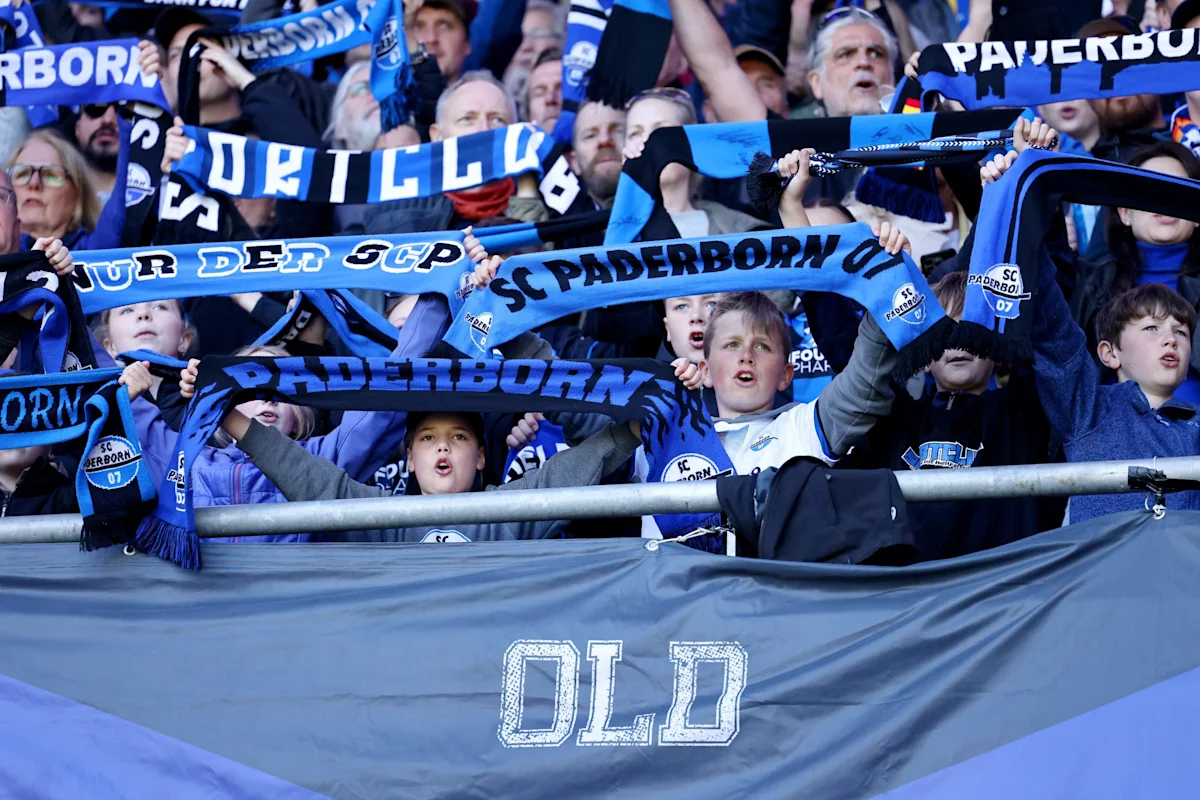
Headline: SC Paderborn and SV Elversberg: A Closer Look at Bundesliga’s Newest Promoted Teams
The Get German Football News Bundesliga Tactical Preview series for the upcoming 2026/27 season continues, now shifting focus to the two newly promoted teams: SC Paderborn and SV Elversberg. Intriguingly, both clubs exemplify the German phrase “Graue Maus,” which translates to “Grey Mouse.” This year, these two clubs have surfaced from relative obscurity into the Bundesliga limelight.
A “Graue Maus” club typically enters the Bundesliga unnoticed, only to vanish back into the lower leagues shortly after. As total Bundesliga newcomers, Elversberg aspires to fit this description, while Paderborn embodies the quintessential “Graue Maus.” First appearing during the 2014/15 season, Paderborn lasted only one season before disappearing again in 2019/20. Their time in the Bundesliga has been fleeting, characterized by their quick exit as soon as the spotlight shines on them.
Advertisement
Paderborn deserves a more detailed introduction. Their 2019/20 campaign, led by Steffen Baumgart, featured many familiar names from recent Bundesliga coverage. For those less acquainted, differentiating between Paderborn and Bielefeld may be challenging, but this column aims to clarify these distinctions, assisting fans in becoming well-versed in Bundesliga knowledge.
SC Paderborn 07
What sets Paderborn apart from other clubs? They are known for producing many Bundesliga coaches and managers. After Baumgart, Lukas Kwasniok, who had a short stint with Köln, and André Breitenreiter, formerly with Schalke and Hoffenheim, have coached the team. Paderborn has contributed to the development of two current Bundesliga sports executives: Markus Krösche at Eintracht Frankfurt and Fabian Wohlgemuth at VfB Stuttgart.
More reflections on Paderborn’s storied past lie ahead in this analysis. The club evokes various memories, such as Klaus Gjasula’s helmet and record number of yellow cards, Baumgart gaining “cult trainer status” during the “Geisterspiel Era,” and Gerrit Holtmann’s speed records. We’ll refrain from delving deeper into the past, as the current team presents its own array of intrigues. The question now is how long this iteration of the “Graue Maus” will remain in the top division.
Major Personnel Shifts in Paderborn
Estimated Summer Transfer Balance: -€450,000
Promotion to the Bundesliga has allowed Paderborn some financial leeway. Unlike previous occasions, they have chosen to invest some of this money. This summer, the club surprised many by spending €3 million on former Bayern Munich attacker Gabriel Vidovic. Historically, Paderborn is known as a “Steine anstatt Beine” club, but they are now committing funds beyond merely infrastructure and stadium enhancements. The decision to spend nearly €6 million this summer after a previous minimal expenditure of around €600,000 before their last Bundesliga season was indeed unexpected.
Advertisement
While the club is preserving its recruitment model, new players are arriving from lower leagues and development teams. Midfielders Oliver Batista Meier, Luka Duric, and Jano ter Horst have joined with transfer fees attached. The spending reflects a “normal bloodletting” process typical of newly-promoted sides, as top players often depart.
Paderborn lost three players without generating transfer income. Keeper Dennis Seimen has returned to Stuttgart after a successful loan. Center back Calvin Brackelmann moved on to Augsburg for free, and striking talent Filip Bilbija, who scored 15 goals during the promotion, transferred to Derby County without bringing in a fee. Paderborn is still working to fill the void left by Bilbija’s departure, although Mika Baur did generate over €5 million for the club.
On the surface, replacements have been secured across all positions. Noll appears as a successor to Seimen, while Ulrich is intended to bolster the midfield in the wake of Baur’s departure. Forward Vidovic, along with Batista Meier, Zeitler, and Millgramm, aim to compensate for the creativity lost with Bilbija’s exit, although their combined efforts will be needed to replicate the scoring output. Brackelmann’s departure presents a more significant challenge, particularly as injuries have severely impacted the defensive lineup this summer. Paderborn has indeed signed players, but whether they can fulfill the expectations set by their predecessors remains a significant question.
Pre-Season Notes from Paderborn
Paderborn kicked off their pre-season with an 18-0 victory over B-Kreisligist Blau-Weiß Ostenland, where eleven players scored. They followed this with a match against Hannover 96, where Ralf Kettemann deployed a variable 3-5-2 formation, resembling a 3-4-1-2 during possession. Hannover led initially through set-pieces, but Paderborn rallied to win 3-2, with Steffen Tigges and Stefano Marino finding the back of the net.
Advertisement
Jano ter Horst also showcased his attacking prowess with a remarkable equalizer against Japanese side Fagiano Okayama, scoring twice in a 3-1 win. However, they faced challenges against Magdeburg, losing 2-0 due to a lack of goals, stemming from a tiring training week.
Southampton emerged as their next opponent, and Jano ter Horst made a dramatic impact by scoring twice late in the game, leading to a come-from-behind 2-1 victory. Despite these successes, a concerning trend of conceding goals from set-pieces became apparent, with both Hannover and Southampton capitalizing on corners.
Advertisement
Paderborn rebounded with a 2-0 win over Osnabrück, with Mika Baur and 17-year-old Vigo Wernet contributing to the scoreline. Injuries were mounting, however, as Hoffmeier and Michel both faced prolonged absences. The summer ended with a tough encounter against Werder Bremen, highlighting Paderborn’s struggle to find consistency, ending in a 2-2 draw.
As the summer campaign unfolded, a clearer tactical picture emerged under Kettemann’s guidance, although injury issues complicated matters. The team demonstrated resilience and creativity, leaving much to be desired heading into the new season.
Winners from Camp, Paderborn
Steffen Tigges, CF
Remember Steffen Tigges? He transitioned from being overlooked at Dortmund to now having a significant impact at Paderborn, even scoring a hat trick against Köln. His vigor in the camp has been noteworthy, although it remains uncertain whether he will secure a starting spot in the upcoming matches.
Advertisement
Stefano Marino has also impressed during pre-season, notably scoring twice in the match against Hannover, offering a more dynamic option in the forward line. The competition between Tigges and Marino could lead to an engaging narrative as they each vie for a role in the starting eleven.
Oliver Batista Meier, ATTM
Batista Meier, a former Bayern Munich talent, has bounced around various teams before finding his place at Paderborn for just €400,000. He has shown great potential, contributing to the offense with a notable free kick goal against Köln and an assist in the comeback victory.
Advertisement
Albert Millgramm, LW/RW
Millgramm has emerged as a surprising talent during the pre-season, coming from the Magdeburg reserves. The 21-year-old has shown impressive skill in navigating defenses and could become a key player for Paderborn.
Advertisement
Jano ter Horst, RM
Ter Horst has established himself as a versatile asset, performing well in both attacking and defensive roles, contributing significantly during pre-season. His bicycle-kick equalizer against Southampton demonstrates his knack for key moments.
Tactical Scout, Paderborn
Ultimately, Kettemann’s tactical approach involves a flexible formation that adapts to match conditions, typically favoring a back three while also utilizing a range of attacking strategies. Paderborn averages over 53% possession, illustrating their intent to maintain control while transitioning effectively. However, defensive frailties remain a concern, especially with the high number of goals conceded from set-pieces.
Advertisement
Anticipation builds as Paderborn enters the next Bundesliga season, hoping to either sustain their position or repeat past patterns of quick relegation. Their emerging talents, coupled with a traditional underdog mentality, may provide some fascinating storylines.
Our Get German Football News Bundesliga Tactical Preview series ahead of the 2026/27 campaign rolls on. The current phase leads us to “series within a series” territory. It’s time to take a look at the German top flight’s two promoted teams: SC Paderborn and SV Elversberg. Interestingly enough, both these clubs – not to mention their colors – fall squarely into what Germans term the “Graue Maus” zone. Even those with rudimentary German knowledge can likely infer that “Graue Maus” translates to “Grey Mouse”. Two such curious mammalian Rodentia have popped up in the “Oberhaus Kitchen” this year.
A “Graue Maus” club, once again easily inferable, slinks into the Bundesliga kitchen from an inconspicuous hole in the wall. Just as soon as it appears, it usually absconds back into its old abode. Elversberg happen to be total Bundesliga newcomers, meaning that they are at best aspiring to be a “Graue Maus” club. Paderborn, on the other hand, qualify as the quintessential “Graue Maus” entity. The East Westphalians surfaced for the 2014/15 campaign, disappearing after just one season. The same thing happened in the 2019/20 campaign. The stay in the kitchen remained brief. On came the lights. Scampering away went the mouse.
Advertisement
Paderborn earns a slightly longer introductory section. The author obviously remembers the 2019/20 Steffen Baumgart-coached incarnation quite well. It featured plenty of names familiar to him as he was covering the Bundesliga beat that year. Others won’t be able to distinguish Paderborn from Bielefeld. Many will get Paderborn and Elversberg mixed up this season. That’s perfectly forgivable, but it needn’t occur. The author assures everyone interested in Bundesliga literacy that this column will get them fully up to speed on SCP. Stick with this series! You shall be a “Graue Maus” pro before you know it!
SC Paderborn 07
What distinguishes Paderborn from the other mice? Think of SCP as the club that produced loads of Bundesliga trainers and managers. The aforementioned Baumgart was actually succeeded by Köln’s ill-fated Lukas Kwasniok. Former Schalke, Hoffenheim, and Hannover trainer André Breitenreiter also led this team during its ill-fated 2014/15 stay in German football. On the managerial level, Paderborn produced two current Bundesliga chief personnel executives: Board Members for Sport Markus Krösche (Eintracht Frankfurt) and Fabian Wohlgemuth (VfB Stuttgart).
More trips down memory lane throughout the course of this analysis shall help more memories surface. Trust the chronicler. Paderborn associations remain deeply buried in your subconscious. They shall ascend all the way up to your prefrontal cortex, yielding “Oh yeah, that’s right!” moments. Remember Klaus Gjasula’s protective helmet and yellow card record? Oh yeah, that’s right! Paderborn! How about Baumgart earning his “cult trainer status” during the “Geisterspiel Era” when everyone could hear him gruffly shouting and whistling on the sidelines? Paderborn!
Advertisement
Gerrit Holtmann stoking everyone’s interest in speed records? Paderborn! Streli Mamba coming out of the 3. Liga to take the top flight by storm? Paderborn! Luca Kilian officially becoming the first Bundesliga player to test positive for COVID? You guessed it! Paderborn! We’ll unfortunately have to cut it off here. The current version of this team intrigues enough as it is. Moreover, we must tackle the question as to how long this particular “Graue Maus” plans on hanging around.
Major personnel shifts, Paderborn
Estimated Summer Transfer Balance = -€450,000
Bundesliga promotion has given Paderborn a little money to play with. Unlike in promotion years past, however, the East Westphalians have opted not to squirrel it away. Many of us were surprised to see them splurge €3m on former Bayern Munich attacker Gabriel Vidovic. This organization ordinarily qualifies as a “Steine anstatt Beine” club, though they do earmark investment money for more than the stadium and infrastructure. This club’s management famously prioritizes cultivating the youth department. In any event, it served as quite the surprise to watch a club that only spent a minuscule amount (maybe €600,000 or so) on players ahead of their last Bundesliga season rack up nearly €6m in financial outlays this summer.
Advertisement
Part of the familiar recruitment model remains intact. Plenty of new arrivals came from the 2. Bundesliga, 3. Liga, Regionalliga or Bundesliga reserve/development structures. Midfielders Oliver Batista Meier, Luka Duric, and Jano ter Horst still didn’t arrive on free transfers. Loan players such as Deniz Zeitler (Hoffenheim), Nahuel Noll (also Hoffenheim), and Laurin Ulrich (Stuttgart) also arrived with six-figure fees attached. The spending became necessary due to what one might term “normal bloodletting” from a promoted side. It’s not uncommon at all for a team like this to lose its best players.
In Paderborn’s case, three players left without generating transfer income. Promotion keeper Dennis Seimen returned to Stuttgart after an outstanding loan campaign. Starting center back Calvin Brackelmann joined Augsburg on a free. Most damagingly in attack, Filip Bilbija took his 15 promotion goals to Derby County without generating a fee. Bilbija’s versatility and capacity to turn chances into goals left a hole that Paderborn spent much of the summer trying to fill. At least Mika Baur brought €5m plus into the SCP coffers.
On paper, replacements have been procured at every position. Noll is the obvious attempt to reproduce Seimen. Ulrich has been earmarked specifically to help replace Baur in midfield. Further forward, Vidovic, Batista Meier, Zeitler and Millgramm furnish several different ways of replacing Bilbija’s creativity and directness without any one of them being asked to replicate 15 goals alone. Brackelmann’s departure looks harder to solve so neatly. The whole defensive line has been injury-ravaged this summer. Paderborn have replaced the names. Whether they’ve replaced what those names actually did is a rather more Bundesliga-sized question.
Notes from pre-season, Paderborn
Paderborn began the campaign with an 18-0 win over B-Kreisligist Blau-Weiß Ostenland. Paderborn scored through eleven different players. Ahem. Right. Moving right along. Hannover 96 came next and gave this scribbling notetaker some material. Ralf Kettemann began with a variable 3-5-2 that looked like a 3-4-1-2 in possession. Hannover twice led through dead ball situations. Steffen Tigges equalized once, while Stefano Marino eventually scored twice to complete a 3-2 comeback. Marino’s movements in the second test were mildly interesting in that he floated around a bit.
Advertisement
Japanese first-division side Fagiano Okayama was next. Kettemann tried out a 3-4-3 and 4-3-3. Cool. Sven Michel scored twice in a 3-1 win. Albert Millgramm came on and set up Sebastian Klaas for the third. Double cool. It wasn’t quite time to take the tactical notebook to the library white board just yet, particularly after a shortage of center backs against Magdeburg forced Kettemann to put the team in a 4-4-2. Honestly, hell with taking notes at that point. A game without any SCP goals (a 0-2 defeat) also produced barely enough ink to justify clicking the pen open.
Paderborn lorded over plenty of possession against FCM. Tigges came close to scoring twice. Millgramm struck the post against his former club. No reason to read too much into it. The Bundesliga outfit had just completed their heaviest training week while the 2. Bundesliga side had the benefit of two weeks of additional camp work behind them. American midfielder Santiago Castaneda had something about him. The author of a regular “Americans in the Bundesliga” column experienced a brief flashback to the old “Days of Yore”. That actually proved a little stressful.
Southampton seemingly came out of nowhere to serve as the next exhibition opponent. Paderborn eventually took the test because Jano ter Horst apparently decided conventional finishing was overrated. The nominal wing-back — recently pressed into emergency service at center-back — equalized in the 87th minute with a bicycle kick, then scored again in stoppage time. Triple cool. Tactically, Kettemann remained without many of his regular center backs. We thus witnessed another back three. No time for “quadruple cool” just yet.
A little bit of an unwelcome trend began manifesting itself at this point. Southampton’s goal came off a poorly defended corner. Hannover had already scored twice from dead balls. Magdeburg added another from a free kick. Southampton joined the list. One can perhaps forgive a preseason set-piece problem when half the available center backs are stuck in the treatment room, but Bundesliga teams will notice all the same.
Advertisement
The 2-0 win at Osnabrück returned Paderborn closer to the preferred structure. Against the ball they formed a 5-2-3, while Castaneda dropped clearly in front of the defensive line to conduct possession. Mika Baur could then push higher into the offensive half-space. The football largely worked. Baur eventually scored just before halftime. The second came from 17-year-old Vigo Wernet, an Osnabrück-born Paderborn U19 player drafted into the squad because of injuries and listed on the team sheet with an “F” for “Freundschaftsspielberechtigter.”
The friendship-match-authorized teenager naturally scored.
Now it’s “quadruple” cool time!
The injury list was becoming significantly less humorous. Hoffmeier came off early with a calf problem and Michel suffered a groin/thigh injury expected to cost him several weeks. Götze, Awortwie-Grant, Nick Bätzner and Timur Gayret were already unavailable. A 140-minute marathon against Werder Bremen changed little about the central footballing question. Paderborn created the better opportunities for long periods. Millgramm and Batista Meier threatened early. Marino struck the bar.
Advertisement
Seventy minutes passed without a goal. Then four tallies arrived once most of the reserves were on and there was no one left to care. The author happened to be one of these stubborn souls, every bit as stubborn as East Westphalians themselves. No entertainment in an extended scrimmage. No eyeballs either. Ruben Müller and Lasse Eickel scored in the final 2-2 draw. Good for them. The final doubleheader against Köln was where the real lessons would lie anyway.
The first half was poor. Paderborn defended deep, struggled badly to connect defense with attack, and allowed Köln to control proceedings. Ragnar Ache deservedly made it 1-0. Then halftime happened. Apparently Köln should have asked whether the second half could be called off. Batista Meier curled home a free kick. Curda crossed for Castaneda to head in the second. Batista Meier then produced a gorgeous first touch before supplying Curda for 3-1. Said El Mala’s late penalty made the final score 3-2.
The second Paderborn team then went 1-3 down to Köln’s reserves and won 4-3. Steffen Tigges scored three times against his former club. Felix Götze supplied the other while appearing in a center-forward position late. Across the two matches, Paderborn therefore turned 0-1 into 3-1 and 1-3 into 4-3. Note to Köln: halftime is apparently when Paderborn opt to start playing.
The summer as a whole leaves us with a fairly coherent tactical picture despite the endless formation changes. Kettemann still appears most comfortable beginning from a back three, but the exact numbers around it are highly fluid. Paderborn have defended in a 5-2-3, built through 3-5-2 and 3-4-2-1 structures, switched into 3-4-3 shapes and used both 4-4-2 and 4-3-3 when personnel or the exercise demanded it.
Advertisement
And then there are the dead balls. Too many preseason goals against came from corners and free kicks, though central defensive injuries obviously complicated the work. Still, there was plenty to like. Importantly, the promoted side rarely looked frightened of playing its football. Whether the Bundesliga will permit them quite so many chances to finish writing the final sentence is another question.
Winners from camp, Paderborn
Steffen Tigges, CF
Now the promised stroll down memory lane. Remember this odd Edin Terzic BVB call-up? Recall how he then moved to Köln and routinely failed to make Tim Schultz’s bench squad toward the end of the 2023/24 relegation campaign? The now 28-year-old is back with a vengeance, scoring a hat trick against the club that didn’t give him much of a chance to help with promotion or relegation and offloaded him for a paltry fee last August. Revenge surely tastes sweeter than a carnival treat for this Osnabrück native. In general, it’s also been a good camp for him. Whether that translates into a starting role remains less certain. We’re defining “winner” rather broadly here.
Advertisement
Stefano Marino arguably enters competitive play with the stronger claim. The 22-year-old struck twice against Hannover and led the line for Kettemann’s stronger XI in the final Köln doubleheader. Marino also offers a more mobile interpretation of the position, regularly dropping toward the No. 10 space to link play and help drive attacks from deeper areas. Tigges remains the more physical option, bringing aerial presence, hold-up play and considerably more Bundesliga experience, but his excellent finish to preseason has probably earned him a genuine battle rather than settled the hierarchy. An interesting story still brews.
Oliver Batista Meier, ATTM
Remember this former Bayern Munich talent? What has the Kaiserslautern native been up to? Batista Meier left Bayern’s development structure after a loan spell with Heerenveen, moved to Dynamo Dresden, and eventually rediscovered his trajectory during an excellent loan spell at Verl. Stops with Grasshopper Zürich, another return to Dresden, and SSV Ulm followed before he landed at Preußen Münster last season. The 25-year-old finally produced a solid second-tier campaign there, registering six goals and four assists in 30 league appearances.
Now Paderborn have picked him up for just €400,000, and the former Bayern prospect has looked like a natural fit for Kettemann’s rotating attacking structures. Batista Meier can operate as a No. 10 or second striker. His camp finished particularly well. After threatening against Werder, he scored a lovely free kick in the stronger team’s 3-2 comeback against Köln before producing the touch and pass that released Laurin Curda for the decisive third. Paderborn may finally have found the setting in which the once highly regarded Bayern talent can turn all those accumulated career detours into something more stable.
Advertisement
Albert Millgramm, LW/RW
Someone no one remembers at last. Some story this! The author has already taken to calling him Albert “Mini-Jobber” Millgramm! The 21-year-old Berlin native was still working a couple of afternoon shifts per week at Rewe while his professional career was beginning to take shape. A few months later, he was preparing for a Bundesliga season. Millgramm arrived at this club from…wait for it…the Magdeburg reserves. Thus far, his professional footballing experience is limited to a pair of brief relief deployments in the 2. Bundesliga . He’s now become one of the revelations of Kettemann’s camp.
Kettemann has been almost giddy about him, praising not merely the dribbling but Millgramm’s judgement over when to take opponents on, his ability to beat one or even two defenders, and his extraordinary running output from penalty area to penalty area. Millgramm hardly looks built for traditional Bundesliga trench warfare. Kettemann considers that a feature rather than a bug. One can hardly wait to get to know Kettemann’s “little giant” better. It also constitutes great news that one can still get a decent Mini-Job in the Bundesrepublik. A cool footballer and an uplifting social welfare program.
The former supermarket mini-jobber might be picking up some very different regular shifts soon.
Advertisement
Jano ter Horst, RM
This player captures the “pre-season entertainment” award. Ter Horst, a €200,000 arrival from Preußen Münster, spent much of camp being shuffled into emergency service in the back three as injuries mounted. He scored an 87th-minute bicycle-kick equalizer against Southampton before scoring again in stoppage time to complete a 2-1 win. Ter Horst’s usefulness went well beyond the acrobatics: his ability to cover the right flank and central defense gave Kettemann badly needed flexibility, and he retained his place in the back three with the stronger XI for the final Köln test. For a player who arrived looking like inexpensive utility depth, that’s been quite the introduction.
Santiago Castaneda, CM
Bundesliga beat reporters know this 21-year-old from a seemingly endless stream of transfer rumors linking him with a move to the top flight. Funny how promotion eventually solved that problem for him. Castaneda now looks like one of the safest names on Kettemann’s team sheet and, more importantly, the structural constant around which all those shifting formations revolve. He sits underneath the rotations, organizes possession and provides the insurance when the wing-backs push on. Castaneda capped an excellent summer by heading home Curda’s cross in the comeback win over Köln. After all those rumors, the Bundesliga finally gets him without anybody having to buy him.
Advertisement
Laurin Curda, RB
No need to get cute here. Laurin Curda is one of Paderborn’s surest Bundesliga starters. The 24-year-old emerged as one of the outstanding performers of the promotion campaign, winning a remarkable 13.3 duels per match, posting the best one-on-one numbers in the 2. Bundesliga, taking more shots than any teammate and, for good measure, scoring the decisive playoff goal against Wolfsburg. The final Köln test supplied a neat summary of his value. Whether one calls him a right-back, wing-back or simply the man occupying the entire right corridor depends on which of Kettemann’s shapes is currently on the board. The one thing that doesn’t seem to change is Curda being there.
The author still likes the term “rail player”.
Losers from camp, Paderborn
Sven Michel, CF
Remember Michel? The only surviving member from the 2019/20 Bundesliga roster. “Survivor” actually isn’t the proper word. Michel returned to Paderborn following stints at Union Berlin and Augsburg, stints that qualify as forgettable unfortunately. Michel will be wanting to forget this camp. A groin/thigh problem suffered against Osnabrück subsequently ruled him out for several weeks. That is especially unfortunate because Michel’s role was never supposed to depend on winning a 34-match starting job. The oldest Paderborner attacker enters the season trying to get healthy while Marino and Tigges make rather loud cases for the minutes that might otherwise have been his.
Advertisement
Marcel Hoffmeier, CB
Another pure availability setback. A particularly frustrating one at that. Hoffmeier had already lost almost the entirety of last season after tearing his ACL in August 2025, having previously established himself as arguably Paderborn’s best ball-playing defender. His passing, two-footedness and willingness to carry out of the back line made him the most natural internal candidate to replace Calvin Brackelmann, and he had at least returned to the squad by the promotion playoffs. Then, just as he was trying to rebuild rhythm and stake a claim for a Bundesliga starting role, a calf problem interrupted his preseason again.
Nyamekye Awortwie-Grant, CB
The former Energie Cottbus defender was supposed to add physicality and competition on the right side of the back three, but a preseason injury was expected to sideline him for several weeks. Given how much defensive experimentation injuries already forced upon Kettemann, Awortwie-Grant lost valuable time during the period in which roles were being claimed. That proved particularly costly as Tjark Scheller strengthened his position and Jano ter Horst turned emergency duty in central defense into a surprisingly convincing audition. The 25-year-old begins the Bundesliga campaign playing catch-up.
Advertisement
Felix Götze, CB
This actually isn’t a fair shake at all. The author merely wished to point out that famous German footballers must be legally mandated to have younger brothers named Felix. It applies to Toni Kroos as well. Felix Götze has done rather more than simply qualify as Mario’s younger sibling. His summer was nevertheless complicated by the adductor problems that had already affected him at the end of the promotion campaign. The late-preseason hierarchy presently appears to favor Tjark Scheller in the middle of the back three.
The skipper would obviously prefer to start, but will have to make do with being the late emergency striker for now.
Tactical Scout, Paderborn
And now the results from the above-mentioned trip to the library’s white board. The author feels a kinship with those tasked with drawing Paderborn’s formation graphic this season. Luckily, the white board came with an eraser. Ahem. Kettemann broadly prefers to begin from a back three. His promotion side often used a 3-4-3. Summer projections moved toward a 3-5-2, 3-4-1-2 or 3-4-2-1. Preseason then produced all three, plus a 4-3-3 and 4-4-2. One also witnessed plenty of in-match adjustments.
Advertisement
Kettemann views formations as starting positions. A pass triggers a movement; the movement changes the assignment; the next player reacts. Promotion was built upon ball possession and constant positional rotations. Paderborn averaged around 53 percent possession, generated roughly 15 attempts per match and produced the second-most aggressive PPDA number in the 2. Bundesliga. They were a possession team, yes, but a significantly more physical and direct one than that description sometimes implies.
After all the summer experimentation, one positional constant has emerged. Santiago Castaneda stays put. When injuries left Kettemann desperately short of center-backs against Magdeburg, the coach could easily have moved his 21-year-old holding midfielder into defense. He refused. Kettemann wanted Castaneda collecting repetitions and recycling possession in the exact role planned for him in the Bundesliga. Everything else can dance around him.
In a standard back-three interpretation, the outside defenders have permission to step into possession. Curda and Obermair supply width or move into higher lanes. Central midfielders rotate ahead of Castaneda. The attacking midfielders can narrow into the half-spaces. Without the ball, the structure often drops into a 5-2-3, but not necessarily a passive one: the first line wants to press while the midfield advances behind it and Castaneda protects the center. Against Osnabrück, this was particularly clear.
As for the XI, the final Köln test matters most because Kettemann himself subsequently said those starters had a slight advantage.
Advertisement
Lineup–SCP (PROJECTED)
Call it a 5-2-3, a 6-1-2, or even a 7-2-1. As one can easily tell, it’s a back-axis-based rotation engine meant to emphasize safety in numbers while generating plenty of potential on the counter. One does divine that Duric may be working as something of an eventual placeholder for either Vidovic or Ulrich. Likewise, Kettemann will wish to get Zeitler and ultimately Vidovic more regularly involved in the attack. The advanced midfield position remains highly relevant either way.
That player, presently Duric, can work alongside Castañeda, drop during buildup and then advance when the next rotation begins. Obermair (or his position) might be the most useful shape-shifter of all. He can remain wide as a wing-back in a back-three formation, then move inside when Paderborn build through a four. We already saw precisely that against Okayama. The attack isn’t totally forgotten or unexciting, just not very crowded in this set-up.
Advertisement
Paderborn’s central summer problem wasn’t really possessing the ball. Anyone with almost zero football knowledge can see how the above graphic is designed to get opponents either chasing endless bow arcs or getting caught out on short-pass link-up play. It almost looks like something Peter Bosz would think up. This is precisely the kind of “underdog” football one can look forward to all season. Sometimes, it will get the job done.
It doesn’t feel as many Paderborn matches witnessed this will be remembered long term. Some of the more interesting stories this club furnishes will also, sadly, be pushed to the back burner. Treat the Köln comebacks for what they were worth: semi-competitive affairs. There will be periods in which Paderborn cannot impose themselves. Köln proved that in stretches across both matches.
Paderborn’s system is demonstrably capable of doing more than crowding the back to break up play. As we saw in the pre-season scout, more intricate goals can be manufactured. Whether or not they will be against Bundesliga opposition remains a mystery, particularly considering the fact that marquee signing Gabriel Vidovic only just arrived and wasn’t present for the entirety of pre-season.
Paderborn can execute their mechanisms well and still go down because Bundesliga opponents will give them fewer chances, punish their buildup more severely, expose the set-piece weakness, and possess better individual problem-solvers. The “Graue Maus” likely appears to be on its way back to its hovel sooner rather than later. Not much anyone can do about it.
Except pay tribute by remembering, that is.
Let some of the stories live on within you.
[/gpt3]