Celtic Faces Challenges Despite Leading the Premiership
Celtic currently holds the top position in the Scottish Premiership with 28 points from 12 games. However, this standing overshadows the team’s struggles, as they have secured only three victories in their last ten matches across all competitions. Their latest setback came with a 2-0 loss to Falkirk on November 1.
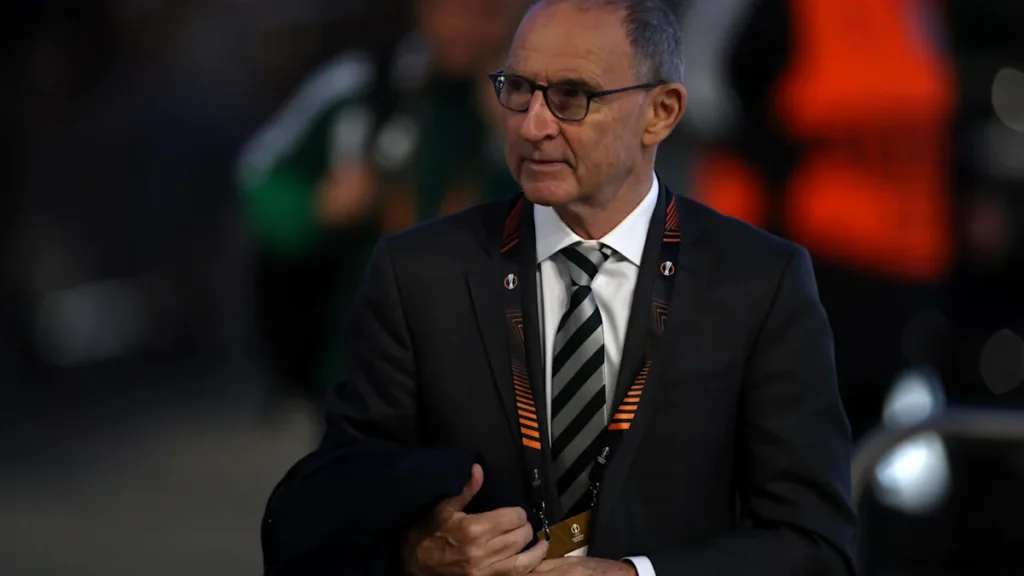
The team’s challenges began during their European campaign. A significant aggregate defeat to LASK diminished their hopes in the Champions League, forcing them into the Europa League, where they have faced further disappointment, losing to Ferencváros (1-3), Benfica (1-4), and Celta Vigo (1-2), placing them 35th out of 36 teams. Additionally, they were eliminated from the League Cup quarter-finals by Rangers, who won 3-0 in September. Critics have labeled the defending as chaotic, and have termed manager Martin O’Neill’s team selection process as unpredictable. A critical match against Beşiktaş is on the horizon.
The statistics illustrate the mounting concerns surrounding the team. Celtic has conceded 17 goals in their last nine matches and managed to keep just one clean sheet in their past seven games. Cameron Carter-Vickers, typically a reliable defender, has committed costly errors, leaving the back line looking disorganized.
Goalkeeping has also emerged as a problem area. O’Neill has alternated between Viljami Sinisalo and Sam Johnstone, but neither goalkeeper has provided the stability the team needs. In midfield, Callum McGregor has struggled without adequate support, and Benfica capitalized on these gaps with swift counter-attacks.
Board Promises January Backing
According to a report by The Glasgow Times, Celtic’s management is keen to see January arrive quickly. During a Q&A session with 120 fans at the Greenock Celtic Supporters’ Club, president Joe Clark and chief executive Michael Nicholson acknowledged the necessity of strengthening the squad and confirmed that a designated budget for January is set aside.
Clark shared on Clyde 1 Superscoreboard that Nicholson is eager for the January transfer window to open. He mentioned that a four-member scouting panel identifies suitable players for O’Neill, who ultimately makes the final selections. Clark noted that during the discussion of how the two summer centre forwards were acquired, it was revealed that the decisions largely depended on player availability.
O’Neill has expressed doubts regarding the board’s objectives of league dominance and Champions League success, while he himself is under a one-year contract with an option for extension.
Should Celtic Make Defence Their January Priority?
For Celtic, the most pressing need lies in bolstering their defense. A strong centre-back should be the top priority, as errors in this area have directly influenced match outcomes. Both Carter-Vickers and Scales require either a partner or a competitor who can organize the defensive line.
Next in line is the goalkeeper position. The club aims to move on from their 33-year-old keeper and put an end to the rotation between Sinisalo and Johnstone; however, acquiring a top-tier replacement will only be beneficial if the defense in front stabilizes.
A holding midfielder would also provide substantial value, as a protective screen in front of the back four would help ease McGregor’s burden. With O’Neill holding a one-year deal and expressing skepticism about the board’s targets, the presence of a panel offering recommendations could lead to short-term signings that lack a long-term strategy. The previous summer’s recruitment saw the addition of two centre forwards while overlooking critical defensive needs. Until the back four can stop conceding goals, Celtic’s lead atop the league will remain precarious.