Headline: Women’s Super League Attendance Growth Slows After Euro 2022 Triumph
Average attendances for the Women’s Super League (WSL) experienced a remarkable increase of 192% in the aftermath of the Lionesses’ victory at Euro 2022. However, the pace of this growth has since plateaued, as indicated by a 2026 report from YouGov and architecture firm Populous. The median crowd has only increased by 166 fans, rising from 3,070 in the 2023-24 season to 3,236 in the 2025-26 season.
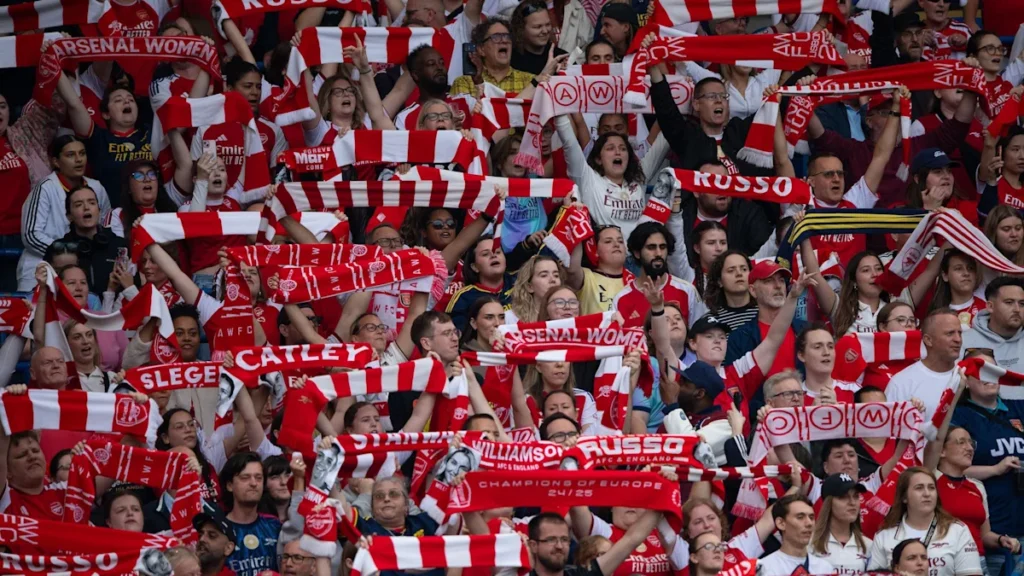
Attendance at some key matchups has notably declined. For instance, the Arsenal versus Manchester United game at the Emirates Stadium saw attendance drop from 46,603 in the 2024-25 season to just 29,853 this year. Similarly, the Chelsea versus Arsenal match fell from 34,302 to 19,349 during the same timeframe. Arsenal, who boasted an average crowd of 34,000 at the Emirates last season—nearly four times that of Chelsea and higher than eight Premier League clubs—saw only 19,546 spectators at their October match against Birmingham City.
While there are positive developments, such as a sold-out away allocation of 4,000 tickets for Arsenal at Tottenham, the overall trend reveals a concerning decline in attendance at several matches. In October, the Manchester United versus Manchester City fixture at Leigh Village attracted a crowd of 5,361, compared to 24,983 fans at Old Trafford for the same match in March 2026.
The report raises questions about the causes behind the downturn, considering factors like marketing strategies, scheduling, matchday experiences, stadium designs, and the overall product quality.
Families vs. Loyal Fans: Can Women’s Football Attract Both?
When the report surveyed fans about what enhanced their enjoyment of women’s football matches, a “welcoming, family-friendly environment” received higher priority than team success or match quality for both existing and prospective supporters. The research revealed that only 15% of fans who attended a women’s match in the last five years do so monthly, while 43% identified themselves as casual followers, engaging more during major international tournaments than with domestic events. Only 10% claimed to be dedicated supporters.
These findings indicate a potential “matchday experience gap” within the domestic league, which some clubs are attempting to mitigate with family-oriented initiatives. Nonetheless, some fans expressed frustration over the overwhelming family-friendly marketing approach. A Tottenham supporter named Dakota commented, “I’m almost glad I can’t make it,” in response to a Spurs’ promotional post for the north London derby that advertised DJs, drinks, face painting, and other activities. Dakota argued that “we’ll never grow as a women’s club if the entire marketing is for kids and families rather than young adults with disposable income.” Another Spurs fan, Rosewen, echoed these sentiments, stating, “They can offer attractions to tempt people through the gates, but we’re losing sight of football and the importance of winning.”
Similarly, regarding the recent low turnout for the north London derby, one fan noted on social media, “While attendances across the WSL are down, this is not specific to Spurs. The club has relied on a one-dimensional family-friendly marketing strategy for years.” Brighton also promoted a family-centric event for their October match against West Ham, featuring a “Saturday Spooktacular” with activities such as haunted house tours and face painting taking center stage in their advertising.
Scheduling Challenges Impacting Crowd Numbers
The long-standing 3 PM Saturday kickoff time for Premier League matches complicates the WSL’s effort to establish a consistent routine for spectators, as the league varies its match timings. Inconsistent scheduling emerged as a chronic concern when BBC Sport sought to understand decreasing attendance figures. Arsenal fan Sue shared her experience: “There have been constant changes in kick-off timings and travel issues. I had six sets of tickets for Arsenal games last season, yet three matches were rescheduled, and for another three, bus replacements were necessary for trains.”
Sue continued, “These factors deter families. The WSL needs regular time slots to cultivate consistent fans.” Victoria concurred, citing, “The scheduling is dreadful. Sticking to Sunday afternoons where possible would alleviate frustrations with last-minute timing adjustments. Consistency is key.” The attendance for the women’s match in the October north London derby stood at 13,719, significantly lower than the 28,852 who attended the same fixture in 2024.
Understanding the Audience
Efforts to broaden the audience for women’s football have occasionally missed the mark. A TikTok channel launched by Sky Sports called Halo was shut down after just 48 hours following backlash that its pink branding and lifestyle-content felt condescending. Similar criticisms emerged during a Women’s League Cup draw hosted by influencer GK Barry. Critiques also followed Disney+’s Women’s Champions League coverage for including gimmicks such as a dog and vegetable platter. These situations underscore the ongoing challenge for broadcasters in enticing new viewers without alienating their existing fan base.
Product Competitiveness Concerns
A fan addressed the issue of attendance by pointing out that the lack of intense competition makes WSL games less enticing: “The context of attendance matters. If a match has no stakes, fewer people will show up compared to a tightly contested game. The Premier League feels more competitive due to its abundance of European qualification spots and relegation stakes, whereas the WSL currently lacks the same level of urgency in many matches.” This sentiment was echoed by Michele Kang, owner of the London City Lionesses, who noted at the World Football Summit in Madrid that competitive balance in leagues like Spain, France, and Germany far surpasses WSL standards.
Stadium Design Impacts Attendance
The WSL showcases a diverse array of home venues, varying from Manchester United’s 12,000-seater Leigh Sports Village and Brighton’s 6,134-capacity Broadfield Stadium to Arsenal’s 60,000-seat Emirates Stadium and the 40,000-capacity grounds of Chelsea and Everton. Larger stadiums present growth opportunities but can often appear empty, while smaller venues can create a more vibrant atmosphere, albeit with limited capacity.
A supporter shared that hosting WSL games at large stadiums allowed families access to famous venues at lower costs, but now that many have visited these iconic grounds, attendance dipped as the novelty faded. Brighton is looking to remedy this with plans for the continent’s first dedicated women’s football stadium, a £75-80 million project designed to accommodate 10,000 fans alongside the Amex. The club emphasizes that this new venue will serve as a permanent and purpose-built home for the women’s team, aiming to deliver an environment tailored specifically for families and first-time attendees.
As the WSL continues to evolve four years after the Euro 2022 success, the focus now shifts from merely attracting interest to transforming casual visitors into dedicated supporters, fostering a stronger sense of community. Some fans advocate that clubs can effectively cater to various demographics on matchdays. One fan noted, “Matchdays don’t have to be exclusive. London City had a designated children’s fan zone before last weekend’s match against Everton while also hosting an Oktoberfest aimed at older attendees.” Former England international Ellen White echoed this sentiment, saying, “Women’s football is inclusive. We can leverage diverse marketing strategies to expand our audience and fill the stadiums.”
Women’s football remains in a state of growth, with pathways leading to enhanced competitiveness among players expected to rise alongside the sport’s increasing mainstream exposure. The first generation of fans raised on accessible women’s football will likely help cultivate a robust fan culture, ultimately translating into higher attendance.