
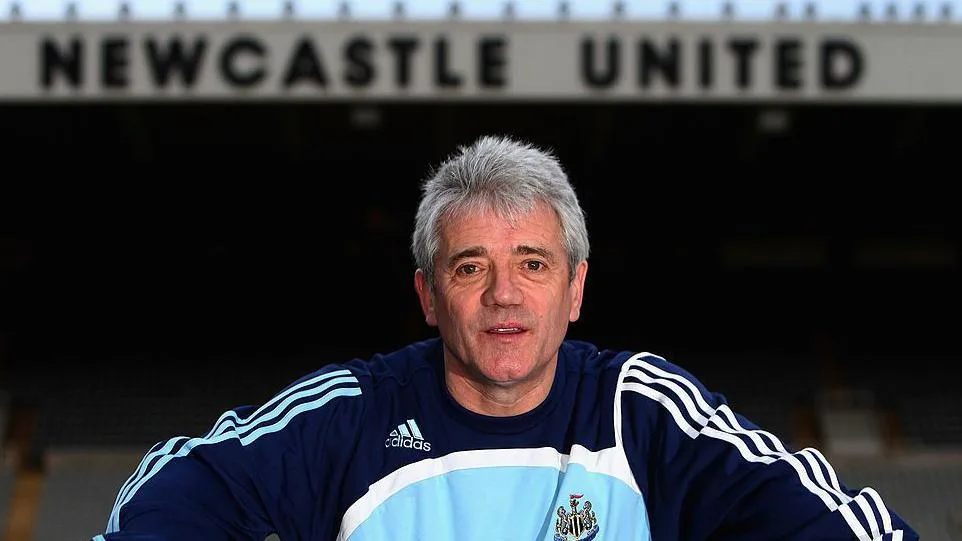
Kevin Keegan, who has died aged 75, was one of football’s most charismatic and influential figures, navigating a career that spanned from superstar player to elite manager.
While many may recall his troubled tenure as England manager, he is more fondly remembered as a world-class player at Liverpool and Hamburg, where he captained England, before becoming a beloved figure at Southampton and Newcastle United.
Advertisement
Keegan rejuvenated Newcastle’s fortunes as a player and captivated fans as a manager, ensuring the club’s return to the top flight and crafting an entertaining team that often challenged for elite titles, even if they did not clinch one.
His time at Newcastle is also marked by his memorable “I will love it if we beat them” remark directed at Manchester United’s Sir Alex Ferguson during the 1995-96 title race, highlighting the unwavering affection the Geordie supporters had for Keegan through all ups and downs.
Keegan embodied a career that mirrored his personality: immensely talented, honest, hardworking, and emotional. Despite the highs and lows, his positivity and vibrancy made him a cherished figure in football.
Advertisement
From Anfield dustbin to superstardom
Born in Armthorpe near Doncaster, Keegan caught the eye of Liverpool manager Bill Shankly while playing over 100 games for Scunthorpe United, eventually being signed for £35,000 in 1971.
Initially viewed by some as merely a diligent player, it quickly became evident that he was much more. Shankly assured Keegan shortly after his arrival at Liverpool that he would play for England.
Advertisement
The new signing made an immediate impact by scoring on his Liverpool debut against Nottingham Forest at Anfield, marking the beginning of an extraordinary partnership with John Toshack.
Keegan scored twice in Liverpool’s 1974 FA Cup final win against Newcastle at Wembley, but was sent off there three months later in the Charity Shield [Getty Images]
They developed a near-telepathic understanding, even showcased on television, where they humorously attempted to guess the color and shape of cards held by the other.
Keegan became the focal point of Shankly’s second great team, securing three league titles, a European Cup, an FA Cup, and two UEFA Cups under the guidance of Shankly, and later Bob Paisley.
His contributions were pivotal, scoring twice in the 1974 FA Cup final against Newcastle. This was followed by a controversial incident in the Charity Shield where he was sent off alongside Leeds player’s Billy Bremner.
Keegan was outstanding as Liverpool won the European Cup in his final game for the club by beating Borussia Monchengladbach in Rome [Getty Images]
In the UEFA Cup final against Borussia Monchengladbach, Keegan scored twice in the first leg at Anfield, which had to be replayed due to a thunderstorm disrupting the original match. Liverpool won 3-2 on aggregate, further validating Keegan’s role at the club.
Off the field, Keegan’s competitive spirit shone through when he participated in the BBC TV’s Superstars series, although a bicycle accident caused him injuries.
Advertisement
He also ventured into music, releasing a single in 1972 titled “It Ain’t Easy.”
The leaving of Liverpool
With ambition to explore new opportunities, Keegan announced during the 1976-77 season that he would depart Liverpool at the end of the campaign, a decision that drew criticism from some fans but was ultimately honest to his character.
He went out on a high note, running circles around the great German defender Berti Vogts in Liverpool’s victorious European Cup final against Borussia Monchengladbach.
Advertisement
Keegan left Liverpool having netted 100 goals in 323 appearances, with speculation swirling about a possible move to Real Madrid, but his actual next step was a move to Hamburg. He enjoyed success there, winning the Bundesliga in 1978-79, but later faced disappointment in the European Cup final against Nottingham Forest.
He solidified his status as a world-class player, winning the Ballon d’Or in both 1978 and 1979 while becoming popular in Germany for his down-to-earth demeanor and commitment to the team.
Advertisement
This catapulted Keegan’s fame internationally, positioning him as one of the sport’s most marketable figures, featured in advertisements globally and pioneering a trend of athlete endorsements.
Keegan also attempted another musical project with “Head Over Heels In Love,” which reached number 10 in the German charts.
Returning to England in 1980, he made a surprising transfer to Southampton, where he continued to show his skills, winning the PFA Player of the Year award in 1982.
Advertisement
Although he did not win trophies at Southampton, he remained a key figure in Lawrie McMenemy’s squad, featuring alongside stars such as Alan Ball and Mike Channon.
An unfulfilled England playing career
Keegan, seen here with his former Liverpool team-mates Ray Clemence and Phil Thompson, was captain of England’s 1982 World Cup squad but was only fit enough to feature as a substitute in their final game, so full-back Mick Mills took the armband [Getty Images]
Keegan earned 63 caps for England over nearly a decade, netting 21 goals and captaining the team 31 times. His international career was marked by missed opportunities, including England’s failure to qualify for the 1974 and 1978 World Cups.
As captain during the 1980 European Championship, England failed to advance from the group stage. The 1982 World Cup saw Keegan struggle with a back injury, limiting his participation to just 26 minutes in the team’s second-round match against Spain.
Despite these challenges, he had notable moments, including scoring a last-minute equalizer against Yugoslavia in a friendly match.
Advertisement
Keegan’s relationship with the national team was uncertain at times, highlighted by a brief walkout after being dropped from a match in 1975. Yet, overall, his England career did not achieve its full potential.
Keegan’s Geordie love affair begins
Keegan was instantly worshipped by Newcastle’s fans after arriving as a player from Southampton [Getty Images]
Feeling that Southampton didn’t match his ambition, Keegan signed with Newcastle—then in Division Two—for £100,000 just before the 1982-83 season began.
Advertisement
This marked the beginning of a deep connection with Newcastle, as Keegan scored on his debut against Queens Park Rangers.
The club made it back to the top tier in 1983-84, but Keegan announced his retirement after the season, feeling he had lost a step due to an injury sustained during an FA Cup match against Liverpool.
In a fitting farewell, he played his last match in a testimonial against Liverpool, remaining in his Newcastle kit as he departed via helicopter.
Though Keegan moved to Spain, vowing against management, he returned to Tyneside on February 5, 1992, almost eight years after retiring.
Highs and lows on Tyneside return
Keegan’s managerial style was characterized by high-octane attacking football, aided by former teammates and complemented by Newcastle’s charismatic chairman, Sir John Hall.
After navigating initial obstacles regarding transfer funds, Keegan quickly set Newcastle on a successful path.
He saved the club from relegation, promoting them to the Premier League and finishing closely behind champions Manchester United and Blackburn Rovers in 1993-94.
Advertisement
A defining moment came when striker Andy Cole was unexpectedly sold to Manchester United; Keegan stood outside St James’ Park explaining the decision to frustrated fans.
The 1995-96 season was memorable for both its highs and lows, as Newcastle surged to a 12-point lead over Manchester United in their title chase, only to falter in the end.
Keegan will remain an iconic figure with the “Toon Army”, Newcastle United’s fanatical fanbase [Getty Images]
Ferguson’s remarks about other teams not trying against Newcastle as hard as they would against Manchester United led to Keegan’s iconic rant, famously declaring, “I will love it if we beat them. Love it.”
Though Newcastle did not clinch the title, Keegan’s charm proved influential, helping secure the world-record transfer of Alan Shearer to the club from Blackburn.
Yet Keegan shocked Tyneside when he resigned on January 8, 1997, stating he had taken the club as far as he could.
Advertisement
Following his exit, Keegan returned to football as Fulham’s chief operating officer, eventually becoming the club’s manager and aiding their promotion back to the First Division.
Then, he took the reins of the England national team.
Limitations exposed as England boss
Keegan initially stepped in as caretaker manager of England after Glenn Hoddle was ousted in February 1999. Despite expressing reluctance to take on the role, he was swayed by the positive reception following a win against Poland in his debut match.
However, he later acknowledged that he struggled with the nuances of international management, famously stating he might not be suited for grinding out results.
Under his management, England qualified for Euro 2000, but the campaign was a disaster, marked by an early exit following disappointing matches, including a shocking loss to Romania.
Keegan faced increasing scrutiny, particularly after a disappointing World Cup qualifier loss against Germany, leading to his resignation in a moment of self-recognition regarding his shortcomings.
Advertisement
After leaving his position, he took over as manager at Manchester City, bringing the same thrilling style of play, recruiting talents like Eyal Berkovic and Ali Benarbia. City enjoyed a successful promotion campaign, scoring 108 goals.
In memory of his time there, Keegan led City through memorable matches, including a remarkable comeback against Tottenham, where they overturned a 3-0 deficit to win 4-3.
While he hinted at retirement after the 2004-05 season, he mutually departed from the club by March 2005.
Tyneside return falls flat
Keegan’s return as Newcastle United manager in 2008 swiftly turned sour and he never returned to the game. [Getty Images]
In January 2008, Newcastle United’s fans erupted with joy and excitement at Mike Ashley’s announcement of Keegan’s return as manager.
Advertisement
Unfortunately, the reunion was short-lived, as Keegan resigned after only eight months due to conflicts with Ashley and Newcastle’s hierarchy, including Dennis Wise, the executive director.
Keegan felt sidelined, emphasizing that a manager should have authority over team decisions. He expressed disappointment saying, “I’ve been working desperately hard to find a way forward with the directors, but sadly that has not proved possible.” He later won damages for constructive dismissal from the club.
Even after his departure, Keegan remained a beloved figure among the “Toon Army,” reflecting the deep-seated affection and respect the football community had for him, particularly after he revealed his illness.