
Jurgen Klopp Takes Charge of Germany’s National Team Amid Rebuilding Phase
Jurgen Klopp could have easily enjoyed a lucrative punditry career, seamlessly transitioning to TV for the World Cup alongside Thomas Muller, the former Germany forward. However, Klopp’s charisma finds better use in a more critical role in the German football landscape.
Following a dismal last-32 World Cup exit to Paraguay, the German national team continues to wait for its first knockout-stage victory since their 2014 World Cup win. Both Julian Nagelsmann and Hansi Flick struggled to inspire the squad, lacking the aura essential for success.
Jurgen Klopp speaks to former Germany manager Julian Nagelsmann while a pundit at the World Cup (Getty)
Klopp’s history shows his ability to transform clubs; he elevated Mainz to the Bundesliga for the first time, secured back-to-back titles with Borussia Dortmund, and revived Liverpool into a trophy-winning force. Klopp’s engaging style of football makes teams under his management easy to support.
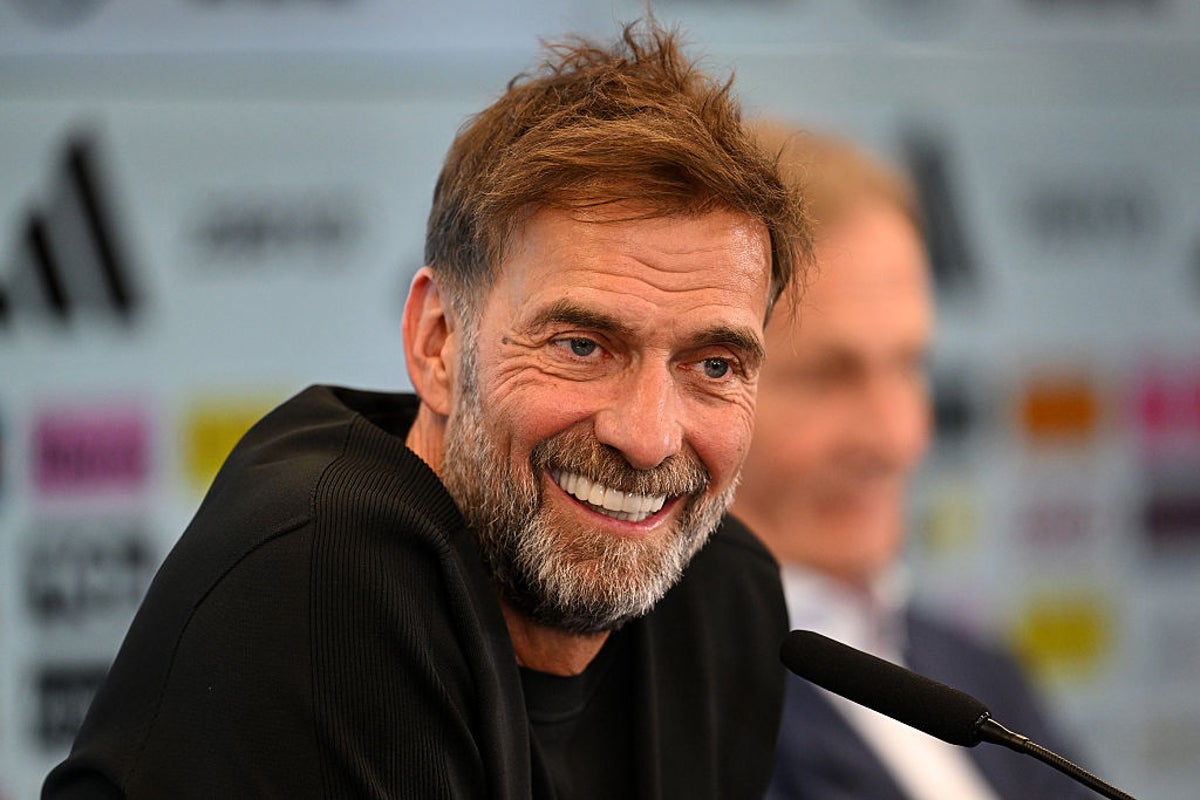
At his appointment press conference, Klopp acknowledged the challenge ahead, stating, “There are 11 nations ahead of us in the rankings – but we have to make beating them possible, with the way we play football.” His presence aims to rejuvenate a stagnant national setup.
Germany has long viewed Klopp as an ideal appointment, hoping he would succeed Joachim Low. However, Klopp has consistently aimed to reconstruct teams rather than maintain existing success, explaining why whispers of a move to Real Madrid or Bayern Munich felt misplaced.
Now, as Germany seeks revival, Klopp has stepped in with confidence. “I’m not doing this job for myself. I’m doing it for you,” he remarked, portraying himself as a savior for the national team.

He has evolved since his time at Borussia Dortmund, now equipped with a wealth of trophies. His personality remains consistent but with an added confidence that accompanies his achievements.
Klopp’s tenure may not be without challenges. His arrival at Germany has not come without its critics, particularly after he faced backlash for his role at Red Bull, which some view negatively due to its impact on supporter voting rights.
Upon taking the helm, Klopp issued a warning, stating, “I’m not going to tolerate what has been the curse of the job,” referring to the treatment received by previous managers. “I’m taking this job even though I’ve seen how you’ve treated Julian Nagelsmann. The day you don’t want me anymore, I’m gone – without any severance pay.”

Klopp bluntly assured he would leave the role if poorly treated (AP)
His straightforward demeanor is expected to resonate in the team environment. Germany’s struggles in knockout scenarios mark a stark change in the culture, where anything less than a “mentality monster” will not survive under his leadership.
Klopp’s revival efforts will extend beyond himself, as he plans to assemble a coaching team inclusive of former Liverpool assistants Pep Lijnders and Peter Krawietz. Their experiences aim to replicate the success achieved at Anfield.

Will Klopp and Pep Guardiola meet again on the international stage? For now, it’s unlikely (Getty)
The challenge before Klopp is to elevate Germany to the heights they once occupied. This role marks a significant stage in his illustrious career. “Jurgen Klopp doesn’t have a career after the national team. Ideally, this is the highlight of my career,” he stated.
As he prepares to face traditional rivals, the Netherlands, in September, the football world eagerly anticipates if this journey will mark the beginning of a new chapter for Germany.