Headline: Pochettino Reflects on Tenure with US Men’s National Team Amid Transition to Manchester United
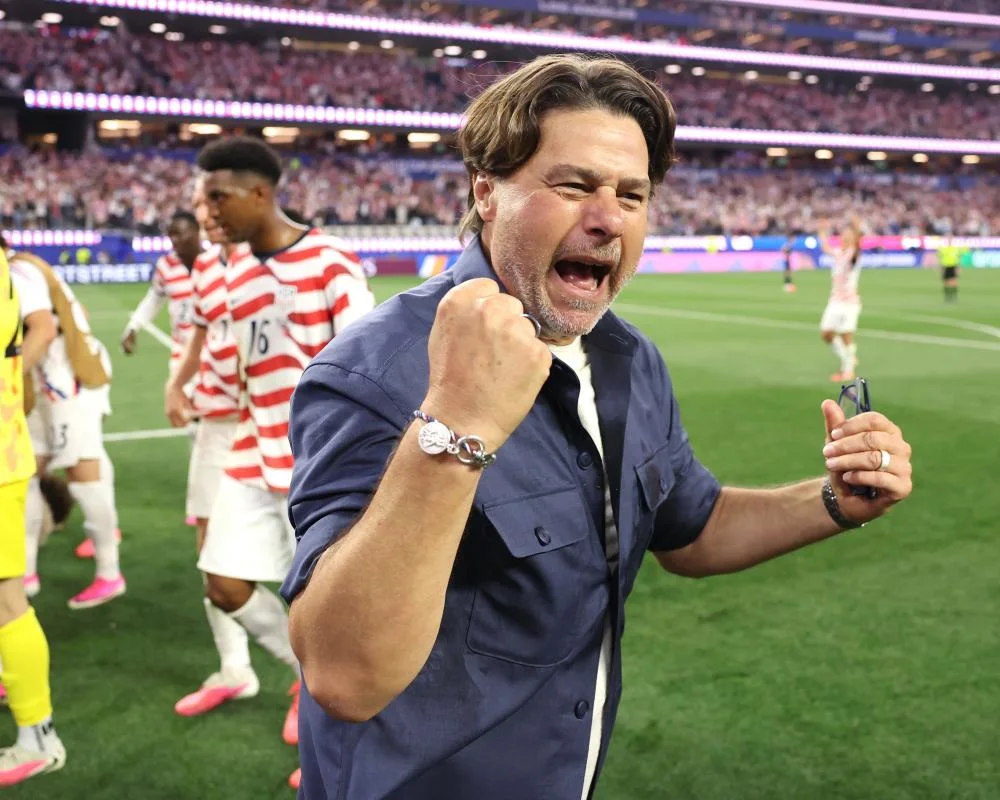
US men’s national team coach Mauricio Pochettino quickly made a significant impact following his appointment. He took over after a disappointing showing at the 2024 Copa América led to the ousting of his predecessor, with the first World Cup on home soil in three decades approaching. The federation introduced him in New York City, situated on the 24th floor of a building with views of the Hudson River. He responded to inquiries regarding the program’s culture by referencing the four-time World Cup champion US women’s team.
Advertisement
Related: Tearful Pochettino says United job was ‘difficult to turn down’ in USMNT farewell
“We need to believe that we can win,” Pochettino declared in September 2024. “That we can win not only a game: We can win the World Cup.”
Such confidence appears almost foreign to analysts of the US men’s program, yet it is the kind of sentiment American fans yearn to hear. For years, they have longed for glory, often carrying an inferiority complex fueled by results and international perceptions. Even today, with American players performing at top European clubs, the notion of winning a men’s World Cup remains a distant dream for many.
Pochettino remained steadfast in his belief that the US could mount a remarkable challenge in 2026 and claim the title. This was a narrative he frequently reiterated, both publicly and privately, in the lead-up to the event. He even conveyed this conviction to Donald Trump, possibly laying the groundwork for an assist turned own-goal in the process.
Advertisement
Belief could resonate with even the casual fans of US soccer, particularly those whose prior encounters with an American coach may have come through platforms like Apple TV. However, for US supporters, Pochettino’s inspiring rhetoric did not always align with his actions.
Rumors continually linked Pochettino to clubs in England, including Manchester United, yet he hardly made efforts to dispel them during his tenure. While understandable given the allure of high-profile coaching roles, his seeming lack of commitment occasionally frustrated fans hoping for stability as the team prepared for a significant World Cup.
Pochettino expressed frustration about the landscape of American soccer, a situation he was partly brought in to improve. After losing the 2025 Gold Cup final against Mexico in Houston, he openly criticized the presence of pro-Mexico crowds at home games—an issue that has persisted for decades. He acknowledged the need for increased stakes in Major League Soccer and raised concerns over the developmental treatment of US players, while also addressing media inquiries following a group-stage exit to Turkey in the summer’s World Cup. Despite this, he faced less pressure as the head coach compared to many other major footballing nations.
Advertisement
Frequent mixed signals left observers feeling Pochettino was never fully invested in the role. Yet just as doubts arose, he would deliver exhilarating moments, such as the US team’s remarkable 4-1 victory over Paraguay, highlighting their best-ever performance at a World Cup. Pochettino appeared emotional, singing “Country Roads” and sharing his admiration for American soccer. However, the team soon experienced a devastating 4-1 defeat to Belgium in the last 16 round, marking one of its most disappointing exits in World Cup history.
Generally, athletes and coaches are hesitant when discussing legacies. The inquiry often feels premature, evoking reflections on past achievements before a departure. Legacies are multifaceted and can shift dramatically with new developments or the successes of those who follow.
Pochettino seemed open to engaging about his legacy, though initially he found it challenging to articulate. “I am not arrogant,” he chuckled, later conceding some might see him as somewhat self-assured. Eventually, he concluded that his impact was rooted in relationships and doing things the right way.
Advertisement
“The most valuable feeling that we get isn’t one victory, or that we helped in the program,” he noted. “It is that relationship in the program – even when you cross the sea, you look and smile because I think you share the values that are very important in life, more important than anything else. That is our principal that we respect always.”
Pochettino approached his role with ambitious goals: to ensure a strong performance at a home World Cup, alter public perception of soccer, and foster sustainable growth for the sport in the U.S. He achieved some objectives but left others unmet, a fitting conclusion for a coach who inspired belief yet may not have fully embraced it himself.