Hamburg Secures 3-1 Victory Against Borussia Mönchengladbach
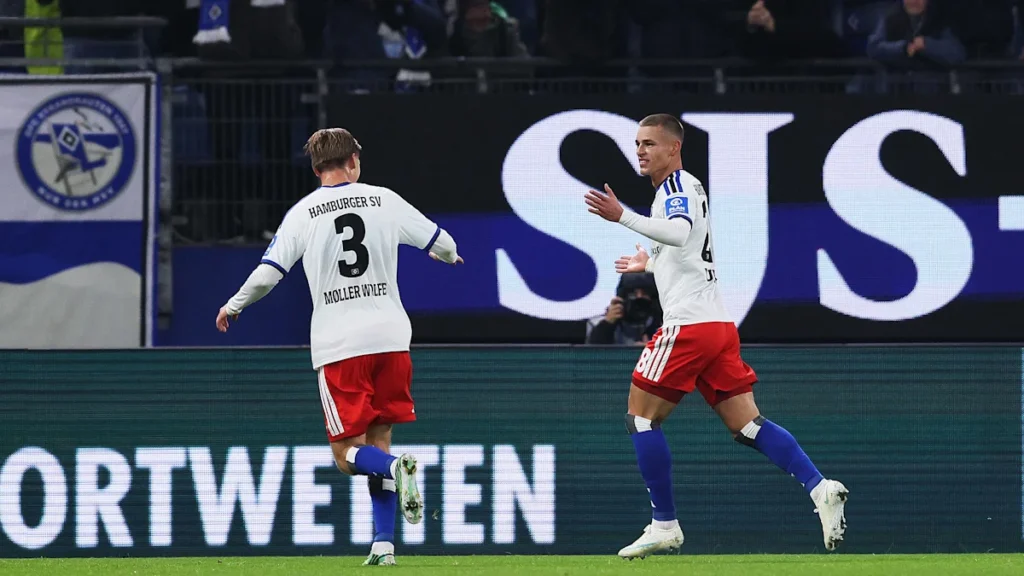
On a chilly Friday night in Hamburg, the local team achieved a much-needed win, defeating Borussia Mönchengladbach 3–1 at the Volksparkstadion. This triumph brings Hamburg’s total points to 12, placing them just three points behind Werder Bremen, who are positioned for a European spot.
Hamburg delivered a commendable performance throughout the match. Notably, the outcome was shaped by Gladbach’s player disadvantage, as they played with 10 men from the 49th minute.
Advertisement
While the red card altered the match dynamics, important elements were evident from the beginning.
Kou Itakura’s Red Card Foreseen Early On
Kou Itakura’s expulsion from the game seemed inevitable right from the outset. This was largely due to his struggles against Albert Grønbæk, who consistently pressed him on the right. Whether by his own choice or that of the coaching staff, Itakura’s defensive approach became problematic for him.
Itakura’s lack of speed as a defender presented challenges, especially since Hamburg targeted that side for their attacks. Unlike Philipp Sander in central defense, who executed effective close marking against Patson Daka, Itakura attempted to press but found himself misaligned in his positioning.
Advertisement
As Hamburg preferred direct long passes aimed at Daka, exploiting the opposition’s weakness in pressing began to work to their advantage. It wasn’t long before Itakura received his second yellow card, leading to his dismissal just minutes into the second half.
Miro Muheim: Key Player for Hamburg
Hamburg’s Miro Muheim seemed destined to make his mark on the game. Known for his shooting prowess, it was his positioning in this match that truly mattered.
Advertisement
From the get-go, Muheim strategically navigated the field to find open spaces for his teammates. He consistently sought to be the free man for Hamburg, searching for openings either centrally or on the flanks. It was no surprise when he seized a perfect opportunity to score, putting Hamburg ahead for the first time.
Alongside Grønbæk, Muheim played a crucial role in manager Merlin Polzin’s strategy to overload the left side in the second half, resulting in the second goal for Hamburg.
Advertisement
This tactical overload, combined with smart diagonal movements, significantly contributed to Hamburg’s success. Their playstyle involved frequently shifting the ball from the flanks to exploit the gaps created when Gladbach’s center-backs went wide.
Albert Grønbæk: Master of the Half-Space
Grønbæk demonstrated expertise in navigating half-space areas, enhancing the team’s play. He positioned himself adeptly to receive the ball and set up opportunities, notably assisting Shafiq Nandja for Hamburg’s second goal after a great diagonal delivery from Albert Sambi Lokonga.
Grønbæk’s ability to swiftly reposition when facing his own goal played a role in forcing Itakura’s red card as well.

His synergy with Muheim, Sambi Lokonga, and wing-back David Møller Wolfe significantly troubled Gladbach’s defense. In the second half, coach Melzin emphasized the left-side overload to fortify their offensive actions.
Advertisement
Grønbæk later capped the match with a stunning long-range goal, showcasing his shooting skills and overall contributions during the game. Though not a flashy dribbler, he consistently generated opportunities through strong movement and astute positioning.
Borussia Mönchengladbach’s Tactical Challenges
Manager Alexander Blessin is recognized for inspiring high-pressing and high-intensity football. Gladbach displayed this approach initially, making it difficult for Hamburg to play their game.
Advertisement
However, inconsistencies in team synergy emerged. The distance between the pressing unit and the defensive line was occasionally too wide, allowing Hamburg to exploit gaps effectively.

Additionally, the wingers often failed to track back promptly, leaving their defensive line vulnerable.
These issues are addressable, particularly as Gladbach adjusts to Blessin’s tactics after only a few weeks of training. Historical performance by Blessin’s teams indicates hope for future improvement in their defensive structure.
Advertisement
Gladbach also needs to enhance their finishing. Their only goal came from a play with a low expected goal (xG) value of 0.05. They squandered two key chances, along with several others, and if they had converted more effectively, the match might have ended differently.
With the possible returns of captain Tim Kleindienst and injured player Hugo Bolin, their offense could see boosts. Until Blessin has his full squad available, the assessment of Gladbach’s performance remains tentative.
They must enhance their efficiency and reduce mistakes, particularly those like Itakura’s during this match. Their struggle to avoid relegation will prove more challenging, especially with upcoming matches against Borussia Dortmund, Werder Bremen, and Bayer Leverkusen.