
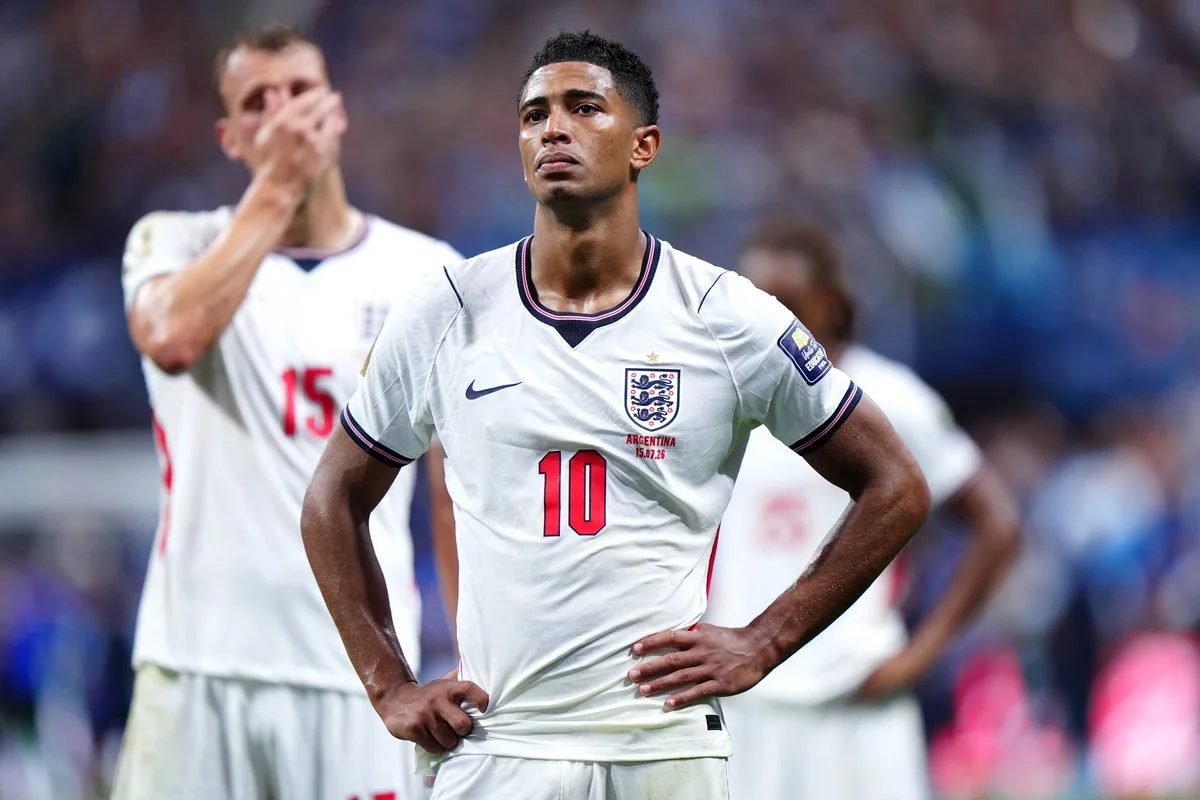
Disappointment Surrounds World Cup Third-Place Play-Off Match
The unique allure and jeopardy of World Cup matches, held every four years, represent one of the tournament’s greatest assets. They stir emotions, create tension, and generate drama. However, as the tournament approaches its final stages, the penultimate match remains a contest that players, fans, and broadcasters seem indifferent toward.
The futility of the third-place play-off, newly dubbed the “Bronze Final,” highlights this lack of interest. Notably, famed rugby union coach Warren Gatland encapsulated its mockery when addressing comments made by the Wales coach after a semi-final loss.
Advertisement
When asked about Gatland’s remarks toward England ahead of the 2019 Rugby World Cup final, England’s head coach Eddie Jones couldn’t resist chiming in. “Well guys, can you just send my best wishes to Warren,” he said to a laughing group of journalists in Japan. “And make sure he enjoys the third-fourth play-off.” Gatland did not enjoy it; Wales lost by 23 points to New Zealand, and the match drew little attention.
The opportunity for ridicule remains in both rugby and football as England faces France just three days after suffering a crushing defeat. “Thomas Tuchel: do you fancy motivating your knackered players for a game which amounts to the ‘best of the semi-final losers’? Good luck with that,” the report noted.
Kobbie Mainoo: is this the World Cup debut you dreamed of?
Advertisement
“None of our players and none of the French players want to play this match,” Tuchel told reporters following the devastating defeat to Argentina. “They want to play the final… Everyone plays to win the World Cup but that’s how it is.”
“We have one less day of recovery than France, but we will approach it with professionalism.”
Despite this being a record-breaking World Cup with 104 matches, the significance of the 103rd match feels absurd. As players recover from a grueling season and five-week tournament filled with knockout games, Saturday’s match in Miami showcases the rarity of actual futility in elite sports.
Criticism arose over FIFA’s preference for head-to-head results over goal difference in the group stage, making some final matches irrelevant. This risk, however, has always existed. With exhausted minds and bodies, the unnecessary risk placed on players – of injury, exhaustion, and even boredom – is evident.
Thomas Tuchel will have to rally his troops for the third-place play-off (Getty)
“I think this match should never be played, I’ve been saying that for 10 years… it’s unfair,” said former Netherlands coach Louis van Gaal in 2014 after his team finished third. Yet, as history shows, nobody seemed to care.
Advertisement
The third-place play-off was introduced in the 1934 World Cup and has been a fixture since 1954, whereas UEFA removed it from the European Championships in 1980. Reflecting on the excitement surrounding these matches two years ago reveals that interest was minimal.
As actual football matches, these play-offs are peculiar occurrences. With first-choice players fatigued, managers often rotate their lineups, with second-choice goalkeepers starting and even third-choice players being substituted in during the final moments. This is not indicative of the World Cup; it’s more like pre-season.
Furthermore, these matches tend to feature numerous goals, as no game since 1974 has seen fewer than two goals. This trend underscores the laid-back nature of the contest, where players may pad their statistics without significant consequence.
Louis van Gaal criticised the bronze medal match in 2014 (PA Archive)
Interestingly, for smaller nations like Turkey in 2002, achieving third place in the World Cup does carry significance, whereas larger, established football nations view it as inconsequential. The question remains: did anyone really watch England’s lackluster 2-0 loss to Belgium in 2018? Or the 2-1 defeat to Italy in 1990? Even if they did, how much did it matter to anyone?
Some may argue it reflects on sour grapes, as England has historically struggled in these matches, while Germany boasts a record of four third-place victories alongside four World Cup titles.
Even host broadcasters find it difficult to generate enthusiasm for the event. The BBC’s choice of Jason Mohammad, their fourth-choice presenter, to host the match on Saturday night reflects this trend, as does the diminished half-hour build-up. This situation arises since many prominent figures are in New York for the final the next day.
England lost the third-place play-off in 2018 (Getty)
Ultimately, the perception of bronze medals within football contrasts sharply with those in the Olympics. Unlike Olympic medals, which are valued regardless of color, World Cup results beyond the championship itself do not carry the same weight. This is evident in the experiences of Portugal and the Netherlands, both third-place winners who have never won the title.
Advertisement
In an era where every aspect of elite football is optimized, FIFA should reconsider the necessity of the World Cup’s third-place play-off. It stands out as perhaps the most pointless fixture in international football, overshadowed by revenue and the opportunities it presents, potentially at the cost of player welfare.
Just bring the boys home. Because, put simply: nobody really cares.