
England Face Heavy Travel Burden at North American World Cup
A World Cup held across three countries was always going to challenge teams in unprecedented ways. With 16 host cities spread across North America, national squads have traveled further than ever before in their pursuit of football’s biggest prize.
While every team has contended with vast distances, some have covered significantly more ground than others.
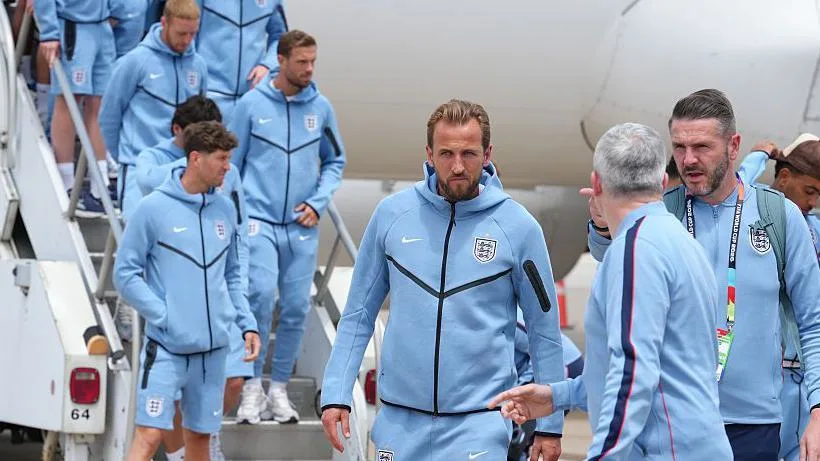
England have traveled more than 14,000 miles to reach the semi-finals—seven times the distance covered by tournament favourites France and considerably more than their opponents, Argentina.
Thomas Tuchel’s side have flown back and forth from their base in Kansas City, Missouri, to play matches in Atlanta, Boston, Mexico City, and Miami.
Argentina also based themselves in Kansas City but have covered just over 8,000 miles. Meanwhile, France remained almost entirely on the East Coast, traveling fewer than 2,000 miles before heading to Dallas for their semi-final match against Spain. That round trip of about 3,000 miles will more than double their total mileage for the tournament.
Which other nations have travelled large distances?
England are not the only team logging high travel numbers.
Spain have clocked more than 12,000 miles, while Switzerland exceeded 10,000 miles due to what the Swiss Football Association called “venue hopping” across North America.
Morocco repeatedly returned to their New Jersey base despite fixtures taking them to Boston, Atlanta, Monterrey, and Houston before their exit against France in the quarter-finals.
Belgium chose to base themselves in Renton, Washington, which kept their total travel to about 4,000 miles before their exit against Spain.
France’s tally remains one of the lowest in the tournament, falling below the totals of several teams eliminated after only three group matches.
Long-distance travel is a familiar hurdle at the World Cup, as seen in Brazil in 2014, Russia in 2018, and South Africa in 2010. However, the first 48-team World Cup presents a unique challenge. With matches staged across three nations and 16 cities, some squads have spent weeks shuttling across the continent, while others have remained in one region.
England’s route illustrates this contrast clearly, with their journey already exceeding the total distances seen at previous tournaments.
For England, however, the travel has become part of their tournament experience. The squad settled into life in Prairie Village, training at Swope Soccer Village and engaging with Kansas City’s local sports culture.
Tuchel, Harry Kane, Dan Burn, and Djed Spence visited the Kansas City Royals, with Tuchel throwing the ceremonial first pitch at Kauffman Stadium before receiving customised jerseys. Following the dramatic 3-2 victory over Mexico, the staff granted the squad roughly 36 hours off to explore the city.
Does all the travelling matter?
While it is difficult to measure exactly how much travel influences on-pitch performance, Norway manager Stale Solbakken admitted that the physical demands of the tournament are beginning to take a toll.
“We’ve really only had Jorgen [Strand Larsen] who has had a fever, but there’s been a bit of coughing and rasping scattered throughout,” Solbakken said.
“There’s air conditioning, flights, changing rooms, and all that. With 50 people in the travelling party, it would be strange if something didn’t crop up.”
Norway’s journey has been considerably shorter than England’s. After starting from a base in Greensboro, North Carolina, they stopped returning to base between matches as the knockout rounds progressed. England, by contrast, have continued flying back to Kansas City after every game. Whether these accumulated miles prove decisive remains to be seen.
How was the data calculated?
BBC Sport calculated the distances between training camps and match venues by using the nearest local airport and assuming each nation returned to their base after every game.
We used an air miles calculator to measure flight distances and doubled the mileage to account for teams returning to their training locations between games.
For nations where the nearest airport to their training base was the same as the venue for their match, we recorded the distance as zero miles. We did not include the transit distance from base to airport or airport to stadium. These results serve as an indicator of distance travelled during the tournament rather than an exact figure.