
Argentina’s Controversial Tactics Spark Debate Ahead of World Cup Final
Emotions ran high following one of Argentina’s dramatic knock-out matches as a prominent coach expressed his frustration intensely. He declared that he would support any opponent against the defending champions, signaling his disapproval of Argentina’s behavior during the game.
This sentiment wasn’t echoed by anyone associated with England, who recently faced an unbelievable collapse in Atlanta. Yet, many, particularly those from Argentina, have seen numerous reports highlighting unpunished fouls in that quarter-final match.
Advertisement
For Lionel Scaloni’s team, the fouls are just one aspect of their intense play during this World Cup. Such toughness has begun to be perceived as one of the more “honest” violations of sportsmanship.
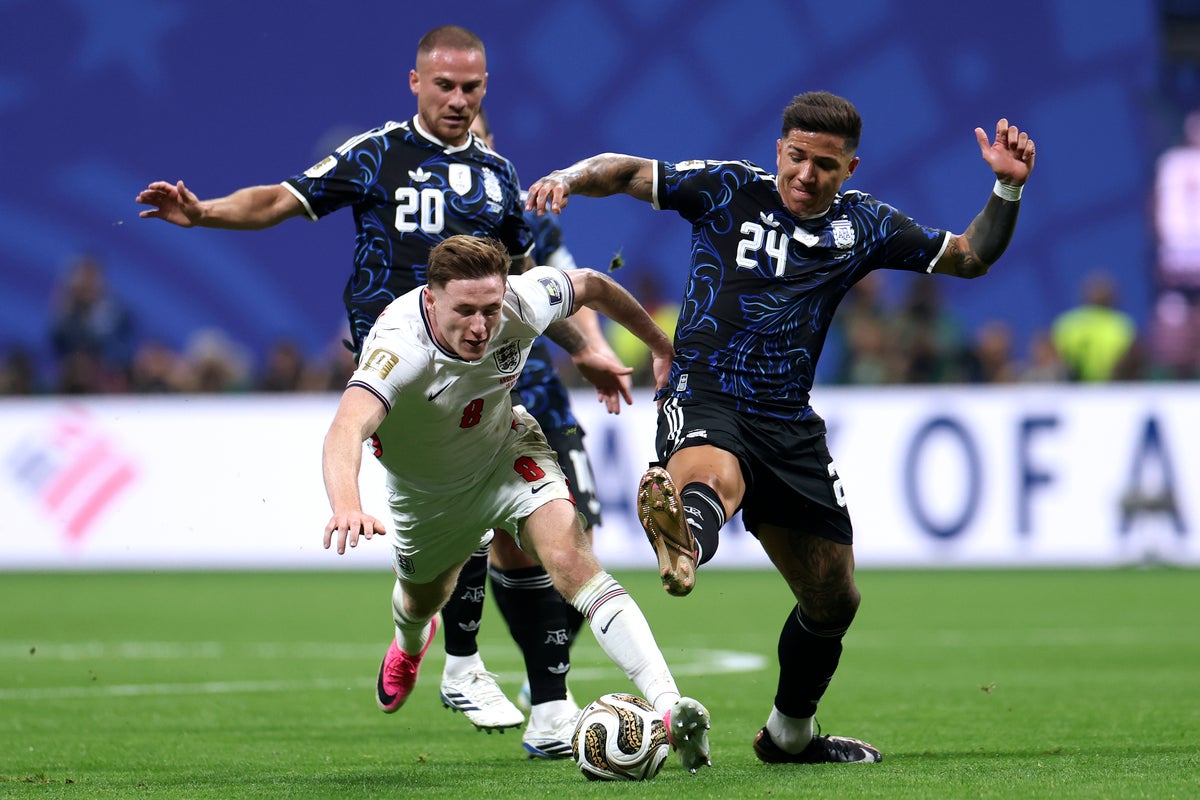
However, what truly aggravates opponents is the gamesmanship, with incidents like Enzo Fernandez targeting Elliot Anderson and the provocative celebrations that followed. Cristian Romero has notably been associated with such antics.
Amidst these actions, some players insist there are no hard feelings towards their opponents. Fernandez himself made this clear regarding England after appearing to revel in the controversies of the match.
This situation mirrors the ongoing discourse regarding the perceived dullness of Spain’s style and has also caused some neutrals to question Argentina’s approach as they approach Sunday’s final.
Advertisement
Spanish goalkeeper Aymeric Laporte highlighted the strategy of Argentina’s rivals, stating: “In the last few matches we’ve seen things that have really surprised us, incidents that have been ignored. Especially with Argentina, who are a team that leave a lot of little messages with their challenges.”
Whereas Spain emphasizes technical excellence, often aiming for perfection, their opponents focus on tenacity, with the intent to disrupt their rivals’ attempts to achieve that perfection.
The differing views motivate some figures at the tournament to feel less resentment toward Argentina’s tactics. They do not necessarily equate Argentina to being “one of the nastiest teams to ever play in a World Cup.” Instead, they appreciate what the World Cup signifies—a team willing to push themselves beyond limits for the sake of achievement.

It remains just football, even if it leads to bruises and hurt feelings.
Advertisement
Citing personal experiences, a striker noted how an Argentina defender left him close to tears as each challenge brought relentless pain. Nonetheless, actions like these—right up to frustrating fouls and interrupting gameplay—are regarded as integral to the sport.
There’s no need to delve into historical discussions about “viveza” and the football culture of Rioplatense, or what academic Eduardo Archetti termed the “ability to cheat where necessary.”
Such narratives are common, yet the application of VAR in modern football tends to diminish their prevalence.

The officiating has further fueled the discussion regarding Argentina, with many believing the team has enjoyed more lenient refereeing. This perception—though widely viewed as unfounded—has fortified their siege mentality and led them to dig in further, especially as a team that has publicly adopted anti-colonial sentiments but is perceived as being favored by authorities.
As Argentine football executive Diego Huerta states, “there’s a sense of other sides just being bad losers.”
He adds: “I don’t see anything that isn’t common in South American football. We play hard. We try to compete.”
Team members assert that their tactics aim at gaining an advantage, while firmly contesting that none of their challenges carry the risk of injury.

Lionel Messi’s majestic impact on the pitch provides a contrast to Argentina’s controversial tactics (Getty)
This intensity is also key to the energy that has brought life to many matches. The remarkable comebacks in the tournament likely would not have occurred without Argentina’s resilience, as they push themselves to achieve epic outcomes.
Advertisement
Argentina is striving for a monumental achievement, and central to this effort is Lionel Messi.
Many fans have felt a mix of anger over Argentina’s tactics alongside admiration for Messi’s brilliance on the field, often witnessing both extremes within the same match. This dichotomy represents two contrasting energies within the team.
They will do what is necessary to win, a quality that arguably adds to the excitement of the World Cup.
Yet, opinions on this matter remain divided.