Cristiano Ronaldo Announces International Retirement After 23 Years
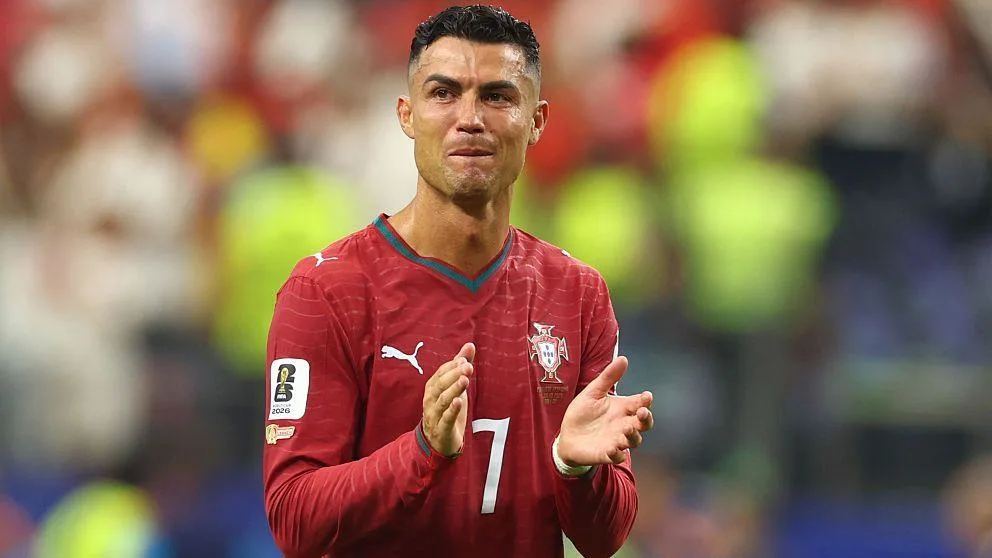
Cristiano Ronaldo, the legendary Portuguese footballer, has officially announced his retirement from international play, concluding a remarkable 23-year career representing Portugal. This announcement follows a recent fallout with coach Jorge Jesus, which was resolved with a 30-day sanction and a fine of 255 euros for leaving the team’s training camp without permission. After serving his punishment, Ronaldo, aged 41, decided it was time to step away from the international stage.
Ronaldo’s last appearance for Portugal took place on September 24, 2023, in a match against Wales, where he scored an impressive 146 goals across 234 games during his tenure. Following his retirement announcement, a wave of gratitude spread throughout Portugal, recognizing Ronaldo as a global ambassador and a source of inspiration for millions. However, the manner in which his international career concluded left a bittersweet feeling among fans.
The possibility of Ronaldo being called up for future squads was still open, according to Jesus, who stated that it was ultimately up to Ronaldo to make that decision. Despite this, it was clear that he was no longer guaranteed a starting position, a situation Ronaldo has historically struggled to accept.
While some may view his sudden retirement as a reaction to external pressures, it reflects a long history of conflicts with various coaches, alongside moments of unity with teammates that defined his career.
When Ronaldo first joined the national team, he was a young player known for his flamboyant style, often arriving at training camps in a baseball cap worn backwards and oversized sunglasses. Initial mentorship from senior players like Luis Figo helped him mature into a leader, ultimately taking over the iconic number 7 jersey after Figo’s departure from the national squad in 2006.
Ronaldo faced hardships early in his international journey, suffering a painful loss in the Euro 2004 final against Greece, a moment that drove him to strive for greatness. Throughout his career, he proved resilient in the face of personal challenges, including the death of his father, which he coped with through his commitment to football.
His relationship with coaches has evolved over the years, with moments of tension especially notable during Carlos Queiroz’s management. Nevertheless, Ronaldo has consistently emerged as a key figure for the national squad, and sociologist Joao Nuno Coelho highlights how the team has often mirrored Portugal’s national identity and aspirations on the world stage.
Ronaldo’s influence on Portuguese football is monumental. Under the guidance of Fernando Santos, he accepted new roles, playing as a center forward and fostering a strong team spirit that contributed to Portugal’s victory in the 2016 European Championship and a successful Nations League campaign in later years.
As the Portuguese national team continues to evolve, Ronaldo’s legacy remains firmly entrenched in the hearts of football fans. The federation plans to hold a special tribute honoring his contributions, recognizing the indelible mark he has left on the sport and the pride he instilled in a nation that has grown alongside his extraordinary journey.