
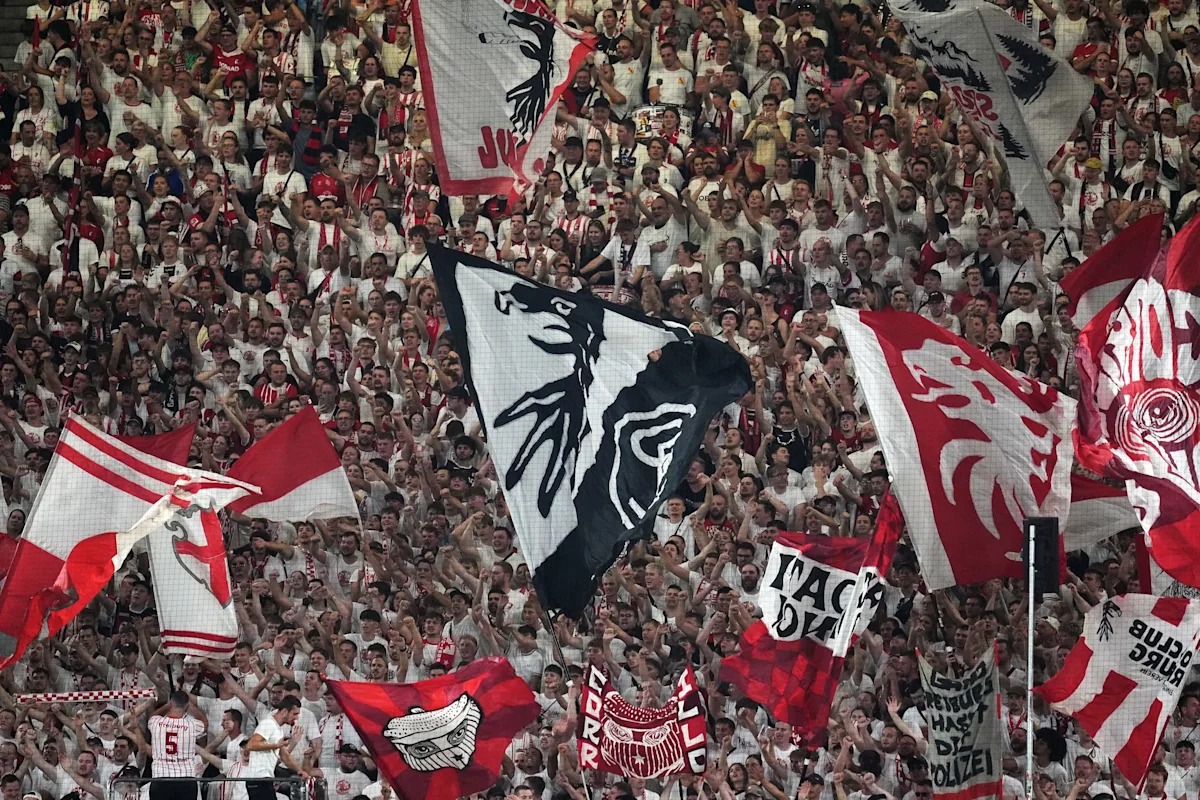
SC Freiburg’s Pre-Season Preparations and Squad Developments Ahead of Bundesliga Kickoff
SC Freiburg’s summer 2023 has drawn to a close as the club gears up for the upcoming Bundesliga season. With significant strategic decisions in the transfer market and some unfolding tactical narratives during pre-season, Freiburg emerges as an intriguing contender in the league.
Last season’s impressive performance saw them reach a European final while generating substantial revenue from player sales. Johan Manzambi’s departure for a notable fee left a mark, alongside Merlin Röhl’s pre-arranged move to Everton, contributing to a considerable transfer income. The club demonstrated its thoughtful approach to squad management, replacing talent effectively without any indication of turmoil.
This summer, Freiburg made four key signings, including ex-Werder Bremen goalkeeper Mio Backhaus for a club-record base fee of €12 million. With Noah Atubolu set to join Eintracht Frankfurt on loan potentially leading to a permanent deal, the investment in Backhaus may soon cover itself. In addition, Japanese striker Keisuke Goto was acquired for €10 million, complemented by midfielders Yannik Engelhardt and Rihito Yamamoto, each bought for €7 million.
While some clubs may have seen their squad undergo substantial changes, Freiburg’s adjustments appear more like routine maintenance. Several players left the squad, including Robert Wagner, Junior Adamu, and Noah Weißhaupt, producing a transfer balance of approximately +€51.55 million.
Freiburg’s pre-season was characterized by solid preparation rather than drastic tactical shifts. Coach Julian Schuster honed the existing framework rather than reinventing the strategy, as the team secured multiple wins in friendly matches. The first friendlies showcased Freiburg’s adaptable formation, primarily a 4-4-2, while also hinting at tactical variations.
Freiburg’s competitive fixtures ahead of the Bundesliga included three matches, culminating in a standout victory against Motherwell in the UEFA Conference League. The squad demonstrated cohesion and efficiency, controlling possession, and finishing with 29 shots compared to their opponents’ two.
Signs of individual brilliance emerged during pre-season, with players like Derry Scherhant and Cyriaque Irié making notable impacts. Scherhant notably contributed two goals and two assists in recent matches, signaling a shift in the hierarchy as he competes for more playing time against established players. Meanwhile, Irié appears poised to redefine his role after a challenging initial season impacted by injuries.
The upcoming season presents SC Freiburg with an opportunity to build upon their previous successes, with a well-structured plan in place to navigate the challenges of the Bundesliga. With a blend of experienced campaigners and promising new talent, the expectation is high for Freiburg to make their mark once again.
Our Get German Football News Bundesliga 2026/27 Tactical Previews series arrives at its conclusion. There’s literally only one place left to go. After seventeen clubs, several forests’ worth of scouting notes and enough pre-season football to permanently damage the author’s relationship with the concept of a friendly, SC Freiburg supply us with the terminus. Those with sufficiently unhealthy memories may recall that last season’s Mainz preview also received the honor of going last. Mainz were contesting Conference League qualification before the Bundesliga began, meaning there was actual competitive football available to scout while everyone else had already been put to bed.
Julian Schuster’s side have supplied us with three competitive fixtures – two Conference League playoff legs against Motherwell with a Pokal trip to Düsseldorf wedged in between – prior to Bundesliga kickoff. Last year, this preview spent a suspicious amount of time discussing Freiburg’s administrative committee, the general niceness of everyone involved and the fact that the same man had apparently been driving the team bus since 1994. There was a reason for this. Whenever one attempts to explain how the Sport-Club operates, the football eventually gives way to an extended description of a small group of sensible people quietly doing sensible things while the rest of the Bundesliga sets fire to increasingly expensive piles of money.
Advertisement
Last year, Freiburg reached a European final. As if the revenue gains from this weren’t enough, they generated another enormous pile of transfer income. They sold Johan Manzambi for a sum that would once have financed several entire Freiburg squads, completed Merlin Röhl’s pre-arranged transfer to Everton for another €25m and spent the summer replacing pieces without ever giving the impression that anybody in the front office had raised their voice. Somewhere, presumably, Jochen Saier and Klemens Hartenbach sat around a table, moved a few names across a sheet of paper, drank something warm and concluded that everything would probably be fine.
This is what makes writing about Freiburg difficult. There is only so much dramatic tension one can extract from a club that keeps responding to potentially destabilizing events by behaving like a functioning institution. Lose a star? There is a succession plan. Sell another one? Promote somebody. Need four new players? Buy them before everyone else realizes what you are doing. Goalkeeper transfer saga threatening to become messy? Extend the goalkeeper, protect the asset, find a late exit and carry on.
The author’s beloved bus driver doesn’t need to change his route.
SC Freiburg
Freiburg have taken one of the Bundesliga’s most valuable young midfielders out of the side, cashed in another significant Premier League asset, changed goalkeepers and added four players for meaningful fees. That would qualify as major surgery almost anywhere else. In Breisgau, it’s merely a routine round of scheduled maintenance. Departures qualify as an especially efficient SCF “garage sale”. The Schwarzwälder have cut ties with several players for reasonably modest fees.
Advertisement
Major personnel shifts, Freiburg
Estimated Summer Transfer Balance = +€51.55m
Backhaus’ early signing constitutes quite the coup. Just like last year, the SCF administrative team got straight to the business of sorting the squad out as soon as the season concluded. Freiburg committed a club-record €12m base fee to Mio Backhaus in May, effectively installing the former Werder keeper as Noah Atubolu’s successor before finding Atubolu somewhere to go. After a crazy summer that featured a change of agents on the keeper’s part, Atubolu is set to join Eintracht Frankfurt initially on a €1m loan, with a likely-to-be-triggered €12.5m purchase obligation. Built-in bonuses may push the total package toward €16m. Freiburg may yet emerge from an awkward succession process with most of the Backhaus investment covered by the goalkeeper he replaced.
The other major investments address the middle and top of the pitch. Japanese striker Keisuke Goto cost €10m from Anderlecht, while Yannik Engelhardt and Rihito Yamamoto arrived for €7m apiece. Johan Manzambi cannot realistically be replaced like-for-like. Engelhardt can occupy his midfield slot without reproducing all of his qualities. Yuito Suzuki will be asked to assume more of the creative burden higher up the pitch. Derry Scherhant’s growth provides another source of attacking production. Cyriaque Irié finally looks capable of becoming serious competition. Freiburg have not purchased another Manzambi. They appear intent on distributing his responsibilities across several players instead.
Advertisement
The squad reduction beneath those headline deals has been substantial. Welcome to the Freiburg “garage sale”! Robert Wagner returned from Dynamo Dresden before completing an €850,000 permanent move there. Junior Adamu came back from Celtic and joined Schalke for €800,000. Noah Weißhaupt returned from Hannover before moving to Darmstadt for €500,000, while Eren Dinkçi’s brief return from Heidenheim ended with another loan, this time to Werder Bremen for a reported €400,000 fee. Daniel-Kofi Kyereh departed for Osnabrück on a free. Nicolas Höfler moved into the Freiburg II structure. Karl Steinmann received first-team work during preparation before heading to Hannover on loan.
There is one returning loanee Freiburg very much do intend to keep around. Berkay Yilmaz came back from an excellent spell with Nürnberg and immediately entered the left-back competition with Christian Günter and Jordy Makengo. Schuster also used the 21-year-old in central midfield during preparation and has since emphasized that his flexibility gives Freiburg considerably more than merely a third candidate for one position. Rouven Tarnutzer also received first-team exposure from the academy during the summer. Tarnutzer – who does still need to improve his basic skill set – will work with SCF II this year. Ultimately, the 19-year-old hopes to emulate his countryman Manzambi’s career trajectory.
Strip away the enormous Manzambi number and the underlying Freiburg method remains almost suspiciously familiar. Sell extraordinarily well. Replace selectively. Promote or reintegrate the youngsters who are ready. Move along the ones whose pathways have closed. Backhaus, Goto, Engelhardt and Yamamoto cost €36m combined. The headline transfer balance remains spectacularly positive even before the expected Atubolu transaction is incorporated.
Notes from pre-season, Freiburg
Freiburg’s summer contained rather less tactical archaeology than some of the clubs already covered in this series. Trainer Julian Schuster did not spend six weeks trying to invent a new football team. The old one still works. Most of the exercise instead involved fitting several new pieces into familiar structures, testing a few succession plans and making sure the Europa League finalists had not forgotten how to be Freiburg. The first evidence arrived in a 3-1 win over Derby County played across four 30-minute periods.
Advertisement
Freiburg defended predominantly from a 4-4-2. Cyriaque Irié supplied the headline. After a miserable first Freiburg season disrupted by malaria and a lengthy adaptation process, the powerful right winger cut inside onto his left and produced a lovely opener. His physical condition looked noticeably improved. Yannik Engelhardt supplied the pass but later lost possession centrally for Derby’s equalizer, an early reminder that replacing Johan Manzambi would involve more than simply placing another midfielder in his old spot.
That warning grew louder one week later. Freiburg lost 0-3 to Greuther Fürth at the end of training camp, although the scoreline rather exaggerated the difference between the teams. Irié conceded an early penalty, Mio Backhaus misjudged an attempted intervention for the second and an advanced, disorganized Freiburg conceded the third on the counter. Fatigue might have played a role, but Schuster refused to hide behind it. Freiburg actually controlled long stretches and became more dangerous after switching from the familiar 4-2-3-1 to a 4-4-2 with Keisuke Goto and Igor Matanovic together up front.
Two matches against Racing Strasbourg then produced two 2-0 wins. In the longer public test, a fairly serious-looking XI featured Backhaus behind a Ginter-Lienhart pairing, Berkay Yilmaz at left-back, Engelhardt beside Maximilian Eggestein and Yuito Suzuki between Niklas Beste and Derry Scherhant. Lucas Höler scored both goals. Scherhant created both of them, once from a free kick and once from open play. The shorter morning match also provided another look at Goto and Matanovic together, while Irié released Matanovic before the striker won the penalty Vincenzo Grifo converted.
By then, several individual summer stories were beginning to separate themselves from the general noise. Irié looked far more capable of turning his considerable physical gifts into useful football. Max Rosenfelder, more importantly, simply kept playing. After years in which almost every promising stretch had been interrupted by injury, the 23-year-old completed preparation without missing a training session. Yilmaz returned from Nürnberg looking capable of competing seriously at left-back while also receiving experimental midfield minutes. Engelhardt accumulated increasingly important work beside Eggestein.
Advertisement
The 3-0 Generalprobe against Crystal Palace supplied the cleanest ending. Schuster started something close to his first-choice side, with Backhaus in goal, Rosenfelder surprisingly preferred to Philipp Lienhart beside Matthias Ginter and Engelhardt occupying the midfield vacancy left by Manzambi. Freiburg allowed the Conference League winners almost nothing across 120 minutes. Engelhardt followed up a saved Suzuki effort for the opener. Scherhant entered, created Höler’s headed second from a corner and later completed the win himself with a delicate chip.
That last sequence rather neatly summarized Freiburg’s preparation. Germans – particularly after watching Eintracht Frankfurt get demolished by Brentford and VfB Stuttgart fall to Fulham – were glad to watch one of their representatives actually beat an English side in a Generalprobe. Freiburg spent the summer discovering that the old machinery still runs. The interesting question is how much better the new parts can make it.
Winners from camp, Freiburg
Derry Scherhant, LW/AM
The clearest attacking winner. Scherhant supplied both Lucas Höler goals against Strasbourg, then came off the bench against Crystal Palace to create another for Höler and score the 3-0 himself. More importantly, the summer production actually moved the hierarchy. Grifo remains the established reference on the left and possesses enough goals, assists and set-piece wizardry to make declarations of succession rather premature. The 33-year-old – recently signed to a contract extension – also appears stubbornly unwilling to participate in the natural aging process. How inconsiderate toward a youngster attempting to take his job! The competition is nevertheless real now. Scherhant entered preparation as the understudy. He leaves it looking like somebody who intends to make the veteran defend his minutes every week.
Advertisement
The Berlin-born Hertha academy product broke into Bundesliga football during the club’s relegation crisis, scored his first top-flight goal in 2023 and subsequently spent enough time moving between coaches, roles and irregular minutes to acquire a fairly comprehensive education in how not to receive a straightforward developmental pathway. A stronger 2. Bundesliga campaign eventually brought Germany U21 recognition before Freiburg activated his reported €2m exit clause in May 2025. Even last summer’s Freiburg preview identified a strong preparation and the potential for impact minutes behind Grifo. Scherhant subsequently scored five times during the first half of the season while learning on both wings and occasionally through more central attacking spaces. One year later, the interesting part is no longer whether Freiburg can find minutes for him. It is whether Grifo can continue hoarding quite so many of them.
Cyriaque Irié, RW
A miserable first Freiburg season finally gave way to something resembling a proper beginning. Malaria, adaptation problems and the demands of a new league had ensured that very little went right after Freiburg paid €8.5m for the Burkina Faso international last summer. This time he returned physically stronger and produced dangerous attacking moments throughout the preparation campaign. That does not mean Irié won the right-wing job. Niklas Beste remains clearly ahead due to the fact that he’s presently ahead on the SCF developmental curve.
Perhaps it all relates to the fact Beste needed nearly a year to learn how frequently the right-sided attacker must recover, tackle and sometimes drop into what becomes a five-man defensive line. Irié is still learning the full assignment. In any event, Irié still looks like a candidate for major minutes. Perhaps the 21-year-old should consider taking on Grifo in the boxing challenge that may or may not have actually taken place. Irié does have some experience playing on the left. He can also operate up front in a two-striker set.
Advertisement
Max Rosenfelder, CB/RB
Sometimes winning camp means simply surviving it. In Rosenfelder’s case, that is far less flippant than it sounds. The 23-year-old has spent much of his professional career demonstrating the tools of an elite modern center-back before another injury interrupts the demonstration. He is aggressive, comfortable building from deep, and extraordinarily quick. A recorded top speed of 35.91 km/h speaks for itself. Injuries have nevertheless not been kind to him. Patellar-tendon trouble effectively cost Rosenfelder his first senior year. A hamstring injury prevented a senior national-team call-up in 2025. Two further muscular injuries restricted him again last season.
This summer was different. Rosenfelder did not miss a training session. He started the Crystal Palace Generalprobe ahead of Philipp Lienhart. Those of us tuning in saw a very different player in more ways than one. The last time Rosenfelder generated genuine excitement, in the autumn of 2024, he also sported a significantly more prolific head of hair. Rosenfelder’s Benedikt Höwedes-like “cranial evaporation” retains no relevance beyond the writer’s need for a joke here. Rosenfelder’s resurgence remains no joke. We could see him playing for the German national team soon. Maybe he is the next Höwedes, and the author means that in the most complimentary of fashions.
Yannik Engelhardt, CM/DM
Engelhardt arrived as one of two €7m midfield additions and immediately behaved like the one who had been in Freiburg for considerably longer. He began preparation with an assist and an ugly central turnover against Derby, then steadily grew into the vacancy beside Maximilian Eggestein. By the Crystal Palace Generalprobe he was starting there and scored the opener by following up Yuito Suzuki’s saved effort. In light of Manzambi’s midfield departure, part of the former Gladbach pro’s job is to ensure that the central midfield part of that equation still works. Thus far, he has done enough to make the position his.
Advertisement
Jordy Makengo, LB
Makengo finished last season under pressure after some difficult performances at left-back, with Philipp Treu even switching sides late in the campaign to stabilize the position. The summer might easily have pushed the Frenchman – something of a slow burn developmental project since making his professional debut nearly three years ago – further down the depth chart. Christian Günter remained. Berkay Yilmaz returned from an excellent Nürnberg loan. Instead, Makengo produced such a strong preparation that Schuster simply kept selecting him. Makengo entered camp with competitors arriving from two directions and left it in front of both.
Losers from camp, Freiburg
Rihito Yamamoto, CM
There is no need to manufacture drama here. Yamamoto has not failed at Freiburg. He has barely had the opportunity to begin. The €7m summer signing appeared only in an internal test at the beginning of preparation before Freiburg placed him on an individual program designed to bring him up to the physical level demanded by the club. He subsequently missed every public friendly and the opening competitive fixtures. That delay became more expensive with every Engelhardt minute. Schuster has indicated that Yamamoto may initially collect minutes with Freiburg II. Fair enough. It remains an unmistakably frustrating beginning. The midfield competition Yamamoto was bought to enter has already started moving without him.
Advertisement
Philipp Lienhart, CB
A relative loser rather than anything remotely resembling a squad problem. Lienhart remains a highly accomplished Bundesliga center-back and the long-established partner of Matthias Ginter. What disappeared during preparation was the assumption that the partnership automatically resumes whenever both men are healthy. Rosenfelder’s summer led to this. One of Freiburg’s most settled positions has therefore become one of its closest competitions. Lienhart did not lose his place permanently. He did lose the luxury of assuming it was his. We should still see plenty of the Austrian international amid the rotations this season.
Tactical Pokal/Conference League Scout, Freiburg
As noted in the introduction, the Sport-Club affords us a luxury few teams in this preview series can. Ahead of Bundesliga kickoff, we have three competitive fixtures to discuss. No squinting desperately at a July friendly against somebody’s U23s in search of definitive tactical truths required here. Freiburg opened their season with the Conference League playoff first leg away at Motherwell, travelled to Düsseldorf for the Pokal three days later and hosted the Scots in the return leg.
Advertisement
Juchu!
Lineup–SCF (UECL-1)
Freiburg’s first competitive XI constituted something close to the summer’s new hierarchy taking physical form. Mio Backhaus started behind Philipp Treu, Matthias Ginter, Max Rosenfelder and Jordy Makengo. Maximilian Eggestein partnered with Yannik Engelhardt, with Niklas Beste and Derry Scherhant flanking Yuito Suzuki behind Igor Matanovic.
The familiar 4-2-3-1 remained. So too did the basic Freiburg impulse to turn it into something flatter without the ball. There was no grand tactical reveal in Scotland. There didn’t need to be one. There was a rather unpleasant reveal after 69 seconds. Motherwell found far too much room down Freiburg’s left and Rosenfelder allowed Regan Charles-Cook too much separation in the box for the early 1-0. One should resist using a single action as an indictment of a player whose summer had otherwise been superb.
Advertisement
The response proved considerably more representative. Freiburg took over immediately, pushed Motherwell deep and allowed the Scots virtually nothing thereafter. The problem for a while concerned finishing those attacks properly. Territorial control yielded crosses, corners, set pieces and plenty of shots without enough clean open-play incision. Fittingly, the equalizer arrived through one of the oldest weapons in the Sport-Club cupboard. Scherhant swung in a free kick and Ginter headed home.
That goal also illustrated something else worth preserving. Grifo began on the bench, yet Freiburg did not suddenly lose their set-piece threat. Scherhant took responsibility. Beste also delivered dangerous dead balls. Grifo later entered and created Keisuke Goto’s stoppage-time header from a corner. Three different takers threatened Motherwell from set-piece situations. Freiburg’s open-play solution, meanwhile, provided rather more interesting evidence for the post-Manzambi team.
In the 63rd minute, Suzuki threaded a vertical ball through for Engelhardt, who burst beyond the midfield line and into the penalty area before Martin Moormann hauled him down. Penalty. Red card. Ginter converted. There, in one move, sat much of the summer’s central personnel question. Freiburg have not asked Engelhardt to become Johan Manzambi. Nor have they dumped the entire creative burden onto Suzuki. Suzuki supplied the incision between the lines. Engelhardt supplied the vertical midfield run beyond them.
The red card naturally reduces the analytical value of the final half-hour. Eleven against ten tells us less about Freiburg’s underlying structure than the hour preceding it. The substitutions remained interesting nevertheless. Irié replaced Beste, while Grifo came on for Suzuki rather than Scherhant. Scherhant stayed on until the final minute after starting ahead of Grifo and nearly scored himself. Goto replaced Matanovic and headed in Grifo’s corner for the third.
Advertisement
Lineup–SCF (DFB-Pokal)
Düsseldorf then provided the more revealing test of Freiburg’s depth. Schuster changed five starters. Kübler replaced Treu. Lienhart came in for the deliberately rested Rosenfelder. Patrick Osterhage replaced Engelhardt. Grifo took Scherhant’s position and Lucas Höler started instead of Matanovic. The formation barely noticed.
Düsseldorf sometimes dropped a midfielder so deep that their defensive structure became a back five. Once again, Freiburg encountered a compact opponent prepared to surrender territory. Once again, the first phase required patience. The eventual 5-1 shouldn’t rewrite what actually happened. The match stood only 1-0 at halftime and remained competitive deep into the second half. The opening goal nevertheless offered another useful clue.
Osterhage left his deeper midfield position, advanced all the way to the byline and supplied Höler for the finish. Motherwell had given us Engelhardt running beyond Eggestein. Düsseldorf gave us Osterhage doing essentially the same thing. There’s some structural instruction! Eggestein supplies the positional security. Whoever partners with him receives greater licence to push forward when the situation demands it.
Advertisement
Suzuki’s role also continued developing in interesting ways. Against Motherwell he supplied the through ball. In Düsseldorf, Eggestein released Suzuki himself beyond the lines for a one-vs-one that the keeper saved. The Japanese international isn’t operating as a static No. 10. He can be connector, passer and runner depending on which layer of the attack needs filling.
Freiburg still hadn’t killed the tie after an hour. Düsseldorf enjoyed a little second-half momentum. Schuster’s response then delivered our first significant in-match tactical shift. In the 69th minute, Matanovic replaced Suzuki and Scherhant replaced Grifo.
Lineup–SCF (70th minute)

With Höler remaining on the pitch, the switch strongly resembled the 4-4-2 alternative tested during pre-season. Scherhant assumed the left-sided role while Matanovic joined Höler through the middle. This time the alternative formation blew open the match.
Advertisement
Matanovic won a free kick almost immediately. Scherhant delivered it. Matanovic headed home for 2-0. Moments later, Scherhant initiated another move with a cross, Höler laid the ball across and Kübler arrived inside the area for 3-0. The rout subsequently produced perhaps the clearest illustration of Freiburg’s attacking width. Makengo sprinted forward beyond Matanovic, accepted the striker’s through ball and finished for his first senior Freiburg goal.
That followed a Kübler goal from six minutes earlier. Freiburg’s attacking width therefore does not belong exclusively to the players listed as wingers. The nominal wide attacker can move inward, the full-back can advance beyond him and the central midfielder can simultaneously attack another channel. The structure stays familiar. The occupation of the spaces remains fluid.
Even Irié’s late appearance reinforced the depth argument. Beste again started. Irié again entered as the understudy. Yet his touch helped create Matanovic’s second goal in stoppage time. Höler had already scored and assisted. Scherhant entered and helped decide the game. Matanovic came off the bench for two goals and an assist. The important point isn’t merely that Freiburg possess plenty of decent players.
It is instead that the replacements understand what job they are entering the pitch to perform.
Advertisement
Lineup–SCF (UECL-2)

If Düsseldorf demonstrated Freiburg’s depth, the Motherwell return leg removed virtually any remaining doubt about it.
Schuster changed seven starters from the Pokal win. Treu, Rosenfelder, Günter, Engelhardt, Irié, Scherhant and Matanovic returned in place of Kübler, Lienhart, Makengo, Beste, Grifo, Höler and the injured Osterhage. Once again, the personnel changed considerably more than the football did. Freiburg controlled 70 percent of possession, outshot Motherwell 29-2 and accumulated 4.07 xG against 0.16 in a 4-1 victory.
The hierarchy clues were useful. Rosenfelder immediately returned alongside Ginter after his planned Düsseldorf rest. Engelhardt resumed his place beside Eggestein. Scherhant started for the second time in three competitive fixtures. Irié finally received his opportunity on the right. Günter’s inclusion ensured that the left-back competition remained rather more open than Makengo’s excellent summer initially suggested.
Advertisement
There was also one rather obvious problem with attempting to write anything resembling a balanced paragraph about Derry Scherhant. He wouldn’t stop doing things. The match had barely begun when Eggestein collected the ball and immediately released Scherhant beyond the defensive line. Six minutes played. 1-0. The Berlin native remained Freiburg’s most persistent outlet thereafter, repeatedly attacking the left channel and forcing Motherwell backwards.
His truly destructive spell arrived after the break. Backhaus went long, Matanovic again secured the first ball, Suzuki released Scherhant and Jake Girdwood-Reich resorted to a professional foul that earned him a red card. Scherhant nearly scored the resulting free kick himself. He then took the corner and supplied Matanovic for 2-1. Three minutes later, another Scherhant corner found Irié for 3-1. Höler struck the crossbar from another Scherhant delivery shortly before the winger finally left the pitch with one goal, two assists and a red card drawn.
At some point, one must stop referring to this as a strong pre-season. Grifo remains Grifo. Nobody needs to explain his importance to Freiburg. Scherhant has nevertheless turned an interesting summer competition into a genuine selection question. Irié managed something similar on the opposite side. The Burkinabé’s first competitive start supplied a reminder of why the club invested so heavily in him. He hit the crossbar before halftime, scored from Scherhant’s corner and continued generating chances after the result had effectively been settled.
The rest of the evening returned quickly to type. Freiburg’s set-piece threat remained absurdly productive without Grifo taking responsibility. Scherhant supplied two corners for two goals. Goto emerged from the bench and scored for the second Motherwell match in succession. Höler immediately threatened after entering. Grifo came on and created further danger. Seven changes had produced the same basic football, the same territorial control and the same collection of substitutes apparently briefed on precisely what they were supposed to do.
Advertisement
Three competitive matches now give us enough evidence to stop treating that as a pre-season theory.
Freiburg’s summer was evolution rather than reconstruction. The 4-2-3-1 remains the base. Eggestein still supplies the positional security in midfield while the player beside him receives greater freedom to advance. Suzuki connects the attacking layers and can become the runner himself when required. The wide players still carry substantial defensive responsibility. The full-backs still have permission to attack beyond them. The 4-4-2 remains available when Schuster wants another striker on the pitch. Set pieces remain one of the most reliable weapons in the cupboard.
Engelhardt can attack beyond Eggestein. Osterhage demonstrated the same movement in Düsseldorf. Suzuki can release those runs or make one himself. Scherhant has become another source of creation and vertical threat. Irié can supply directness from the opposite flank. Matanovic provides the central reference while Höler and Goto change the attacking profile without requiring Freiburg to change everything around them.
Freiburg didn’t replace Johan Manzambi.
They redistributed him.
[/gpt3]