
SS Lazio’s front-of-shirt sponsorship deal with prediction market platform Polymarket has come to an end after just a few months. The agreement, announced in April 2026 and valued at approximately €19–22 million, was intended to run until June 2028, with an option to extend to 2029. However, the partnership did not last the current season.
The Italian Customs and Monopolies Agency (ADM) blacklisted Polymarket, designating it as an unauthorized gambling operator and blocking access to its site nationwide. The initial access block occurred in November 2025 but was lifted following an appeal from Polymarket.
On July 27, 2026, the Regional Administrative Court (TAR) of Italy dismissed Polymarket’s urgent appeal, resulting in a renewed site block. Consequently, Lazio removed Polymarket’s branding from its website and merchandise, and both parties began formally ending the agreement.
Why the Deal Was Always Unstable
Italy’s Dignity Decree, effective since January 2019, bans all gambling and betting advertising in sports, including shirt sponsorships, television, and most digital platforms. Polymarket positioned itself as a prediction market rather than a betting operator, arguing that this classification excluded it from the decree’s parameters. Lazio supported this framing, referring to Polymarket as an “Official Fan Intelligence & Digital Insight Partner” instead of a betting sponsor. However, Italian courts did not accept this argument, and the ADM blacklisting aligned Polymarket with existing gambling regulations.
Licensed Operators Face the Same Ban
It is crucial to note that the Dignity Decree impacts not just grey-area platforms. It also prohibits licensed operators regulated by the ADM from sponsoring Italian clubs entirely. This regulatory stance is stricter than most European countries and has forced clubs to adopt creative solutions.
One workaround has involved “infotainment” partnerships. Gambling companies sponsor clubs through subsidiary brands focused on content rather than direct betting promotions. For instance, Inter Milan’s shirt sponsor is Betsson.sport, a content division of the betting operator Betsson. Parma collaborates with AdmiralBet.news, while Lecce has partnered with BetItalyPay.
These arrangements provide match insights and highlights while avoiding betting promotions, allowing them to operate technically outside the ban.
Since at least 2025, Serie A officials have pushed for the reversal of the decree, citing an estimated €100 million annual loss in sponsorship revenue for the league. Discussions in the Senate have occurred regarding a revised “1% betting allocation” model, but as of mid-2026, the sponsorship ban remains intact. Polymarket’s attempts to circumvent the ban by labeling itself as a “fan intelligence” provider followed the same rationale as the infotainment agreements, yet lacked the licensing necessary to withstand scrutiny.
A Wider European Trend
Italy’s tightening of betting sponsorship is part of a broader trend, although its approach is more absolute than most. The Premier League will implement a front-of-shirt ban on gambling sponsors starting with the 2026-27 season, marking the end of an era when 11 out of 20 clubs displayed betting logos prominently. Although clubs can still utilize gambling sponsors in other ways, such as on sleeves and training kits, the most visible shirt area is now off-limits.
Advertisement
Belgium has also opted for a partial restriction, allowing betting sponsorship on sleeves and the back of shirts, while some clubs continue to use sub-brands to maintain a front presence. In contrast, Spain instituted a complete ban on gambling sponsorship in football in 2021, while honoring existing contracts during a transition period. Overall, the trend across Europe shows a move toward reduced visibility of betting branding, although Italy’s full ban remains comparatively unique.
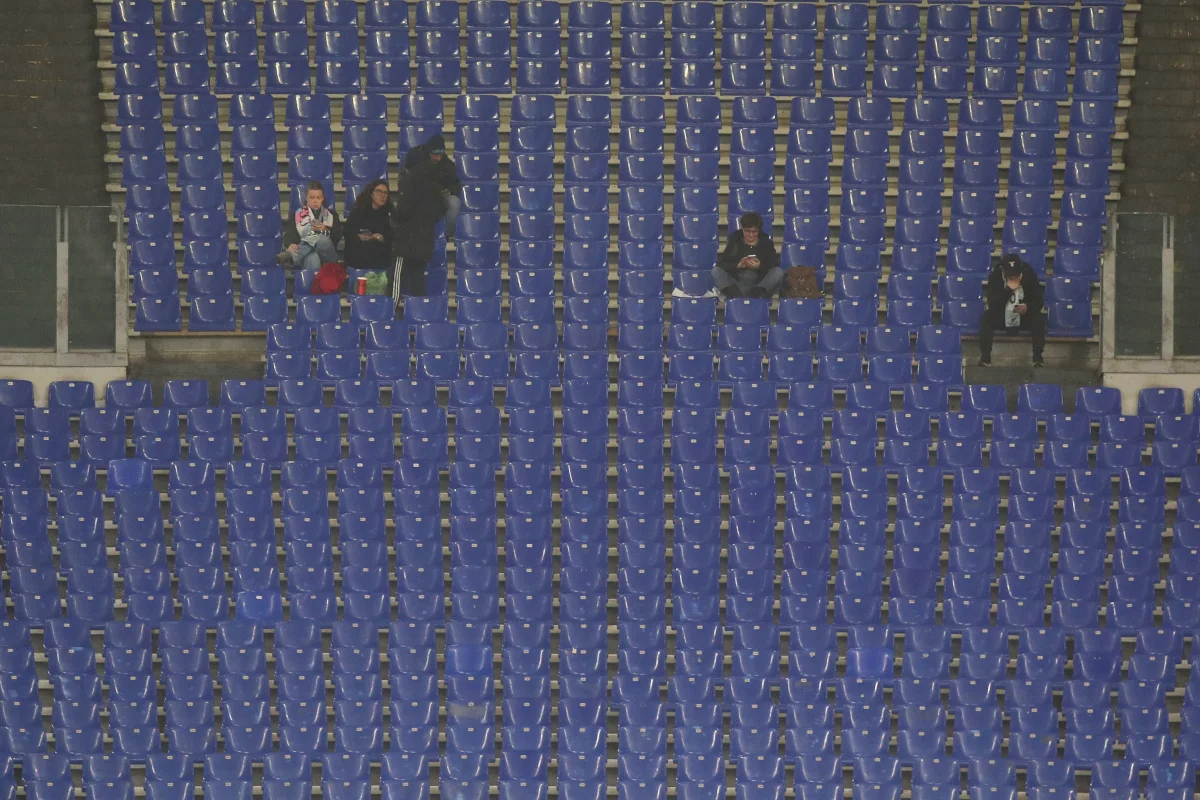
ROME, ITALY – MAY 23: A general view of Lazio fans inside the stadium, surrounded by empty seats due to a fan protest, before the Serie A match between SS Lazio and Pisa SC at Stadio Olimpico on May 23, 2026 in Rome, Italy. (Photo by Paolo Bruno/Getty Images)
Ireland serves as an alternative model. In February 2026, NetBet became the sponsor for Shamrock Rovers, marketed as the club’s “Responsible Gambling Partner” and emphasizing safer gambling messaging rather than a conventional commercial partnership. Fans interested in checking football odds at NetBet Sport can do so directly, distinct from the club’s sponsorship agreement. This represents an open collaboration between a licensed operator and a top-flight club, contrasting sharply with the restrictions imposed by Italian law and the Premier League’s front-of-shirt ban.
Advertisement
Where That Leaves Lazio
Within this context, the collapse of the Lazio-Polymarket partnership appears less like an isolated incident and more a foreseeable result of Italy’s stringent regulatory environment. Both licensed and unlicensed betting operators encounter significant challenges in securing straightforward arrangements with Serie A clubs. Teams that have successfully navigated these hurdles have done so through subsidiary branding designed to withstand legal scrutiny, rather than by attempting to redefine themselves outside the gambling sector. Polymarket’s approach to this issue, while ambitious, ultimately failed to hold up under regulatory examination.
SS Lazio’s front-of-shirt sponsorship deal with prediction market platform Polymarket has ended after a few months. Lazio and Polymarket announced the agreement in April 2026, valued at approximately €19–22 million, running through June 2028 with an option to extend to 2029. The deal did not last the season.
Italy’s Customs and Monopolies Agency (ADM) blacklisted Polymarket, classifying it as an unauthorised gambling operator, and blocked access to its site nationwide. The block happened twice. The first came in November 2025, after which Polymarket appealed, and the site was reopened.
Advertisement
The second came on 27 July 2026, after Italy’s Regional Administrative Court (TAR) rejected Polymarket’s urgent appeal. Following that, Lazio removed Polymarket’s branding from its website and from shirts sold in its online store, and the two sides began formally winding down the agreement.
Why the deal was always on shaky ground
Italy’s Dignity Decree, in force since January 2019, bans gambling and betting advertising across sport, including shirt sponsorship, television, and most digital placements. Polymarket’s position was that it should be classified as a prediction market rather than a betting operator, a distinction that would place it outside the decree’s scope. Lazio backed that framing, describing Polymarket as an “Official Fan Intelligence & Digital Insight Partner” rather than a betting sponsor. Italian courts didn’t accept it, and the ADM’s blacklisting treated the platform as falling squarely under existing gambling regulation.
Licensed operators face the same ban
What’s easy to miss in the Polymarket story is that the Dignity Decree doesn’t only catch grey-area platforms. It bans licensed, ADM-regulated betting operators from sponsoring Italian clubs outright. That’s a stricter position than most of Europe, and it’s forced clubs to get creative.
Advertisement
The workaround has been “infotainment” partnerships: gambling companies sponsor clubs through content-focused subsidiary brands rather than their betting operations directly. Inter Milan’s shirt sponsor is Betsson.sport, a content arm of betting operator Betsson. Parma has partnered with AdmiralBet.news, and Lecce with BetItalyPay.
These entities provide match insights and highlights rather than odds or betting promotions, which keeps them technically outside the ban.
Serie A has pushed to overturn the decree since at least 2025, arguing it costs the league upwards of €100 million a year in lost sponsorship revenue, and the Senate has discussed a revised “1% betting allocation” model. As of mid-2026, though, the sponsorship ban remains in force. Polymarket’s attempt to sidestep it with a “fan intelligence” label followed the same logic as the infotainment deals, just without the licensing that lets those arrangements survive scrutiny.
A wider European pattern
Italy isn’t unusual in tightening the screws on betting sponsorship, even if its approach is more absolute than most. The Premier League’s front-of-shirt ban on gambling sponsors takes effect at the start of the 2026-27 season, ending an era where 11 of 20 clubs carried betting logos on their shirts. Clubs can still use gambling sponsors elsewhere, on sleeves, training kits, and stadium boards, but the most visible piece of shirt real estate is now off-limits.
Advertisement
Belgium has taken a similar partial route, restricting betting sponsorship to sleeves and the back of shirts, though some clubs use sub-brands to keep a presence on the front. Spain banned gambling sponsorship in football outright in 2021, honouring existing contracts through a transition period. The direction across the continent is consistent: less visible betting branding, even where full bans like Italy’s remain the exception rather than the rule.

ROME, ITALY – MAY 23: A general view of Lazio fans inside the stadium, surrounded by empty seats due to a fan protest, before the Serie A match between SS Lazio and Pisa SC at Stadio Olimpico on May 23, 2026 in Rome, Italy. (Photo by Paolo Bruno/Getty Images)
Ireland shows a different model. NetBet became Shamrock Rovers’ sponsor in February 2026, styled as the club’s “Responsible Gambling Partner” and tied to safer-gambling messaging rather than a standard commercial deal. Fans looking to check football odds at NetBet Sport can do so directly, separate from the club sponsorship itself. It’s a licensed operator sponsoring a top-flight club in the open, the kind of arrangement Italian law rules out entirely, and the Premier League has pushed off the front of the shirt.
Advertisement
Where that leaves Lazio
Set against that backdrop, the Lazio-Polymarket collapse looks less like a one-off dispute and more like a predictable outcome of Italy’s regulatory position. Betting operators, licensed or not, don’t get a straightforward path onto a Serie A shirt. The clubs that have found workarounds have done so through subsidiary branding designed to withstand legal scrutiny, not by reclassifying themselves as anything other than a gambling business. Polymarket tried the latter, and it didn’t hold up.
[/gpt3]