
Tijjani Reijnders Set for Transfer to Al Qadsiah from Manchester City
Tijjani Reijnders’ short tenure at Manchester City is coming to an end as the Dutch international prepares for a move to Saudi Arabian club Al Qadsiah. The transfer is reported to be worth approximately £55 million. Whether he will help elevate the “Pride of the Eastern Province” to glory in the Saudi Pro League remains to be seen.
In the midst of the summer transfer frenzy, this deal may not seem particularly significant. City will post a small profit on a player they acquired for £45 million just last summer. It is unlikely that many City fans will lament his departure. Reijnders is just one of many Premier League players attracted by lucrative offers from Saudi Arabia.
However, the transition from AC Milan’s talented midfielder to Al Qadsiah’s marquee signing in just over a year feels unsettling and somewhat grim. While such decisions may enrich bank accounts, they also reflect a decline in footballing terms, demonstrating a departure from competing for major European titles and representing a missed opportunity for Reijnders’ evident talent.
During his final season with Milan, Reijnders netted 15 goals and earned the title of Serie A’s midfielder of the season. He signed a five-year deal with City, hoping to fill the void left by Kevin De Bruyne and Ilkay Gundogan, and described playing in the Premier League as “a boy’s dream.” City’s director of football, Hugo Viana, praised Reijnders upon his signing, claiming he is the type of midfielder that every team desires. Unfortunately, it appears his time at City has not unfolded as anticipated.
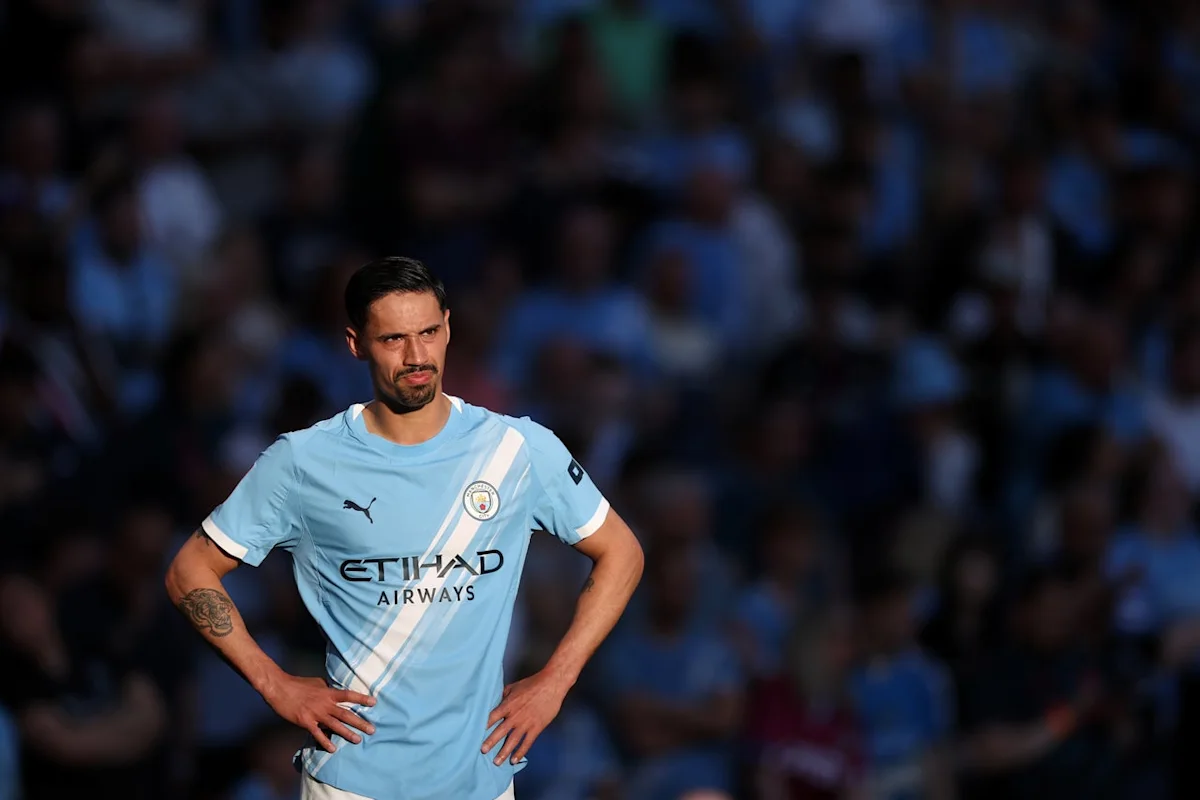
Tijjani Reijnders on the ball for Manchester City (Getty)
It remains uncertain how much Reijnders was encouraged to leave City. His performance showed some defensive weaknesses while playing deeper in midfield. He also fell victim to Pep Guardiola’s mid-season tactical shift, which sought a more direct playing style after the acquisition of Antoine Semenyo in January. Now, with Enzo Maresca stepping in as Guardiola’s successor, City has set its sights on new targets like Chelsea’s Enzo Fernandez.
However, this situation fits into a broader pattern of growing excess, particularly among the wealthiest Premier League clubs. There is an increasing trend where powerful clubs buy new players at hefty prices, use them sparingly, and then part ways after just a season or two.
At City, Savinho is set to transfer to Spurs after making only seven league starts last season. Jack Grealish finds himself without transfer offers and is poised to return to Everton on loan, nestled in mid-table limbo. Kalvin Phillips remains on loan at Sheffield United, still part of City’s roster. Other clubs, like Chelsea, have been notorious for acquiring and quickly selling players who prove unnecessary. Meanwhile, Manchester United has been wasteful with player resources in recent years.
Player turnover continues to rise, with data indicating that half of new transfers fail. In the upper echelons of the Premier League, players cycle in and out with an almost careless regularity. The emphasis on selling off academy products in light of financial fair play policies is growing, diminishing the presence of one-club players in the modern game. Consequently, forging deep connections between players and their clubs becomes increasingly challenging, undermining the ties that bond fans to their teams.

Tijjani Reijnders, left, celebrates with the FA Cup (Getty)
This situation may be partly a byproduct of a sport that has industrialized talent identification. While City once led the way in recruitment strategies, now clubs across the leagues possess advanced systems, enabling a committee-based approach to transfers supported by extensive data. Replacing players has become simpler. If Marc Cucurella expresses a desire to leave Chelsea, a quick data filter can yield a list of suitable replacements based on technical ability and performance metrics.
Ultimately, the dynamic also reflects the reality of a league increasingly populated by clubs owned by Gulf states and American venture capitalists, who view players as tradeable assets. It’s important to note that players retain agency over their paths, but the modern Premier League now offers little opportunity for individuals to develop lasting ties with their clubs. This loss of deeply-rooted connections strips away an emotional dimension that has long been central to football.
As Reijnders completes his transfer, he will be replaced within the Manchester City squad, with his No 4 jersey soon reassigned. The remaining years on his contract will fade from memory. This exemplifies the transient status of the modern Premier League athlete: seen more as an asset to be quietly offloaded than as a valued player.
Tijjani Reijnders’ fleeting time at Manchester City is almost over. The Dutch international is expected to join Saudi Arabian club Al Qadsiah in a transfer worth around £55m. Will he lift the “Pride of the Eastern Province” to Saudi Pro League glory? Who knows. Also: who cares.
Amid the summer transfer churn, perhaps it is not a particularly noteworthy deal. City will make a small profit on a player they bought for £45m last summer. City fans won’t shed many tears. Reijnders is far from the first Premier League player to accept Saudi Arabian riches and he won’t be the last.
Advertisement
But there is something jarring and a little bleak about Reijnders’ road from AC Milan’s marauding midfielder to Al Qadsiah’s flagship signing in little over a year. No doubt it is a journey that nourishes the bank account for those who choose it. But in football terms, Reijnders’ trajectory cannot be seen as anything other than a decline, a step down after competing for major European trophies, and a shocking waste of his undoubted talent.
In his last season in Milan, at one of Europe’s greatest clubs, Reijnders scored 15 goals and was named Serie A’s midfielder of the season. He signed a five-year contract at City with the ambition of helping to fill the void left by Kevin De Bruyne and Ilkay Gundogan, and called it “a boy’s dream” to play in the Premier League. “Tijjani is the type of midfielder that every team would like to have,” said director of football Hugo Viana on his signing. Well, not City, as it turns out.

Tijjani Reijnders on the ball for Manchester City (Getty)
We don’t know to what extend Reijnders was pushed to the door. He was a little suspect defensively when playing deeper in City’s midfield. He was also a victim of Pep Guardiola’s mid-season tactical evolution to become more direct and “vertical”, built around the arrival of Antoine Semenyo in January. Now Guardiola’s successor, Enzo Maresca, has led City to pursue new targets such as Chelsea’s Enzo Fernandez.
Advertisement
But step back and his story is part of a wider trend of increasing decadence, particularly at the richest end of the Premier League. More so than ever before, the most powerful clubs repeatedly buy new players, often for large fees, and barely use them, only to discard them after a season or two.
At City, Savinho is being sold to Spurs after making only seven league starts last season. Jack Grealish has no transfer offers on the horizon and is set to return to Everton on loan, stuck in mid-table purgatory. Kalvin Phillips is on loan at Sheffield United and still on City’s books. Chelsea are prolific in buying and soon selling players they have no use for. Manchester United have proved positively wasteful in recent years.
Player churn is gradually increasing, yet half of new transfers fail. At the top of the Premier League’s machine, players come and go with an almost casual abandon. Academy products are increasingly viewed as sellable property in the age of financial fair play. One-club players barely exist in the modern game. And it all means that deep, meaningful connections between players and their clubs – those ones that bind a fanbase to their team – are harder to find.
Tijjani Reijnders, left, celebrates with the FA Cup (Getty)
Perhaps this is partly a consequence of a sport which has industrialised the science of talent identification. Where City were once at the forefront of recruitment, now every club has a sophisticated system in place, buying by committee, with endless wells of data at their fingertips. Finding a replacement is easier now. Marc Cucurella wants to leave Chelsea? Filter for technical left-backs in their mid-20s who make very few errors, create chances in the final third and look like they are being permanently chased by a swarm of bees, and you’ll have a ready-made list of replacements.
Advertisement
Certainly, this is a consequence of a league of clubs increasingly owned by Gulf states and American venture capitalists, who naturally treat players like shares to be traded. Which is not to say modern players have no power or stake in their destiny, far from it. But the modern Premier League is one where players rarely have time to cultivate lasting bonds, and that is one of football’s essential emotive layers that cannot be quantified.
So Reijnders will simply be replaced in the Manchester City squad, the No 4 reassigned. The remaining four years on his contract will be forgotten. This is the fragile life cycle of the modern Premier League star: an asset to be quietly shipped out, more disposable and replaceable than ever.
[/gpt3]