
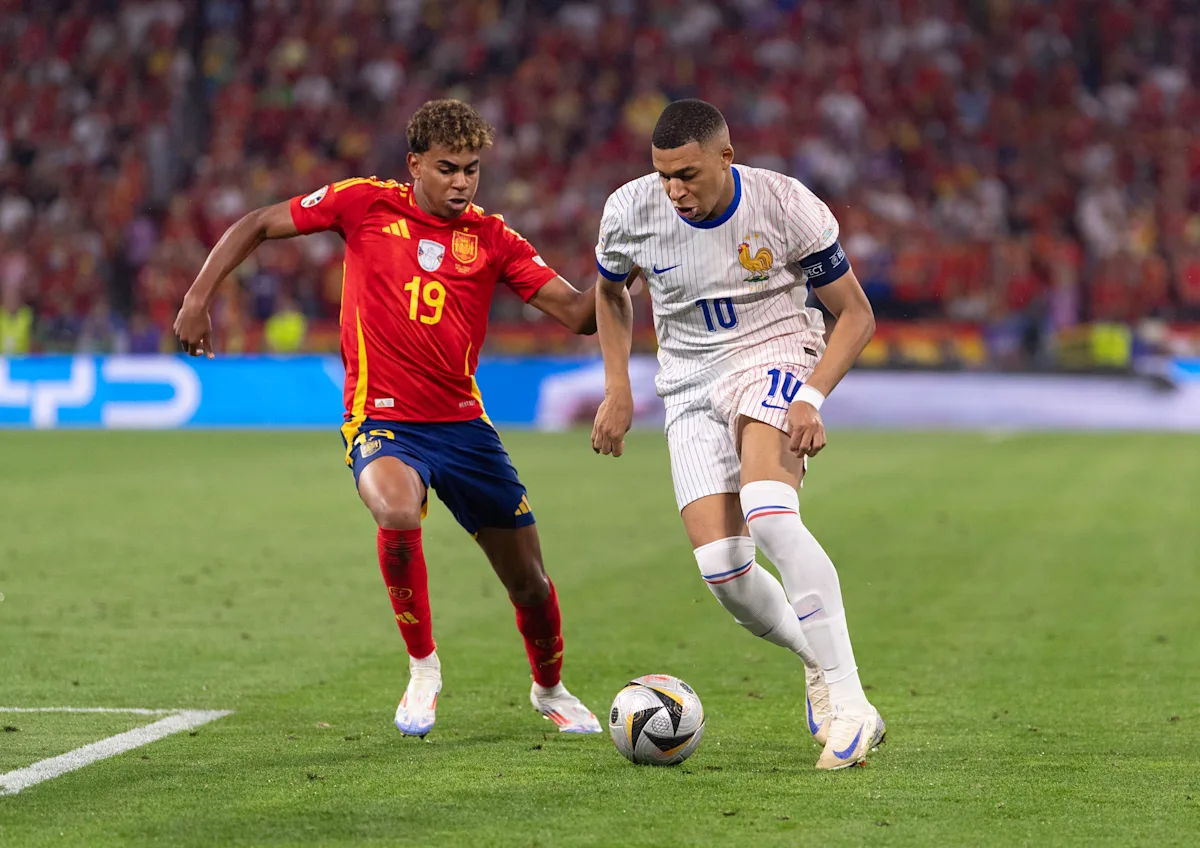
World Cup Semifinal Power Rankings: France and Spain Lead the Final Four
At the World Cup semifinal stage, the margins within power rankings are finer than ever. Analysts must pick nits and use metaphorical microscopes to decide team placement. It remains almost impossible for any team to navigate the group stage and three knockout rounds without being fully capable of winning the title.
That holds true this year, as the top four teams in FIFA’s rankings reached the semifinals. All four are previous World Cup champions, and each has reached multiple major finals in the past fifteen years.
Matchups matter less now, as the tournament winner must eventually overcome two of the three remaining teams. Consequently, these power rankings account for both the likelihood of winning the tournament and the overall quality of the teams.
1. France
France remains the top team for the majority of the tournament, and their 2-0 quarterfinal win over Morocco provided no reason to change that.
For the first time in the tournament, France did not hold the majority of possession, yet they looked untroubled throughout. France consistently exploited space behind Achraf Hakimi, a logical strategy given Kylian Mbappé’s presence on the left and Hakimi’s role as Morocco’s primary attacking threat. It remains encouraging to see France make simple adjustments to maximize their immense talent.
France faces a tougher challenge in solving Spain’s press, but they still possess the highest upside among the remaining teams. While any realistic France-Spain result is possible, a blowout victory by France appears more likely than the reverse.
2. Spain
A strong case exists for placing Spain in the top spot. They have conceded only one goal and 1.8 expected goals (xG) throughout the tournament, while boasting the lowest shot quality allowed at 0.05 xG/shot. Offensively, Spain has recorded 11 goals and a tournament-leading 11.7 non-penalty expected goals. Only Portugal limited Spain to fewer than six shots, largely because a suffocating press starts 56 percent of Spain’s possessions in the middle and attacking thirds—the highest rate among quarterfinalists.
Although Spain’s attack may not be firing on all cylinders, their statistical profile mirrors that of France. While France possesses more world-class individual talent in the front line, Spain holds the edge in overall midfield strength.
The semifinal in Dallas promises to be a high-quality encounter. A Spain victory would represent a minor upset, but it would not be a surprise. Whoever advances will enter the final against England or Argentina as the favorite.

3. England
England rises in the rankings after grinding out their third consecutive one-goal victory in the knockout stage. In tournament football, the ability to win close games eventually outweighs the negative perception of needing to do so, and England has clearly crossed that threshold.
Through Thomas Tuchel’s tactical approach and the flexible talent available, the Three Lions demonstrate an ability to win in varied ways. They navigated Congo DR’s low block, held firm while down a man against Mexico, and limited Erling Haaland’s opportunities against Norway.
Argentina presents unique challenges, specifically Lionel Messi, but England’s superior aerial presence should prove impactful at both ends of the pitch. With Harry Kane and Jude Bellingham, England possesses two players capable of winning any match, supported by a deep midfield capable of attacking through the middle or the wings. While France and Spain often perform at a slightly higher level, England is not far behind.
4. Argentina
Argentina drops one spot after needing a late stoppage-time goal from Lautaro Martínez to secure a 3-1 quarterfinal win over Switzerland. Much like England, their ability to win tight matches is crucial, but the manner in which they do so raises questions.
Although Argentina leads the tournament with 16 non-penalty goals, they rank fourth with 10.4 expected goals, a figure inflated by two extra-time matches. Their attacking options appear somewhat limited.
I retain doubts regarding Argentina’s ability to drive forward with width, as they lack explosive wingers. They have attempted 78 crosses over six matches, tied for the fewest among quarterfinalists. While crosses rarely serve as the most efficient attacking option—only about a quarter are completed—they indicate how a team chooses to attack. When Argentina requires a goal, opposing defenses defend narrowly, leaving Argentina struggling to find space in the middle.
Regardless, Argentina still fields Lionel Messi and enough talent to potentially become the third repeat World Cup winner. While they may not reside in the same tier as the other three teams, Messi and his teammates could certainly prove these rankings wrong. Their potential victory would be a remarkable story.