Jose Mourinho’s Tactical Brilliance Shines as Real Madrid Overcomes Barcelona
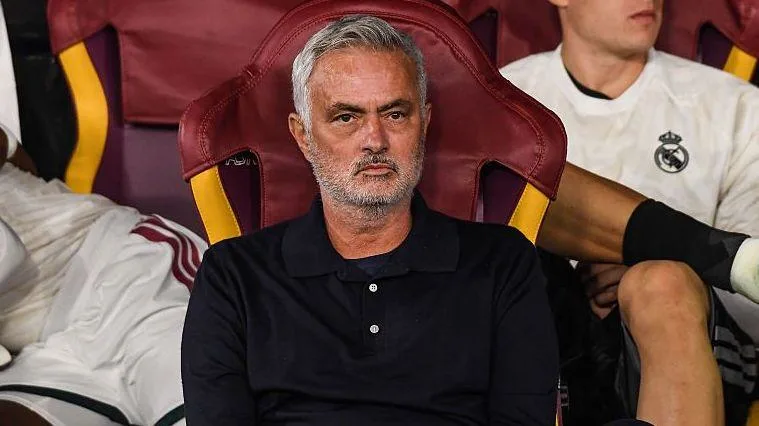
Barcelona supporters have frequently ridiculed Jose Mourinho by calling him traductor—Spanish for translator—an allusion to the Real Madrid manager’s early career beginnings.
This nickname harkens back to his time as an interpreter for the legendary Sir Bobby Robson, during which Mourinho followed Robson from Sporting to Porto, and ultimately, to Barcelona in 1996.
Fast forward four years, and Mourinho began his managerial journey with Benfica, marking the start of a remarkable coaching career that would later include two Champions League titles and triumphs across England, Italy, and Spain.
More than just a translator, Mourinho’s diverse success speaks volumes about his qualities: he is diligent, introspective, and tactically astute, thriving in chaotic environments.
His tactical acumen was on full display last weekend as Real Madrid bested Barcelona 2-1.
As football analysts commended Mourinho’s tactics, it became a fitting moment to review his 26-year managerial legacy.
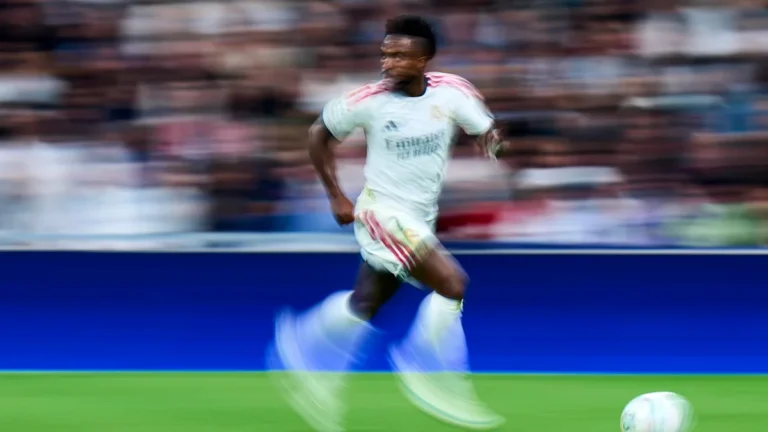
This match featured Real Madrid adopting a 4-4-2 formation due to the absence of winger Vinicius Jr. Federico Valverde filled in at right-back, while Bernardo Silva partnered Aurelien Tchouameni in midfield. Arda Guler and Yan Diomande occupied the flanks, with Jude Bellingham and Kylian Mbappe leading the attack.
Consistent with his approach in major matches, Mourinho assigned Silva to man-mark Barcelona’s Pedri, a challenging assignment that ultimately limited the Spanish midfielder’s impact.
Recognizing Barcelona’s aggressive pressing style, Real Madrid players strategically lured opponents to wide areas before exploiting the newfound space. This tactic was especially effective as the ball transitioned from the right to the left flank, allowing Marc Cucurella to evade Lamine Yamal’s defense.
As Barcelona move towards the ball, Valverde switches play to an unmarked Cucurella [BBC]
Following the match, Mourinho stepped outside his usual practice of avoiding detailed tactical discussions in public. He emphasized the challenge Barcelona faced in tracking the deep runs of his midfielders.
Displaying his adeptness at utilizing press conferences as an extension of on-field strategies, Mourinho likely aimed to inform future opponents of Barcelona about his tactics.
By exploiting the space behind Barcelona’s high defensive line, Real Madrid effectively countered Hansi Flick’s aggressive game plan.
While Mourinho garners praise for orchestrating significant victories, his broader strategic vision often goes unnoticed.
Many recent coaches famous for their well-defined strategies or tactical patterns have received acclaim, whereas Mourinho has favored an adaptable approach that utilizes his players’ strengths, changing tactics based on the context of the team he manages.
Such a flexible style complicates analysis, leading to misunderstandings of his methodology.

Working alongside Sir Bobby Robson, Jose Mourinho became fond of Barcelona, but they would later choose the man standing to his left in this picture, Pep Guardiola, over him for the head coach position in 2008 [Getty Images]
Mourinho subscribes to the concept of tactical periodisation, a philosophy pioneered by Vitor Frade.
During his time with Robson at Porto in the mid-1990s, Frade was also involved with the coaching staff. His approach combined aspects of psychology, sociology, neuroscience, and systems theory, asserting that technical, tactical, physical, and psychological aspects of football should not be treated in isolation.
Frade’s philosophy maintained that these components operate concurrently during a match.
Since his return to Real Madrid this season, reports indicate training sessions have become shorter yet more intense, with an emphasis on ball control in each drills.
Even pre-season conditioning focuses on developing players’ skills with the ball at their feet.

“For our generation, it was unheard of to get footballs out in the first pre-season session,” former defender John Terry said about Mourinho’s first stint at Chelsea. “But he told us that you never see a pianist running around a piano, you see a pianist work on the piano.” [Getty Images]
In the world of football, coaching philosophies generally diverge into two main approaches. Coaches either attempt to minimize the chaos associated with matches or choose to adapt to it—like adherents of tactical periodisation do.
Mourinho has had an illustrious start to his career, capturing the UEFA Cup and Champions League with Porto, transforming Chelsea into a major contender in England, securing a treble with Inter, and claiming La Liga with Real Madrid.
However, between 2019 and 2025, his roles shifted to positions with more modest expectations compared to his earlier successes.
Since winning the EFL Cup and the Europa League at Manchester United in 2017, Mourinho’s only trophy has been the Conference League, which he lifted in 2022 while managing Roma.
During this period, coaches who favored minimizing on-field chaos thrived.
Fans witnessed matches characterized by structured play, where successful coaches focused on retaining possession and organized their teams in predictable shapes, assigning clear player roles.
This allowed attacking teams to devise strategies to create player overloads on the field.

Pep Guardiola and Enzo Maresca achieved significant success by adopting a positional style of football [Getty Images]
In recent years, a trend of intense man-to-man pressing has emerged, complicating the ability for teams to establish overloads. This pressing approach places additional time constraints on attackers, forcing quicker decisions.
As a result, matches appear more chaotic, which might actually favor Mourinho’s teams.
Devotees of Frade’s philosophy maintain that chaos is an inherent part of football. By training holistically, they hope players can become adept at resolving issues in real-time during matches.
This could explain why Mourinho’s teams typically excel in challenging conditions, often stepping up as underdogs when the stakes are high or when games deviate from structured patterns.
Rather than controlling his players’ every choice, Mourinho prepares them to independently seek solutions, ultimately aiming to elevate the level of their decision-making, especially with more skilled players.

When comparing coaching approaches, Eden Hazard noted the differences in training methods between Antonio Conte and Jose Mourinho, commenting that while Conte is more prescriptive, Mourinho allows players the freedom to express their game [Getty Images]
Against Barcelona, players like Bellingham, Mbappe, and Silva demonstrated their unique styles, effectively integrating into a cohesive team performance under pressure.
Mbappe threatened the defense directly and finished strong. Bellingham showcased tenacity while also displaying finesse on the ball, and Silva strategically managed the tempo of play, successfully evading Barcelona’s pressing before advancing the ball to teammates higher up the pitch.

Mbappe’s double helped Real past Barcelona last week [Getty Images]
Mourinho’s career comes full circle, having kicked off at Benfica and returning 25 years later in September 2025.
With back-to-back titles at Chelsea, and a triumphant third stint six years later, as well as a second term at Real Madrid 13 years after his initial tenure, the narrative of his journey continues to evolve.
Considering the shifting landscape of tactics in football, it seems an opportune moment for Mourinho to embrace a new chapter in his tactical philosophy.